
IEC TR 62730 Test Results
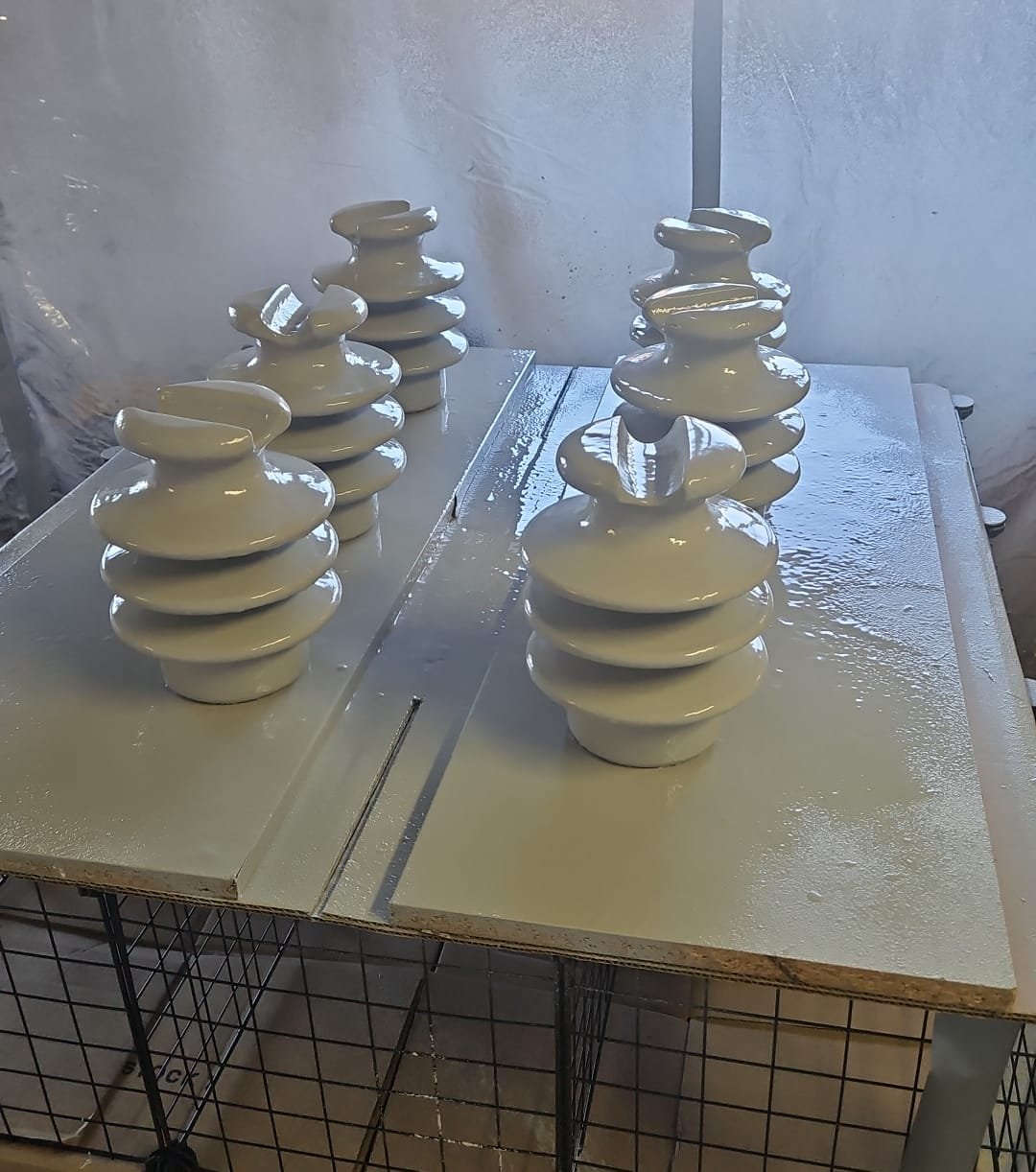
Si-COAT 570 HS has passed both tests in IEC TR 62730. That standard sets out how to check whether an insulator material stands up to tracking, erosion and pollution.
Made by CSL Silicones, Si-COAT 570 HS is a high solids RTV silicone coating for high voltage insulators. TSS supplies it across Southern Africa, including the DRC and the Seychelles. Both tests ran at independent accredited laboratories, and in both cases the coated insulators passed.
What the IEC TR 62730 tests check
Polluted insulators fail in a familiar way. First, dust, salt or ash settles on the surface. Then moisture turns that layer into a conductor, leakage current flows, and dry bands form. Eventually an arc bridges the insulator and the line trips.
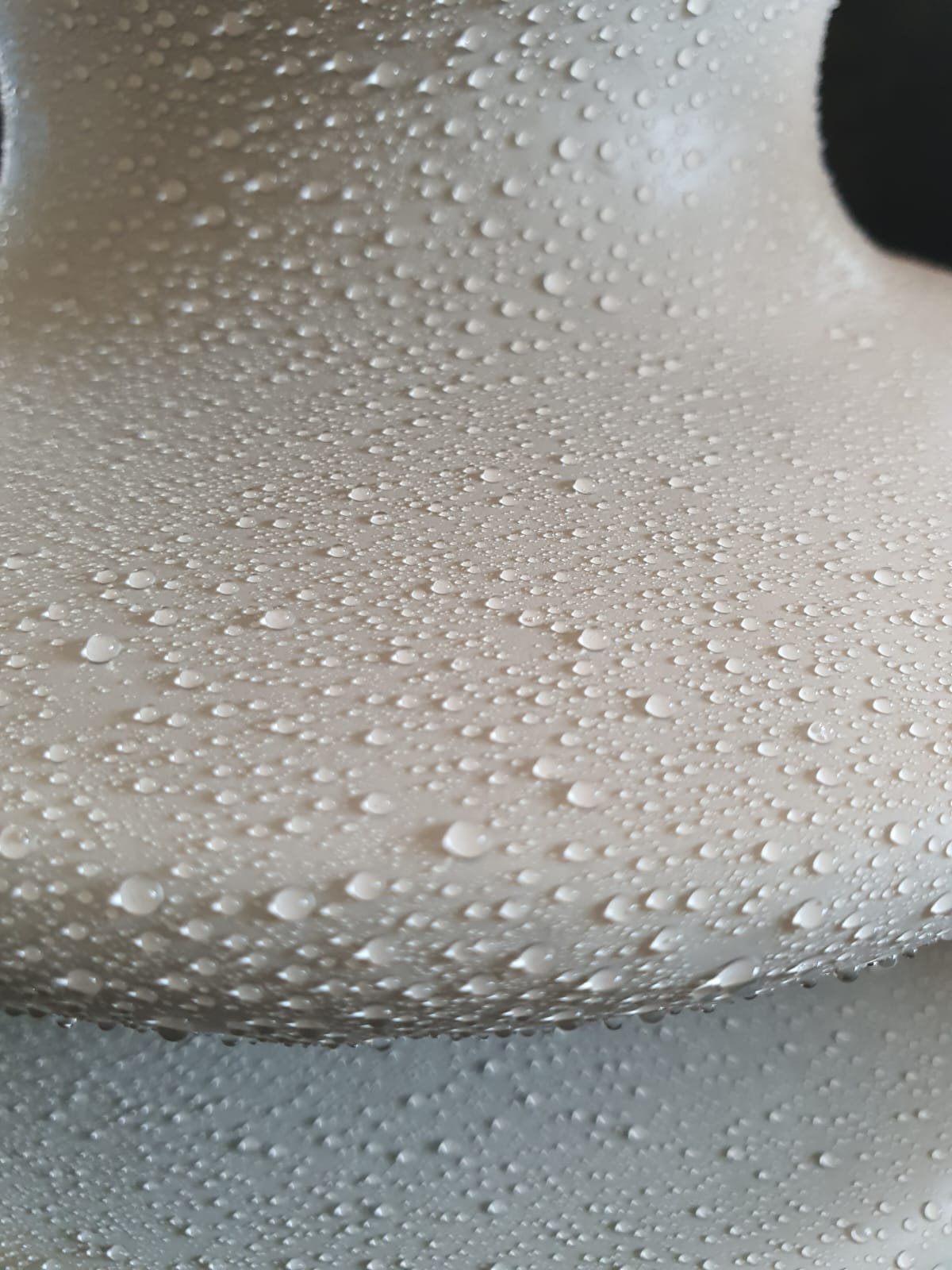
A good coating stops this by staying water repellent, so the dirt layer never connects. However, the coating also has to survive the arcing it suppresses, plus years of sun, rain and heat. IEC TR 62730 tests exactly that, using two methods: the wheel test and the 5000 hour multiple stress test.
The 5000 hour multiple stress test
In the first test, two coated porcelain line post insulators sat in a sealed 20 m³ chamber. For 5000 hours, from January to August 2026, the chamber repeated the same 24 hour cycle. In total, it paused for only one hour across the whole test.
Each cycle combined the stresses a coastal or industrial substation sees. Humidity reached 95% and the heat went up to 50°C. Meanwhile, rain and salt fog took turns on the samples. A 6500 W xenon lamp, filtered to match sunlight, stood in for the sun. Throughout the service periods, the insulators also carried live voltage.
At CSL’s request, the lab also ran the voltage about 27% higher than the standard calls for. As a result, the samples faced more electrical stress than the test requires.
What the 5000 hour test found
After 5000 hours, the results were clean. There were no flashovers and no trip outs during the whole test. Afterwards, the lab measured insulation resistance along the most likely leakage paths, and every reading stayed above 2 MΩ. In addition, no erosion went deeper than 3 mm or reached the core, and nothing punctured. Therefore, both samples passed.
The IEC TR 62730 wheel test
The second test is harsher on the coating surface itself. Here, the insulators sit on a wheel that dips them in a salt water bath and lets them drip. Next, it turns them under voltage and then lets them cool. Every turn of the wheel counts as one cycle.
For this test, two coated 11 kV porcelain post insulators ran 30,853 cycles at 14.3 kV. The test ran from July to September 2025, and the standard requires 30,000 cycles. To pass, the coating must show no tracking or erosion through to the core and no puncture. Afterwards, the lab inspected both samples, and both passed.
Why IEC TR 62730 matters in South Africa
Eskom has two RTV coating standards for transmission, 240-56062705 for suppliers and 240-56063877 for application. Both list the IEC TR 62730 wheel test and 5000 hour test as a route for heavily polluted sites. Si-COAT 570 HS has passed both. To be clear, this does not make it Eskom approved, since approval is Eskom’s own process. Still, it means an engineer can check our claim against a standard they already use.
This matters on the sites we work on. For example, coastal substations in KwaZulu-Natal face salt fog, while mines and smelters face heavy dust. Similarly, power stations deal with fly ash. In all these places, a coating that holds up under salt, sun and voltage means less washing and fewer unplanned trips. For more on this, read our high voltage articles.
Reports available on request
We don’t publish the full test reports online. However, engineers and specifiers can ask for them, and we will send them through. Simply email sales@tssupplies.co.za, or use our Request a Quote page. For product details, see the Si-COAT 570 HS insulator coating page, or browse our FAQ page.
Send us the problem
Photos and a rough size are enough to start, while drawings and specs can follow later. Then we come back with the right product and a quote.