
Si-COAT 570 HS High Voltage Insulator Coating
Si-COAT 570 HS (also known as 570 HS) is a one part RTV silicone insulator coating made by CSL Silicones and supplied across Southern Africa by Technical Solution Supplies (TSS), the exclusive Southern African distributor of CSL Silicones. It keeps porcelain, glass and composite insulators water repellent, so moisture cannot turn surface pollution into a conductive film. As a result, leakage current drops and the risk of pollution flashover falls.

Si-COAT 570 HS Insulator Coating for Substations and Lines
It needs no primer, no mixing and no thinning. Crews apply it before energisation on new equipment, or during a planned outage on existing equipment. According to CSL, it has more than 15 years of field service with zero failures, and CSL lists it for AC and DC systems at all voltage levels.
Independent Insulator Coating Test Results: IEC TR 62730
Si-COAT 570 HS passed both tests in IEC TR 62730 at independent ISO/IEC 17025 accredited high voltage laboratories, on coated porcelain line post insulators.
5,000 hour multiple stress test (clause 7.2). The insulators went through 5,000 hours of repeating daily cycles of rain, salt fog, 95% humidity, 50°C heat and simulated sunlight, all under continuous voltage. In addition, the test ran at a higher voltage than the standard sets for that insulator. As a result, there were no flashovers or trip outs, no puncture and no erosion reaching the core, and insulation resistance stayed above 2 MΩ. So the coating passed.
Tracking and erosion wheel test (clause 7.1). The insulators went through more than 30,000 cycles of dipping in salt water and energising. There was no tracking or erosion to the core and no puncture, so the coating passed again.
Eskom Transmission’s standards for RTV silicone insulator coatings list several routes for heavy and very heavy pollution sites, and both IEC TR 62730 tests are among them. Si-COAT 570 HS holds accredited reports for both. The full accredited test reports are available on request from Technical Solution Supplies.
Si-COAT 570 HS at a Glance
| Property | Si-COAT 570 HS |
|---|---|
| Product | Si-COAT 570 HS (570 HS), one part RTV silicone insulator coating |
| Manufacturer | CSL Silicones Inc., Canada |
| Use | Porcelain, glass and composite insulators, bushings and arresters; AC and DC, all voltage levels |
| Substrates (unprimed) | Glass, porcelain, HTV and LSR silicone, EPDM; refresh coat over cleaned older silicone coatings |
| IEC TR 62730 | Passed 5,000 hour multiple stress test (cl. 7.2) and tracking and erosion wheel test (cl. 7.1) |
| Hydrophobicity (IEC 62073) | Static contact angle 116°, advancing 114°, receding 92° |
| Tracking and erosion (IEC 60587) | Pass at 1A 4.5 and 1B 4.5 |
| UV and salt fog (IEC 61109) | 5,000 hours, no degradation |
| CEA tracking wheel | Over 1,000 hours |
| Dielectric strength (ASTM D149) | 718 V/mil |
| Dry film thickness | About 0.38 mm (15 mil); minimum 0.25 mm (10 mil); at least 0.3 mm for Eskom work |
| Coverage | Roughly half a litre per m² before losses |
| Cure at 25°C, 50% RH | Skin 20 to 25 min, tack free 30 to 40 min, cured through about 6 h, full properties 7 days |
| Application | Airless spray recommended; brush or dip; not below 5°C; air at least 3°C above dew point |
| Service temperature | −40°C to 250°C |
| Field record | More than 15 years with zero failures, according to CSL |
How Pollution Flashover Happens
Pollution builds up on insulators all the time, even on well maintained sites. On the coast, for example, from Walvis Bay to Durban and Maputo, it is salt. Near smelters and power stations it is industrial fallout, and on mines, in the Kalahari and in the Northern Cape it is dust. While the surface stays dry, this layer does little harm.
Trouble starts when fog, dew, light rain or condensation arrives. Then the moisture dissolves the salts and forms a conductive film across the insulator. Leakage current then flows, heats the surface and dries it in patches. As a result, small arcs jump across these dry bands, and in the end the insulator can flash over. That trips the line and can damage the insulator and the equipment around it.
How an RTV Silicone Insulator Coating Works
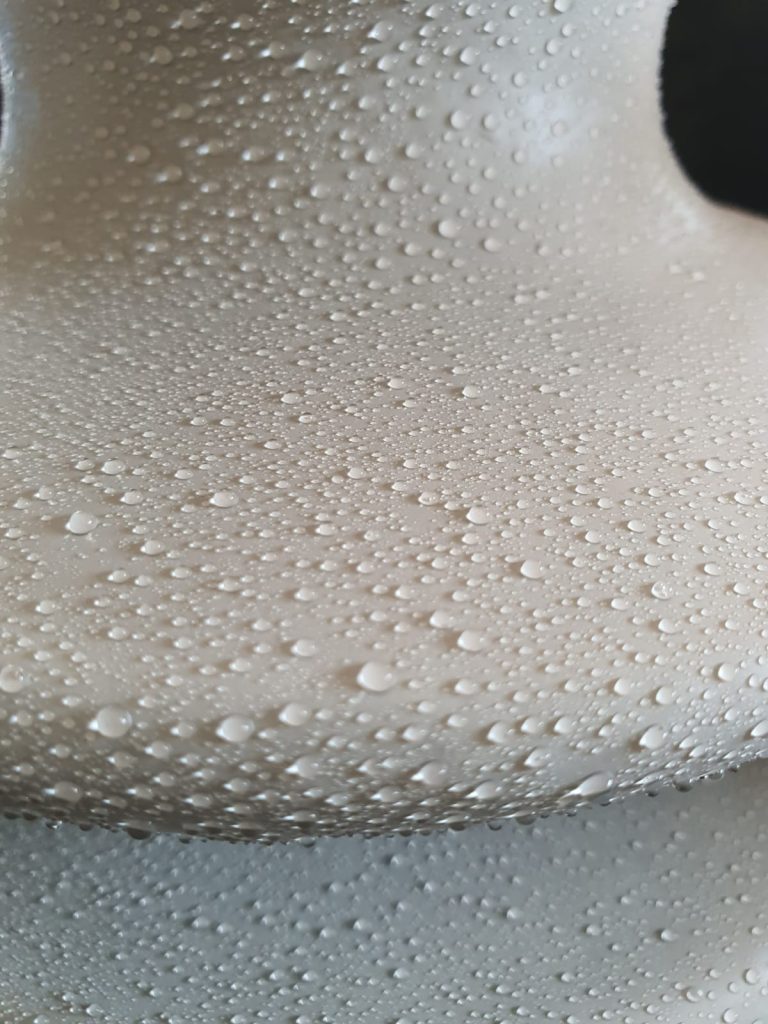
The cured silicone film is water repellent. Instead of spreading into a continuous film, water forms separate beads and runs off. So the pollution layer stays mostly dry, and leakage current stays low.
RTV silicone also keeps working as dirt builds up. Over time, low molecular weight silicone moves from the coating into the pollution layer and makes that layer water repellent too. That is why an RTV silicone coating holds up in places where bare porcelain or glass flashes over. For field proof of the technology at a coastal substation, read our article on RTV insulator coating in Southern Africa.
For tracking resistance, Si-COAT 570 HS uses a patented, larger ATH particle. According to CSL, this differs from competing coatings that use sub micron ATH, and it limits settling in the tin. For a deeper look, read our article on why silicone insulator coating prevents flashover.
Where to Use the Insulator Coating
Si-COAT 570 HS suits any high voltage insulation that sits in salt, dust or industrial pollution. These are the main sites across the region.
Coastal Substations and Lines
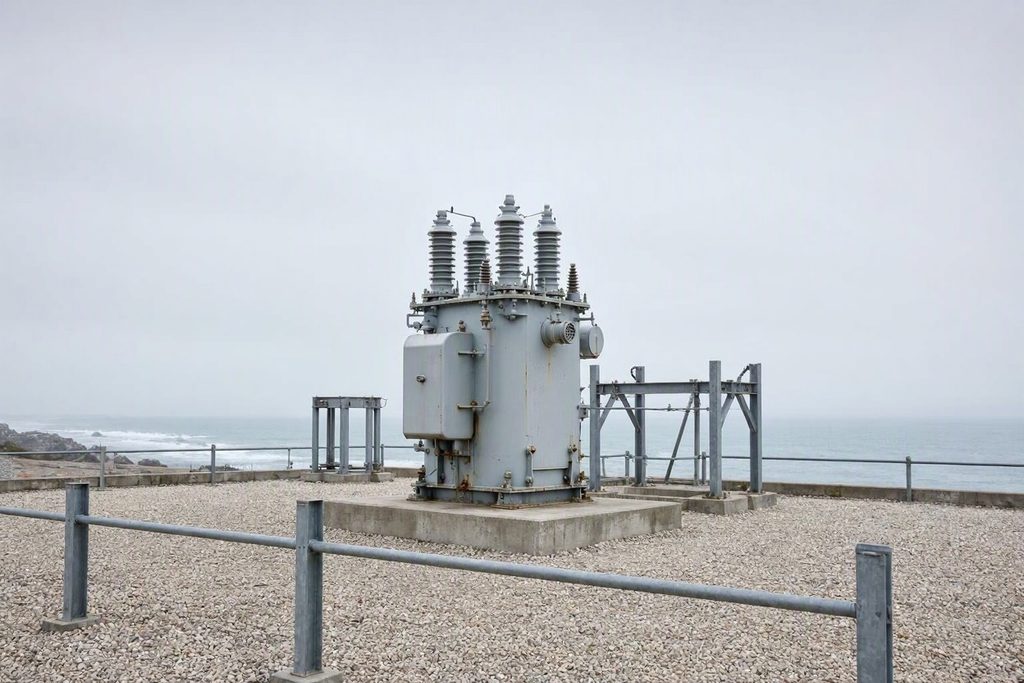
Salt fog and sea spray put a conductive film on insulators every night, so coastal sites flash over most often. For example, post insulators, bushings, surge arresters and busbar supports at coastal substations are the classic case. So are line insulators on the structures where flashovers keep coming back.
Insulator Coating for Mine and Smelter Substations
Inland, however, mine dust, smelter fumes and veld fire smoke load insulators on the Copperbelt, the platinum belt and in the Northern Cape. In addition, many mine substations sit right next to the dust source. See our article on insulator coating for mines.
Wind and Solar Farm Substations
Renewable sites in the Northern, Western and Eastern Cape face dust and coastal salt from the day they are commissioned. So coating before energisation means the work is done before the first outage window is ever needed. Read more about Si-COAT 570 HS on renewable energy projects and coating new substations from day one.
Switchgear Interiors
Dust and moisture also get into switchgear through vents and cable entries, where they cause surface tracking. Si-COAT 570 HS has been applied inside MV switchgear interiors as well as on outdoor substation equipment.
Older Silicone Coatings and Composites
It also goes unprimed onto glass, porcelain, HTV and LSR silicone and EPDM. In addition, it can go over an older silicone coating as a refresh coat, once that surface is properly cleaned. Steel towers on the same lines often need corrosion work too, as our article on transmission tower corrosion explains.
When to Apply an Insulator Coating
The best time is before the first flashover, not after it. So on new lines, substations and mine switchyards, coat at construction or commissioning, while the equipment is still dead.
On existing sites, three signs say a coating is overdue. First, the site has a history of flashovers after fog or light rain. Second, visible deposits build up again within weeks of washing. Third, the site sits in a coastal, industrial, mining or farming area with heavy airborne pollution. In any of these cases, plan the coating into the next outage window.
Porcelain and glass insulators gain the most, because their bare surfaces attract water. Composite insulators start out water repellent, but in heavy pollution and strong UV they can lose some of that over the years. A coat of Si-COAT 570 HS then restores the water repellent surface.
Where Not to Use This Insulator Coating
- On live equipment, because it must go on before energisation or during a planned outage.
- Over old grease. Remove all grease first, then clean with acetone followed by isopropyl alcohol.
- Below 5°C, or when the air is less than 3°C above the dew point, because the coating needs to cure properly.
- Also as a cure for bird or animal flashovers. A coating does not stop an animal bridging the gap, so those need guards or other measures.
Applying Si-COAT 570 HS
- Timing: before energisation on new equipment, or during a planned outage on existing equipment.
- Cleaning: first a high pressure water wash at 14 to 70 bar. Cement build up needs dry abrasive cleaning. Old grease must be removed first, then the surface wiped with acetone followed by isopropyl alcohol.
- Thickness: about 0.38 mm once dry (15 mil, 380 µm), with a minimum of 0.25 mm (10 mil), so roughly half a litre per m² before losses. For Eskom work, apply at least 0.3 mm dry.
- Method: airless spray is recommended, but brush and dip also work.
- Conditions: do not apply below 5°C. Also, the air must be at least 3°C above the dew point.
- Cure at 25°C and 50% humidity: skin in 20 to 25 minutes, tack free in 30 to 40 minutes, cured through in about 6 hours, then full properties in 7 days.
- Service temperature: minus 40°C to 250°C.
The film thickness is applied in accordance with IEEE 1523, the IEEE guide for RTV silicone coatings on outdoor ceramic insulators.
Insulator Coating, Grease or Washing?
There are three common ways to control pollution flashover, and each has its place.
Washing removes the pollution for a while. However, the insulator surface stays water attracting, so dirt builds up again and the washing has to be repeated.
Silicone grease goes on at 1 to 2 mm and never cures. In practice, it works by holding the pollution inside the grease layer. Once that layer is loaded, the old grease must be removed and fresh grease applied. Grease suits sites already on a regular greasing cycle, or where a utility specifies it. For those sites, TSS supplies CSL 880 insulator grease, with an anti tracking filler and a white colour that shows when it needs replacing. We compare the two in insulator grease or silicone coating.
An RTV silicone insulator coating cures to a thin rubber film and stays water repellent for years. So for long term protection with the least maintenance, the coating is usually the better choice. Old grease must be fully removed before coating.
For sealing cable entries, terminal boxes, conduit ends and connectors in substations and switchgear, TSS also supplies CSL 588 electronic grade sealant. It is a neutral cure silicone, so it does not corrode copper, brass or silver.
Our feature on RTV silicone coating technology appeared in ESI Africa’s 2026 Powering Mines and Industry, Volume 6. For more answers, see the Si-COAT 570 HS FAQ, our case studies or our overview of industrial coatings in South Africa.
Insulator Coating FAQ
Has Si-COAT 570 HS passed the IEC TR 62730 tests?
Yes. Si-COAT 570 HS passed both tests in IEC TR 62730, the 5,000 hour multiple stress test and the tracking and erosion wheel test, at independent ISO/IEC 17025 accredited high voltage laboratories. The full accredited test reports are available on request from Technical Solution Supplies.
Can Si-COAT 570 HS be applied to live equipment?
No. Crews apply it before energisation on new equipment, or during a planned outage on existing equipment.
Does Si-COAT 570 HS meet Eskom’s requirements?
Yes, on the testing. Eskom Transmission’s standards for RTV silicone insulator coatings list several test routes for heavy and very heavy pollution sites, and both IEC TR 62730 tests are among them. Si-COAT 570 HS holds accredited reports for both, so it meets those test requirements. Approval itself is Eskom’s decision, and we do not claim it. For Eskom work, apply at least 0.3 mm dry.
Should I use an insulator coating or insulator grease?
Grease suits sites already on a regular greasing cycle, or where a utility specifies it. However, grease holds pollution in the layer and must be removed and replaced once loaded. So for long term protection with the least maintenance, an RTV silicone insulator coating is usually the better choice.
Is scheduled insulator washing enough to prevent flashover?
Not always. Washing removes the pollution but leaves the surface water attracting, so in coastal, industrial and mining areas the deposits can build up to a dangerous level between washes. Each wash also needs a planned outage. An insulator coating keeps the surface water repellent between maintenance visits, so washing is needed far less often.
Technical Solution Supplies distributes CSL Silicones products across Southern Africa, including the DRC and the Seychelles. For full technical data, download the data sheets below, or contact us for the test reports, a site visit or a sample.
High Voltage Insulator Coating, Grease and Sealant Documents
Related Insulator Coating Articles
- Insulator Grease or Silicone Coating? A Guide for Substation Maintenance Planners

- Shunt Reactor Insulator Protection: Preventing Flashover on Transmission Equipment

- Insulator Coating for Mines: Preventing Flashover on Africa’s Mine-Owned Power Infrastructure
- RTV Insulator Coating Southern Africa: 18 Years of Proof at Duinefontein

- South Africa’s New Transmission Grid: Why Every New Substation Needs High Voltage Insulator Coating From Day One
- Insulator Washing: Why Scheduled Maintenance Alone Is Not Enough to Prevent Flashover

- Transmission Tower Corrosion: Why Africa’s Power Grid Is One Rust Patch Away from Collapse
- High-Voltage Silicone Coating for Power Plants – Stop Dust & Flashover

- Hydrophobicity in High Voltage Insulator Coatings.

- Silicone Insulator Coating Flashover Prevention – Why It Works
- Infrared Electrical Imaging: Detecting Risks Before They Become Failures – How Si-COAT 570 HS Enhances Reliability

- Protecting High-Voltage Equipment in Renewable Energy Projects with SI-COAT 570HS






Send us the problem
Photos and a rough size are enough to start, while drawings and specs can follow later. Then we come back with the right product and a quote.