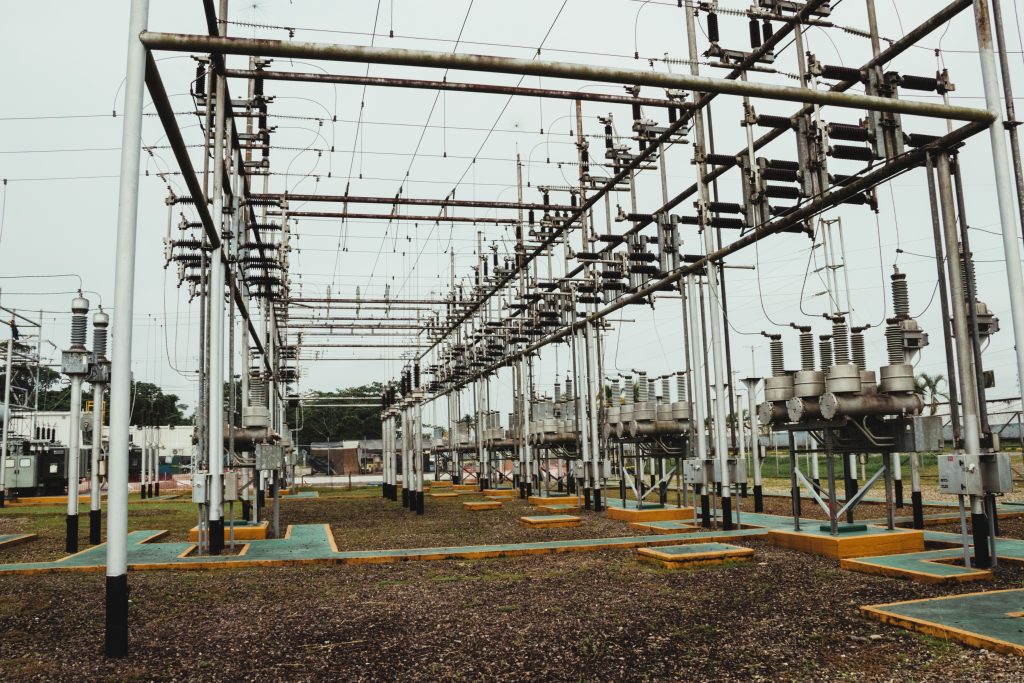
Mining operations across Africa are no longer simply consumers of grid electricity. Persistent load shedding, ageing national grids, and the sheer scale of power demand at modern mining operations have pushed the sector toward generating and distributing its own electricity. Mines are building private substations, transmission infrastructure, and renewable generation facilities at a scale that rivals national utility projects, with single mining-sector substations now designed to handle gigawatt-scale capacity.
This shift brings a new operational reality. Mines that once relied on a national utility to manage flashover risk, insulator maintenance, and contamination control now carry that responsibility themselves. An insulator coating for mines is no longer a niche specification item. It is a frontline defence against unplanned outages on infrastructure the mine itself depends on to keep production running.
TSS, the exclusive Sub-Saharan Africa distributor for CSL Silicones, supplies SI-COAT 570 HVIC to mine-owned substations, transmission infrastructure, and high voltage equipment across South Africa, Zambia, Tanzania, the DRC, and Namibia.
Why Mines Are Building Their Own Power Infrastructure
South Africa’s national grid has struggled with reliability for years. Citizens and industries faced load shedding for over 48 days in a single year during the worst of the crisis, and the underlying mismanagement behind those outages has pushed major energy consumers to seek independence wherever possible. Mining operations, with their continuous power demands and low tolerance for unplanned downtime, have led that shift.
Large-scale transmission infrastructure built specifically to serve mining operations is now a visible feature of South Africa’s energy landscape. Substations designed to accommodate gigawatt-scale renewable capacity for mining clients demonstrate the scale of this transformation. Underground operations are deploying custom mini substations integrating switchgear and transformers directly into confined mining environments, with recent projects in Zambia’s copper belt showing how far this trend extends across the region.
Every one of these substations, transformers, and transmission lines depends on high voltage insulators to function safely. And every one of those insulators is exposed to a contamination risk that conventional grid infrastructure rarely faces in the same concentration: mining dust.
How Mining Dust Drives Flashover Risk
Flashover occurs when contamination on an insulator’s surface allows electrical current to bridge the gap between live conductor and earth. The mechanism is well understood. Pollutants settle on the insulator during dry periods, and when moisture arrives, those pollutants dissolve and begin conducting electricity across the surface. Leakage current heats the area around the contamination, drying it out in patches and forming dry bands. Arcs bridge these dry bands, and if conditions are severe enough, the arc grows until it bridges the entire insulator and trips the circuit.
This contamination flashover mechanism explains why mining environments carry elevated risk compared to typical utility infrastructure. Cement dust, ore particles, and airborne mineral contamination from processing and ore handling settle continuously on exposed insulators. Research into transmission infrastructure exposed to mining-related contamination in desert regions has documented exactly this combination of pollutants, finding that lines exposed to mining dust alongside other airborne contaminants performed poorly without protective treatment and required scheduled maintenance and protective coatings to manage the risk.
A single flashover event on mine-owned infrastructure does not just trip a breaker. For an operation generating and distributing its own power, it can mean a production stoppage measured in hours or days, not minutes.
The Proven Case for RTV Silicone Coating
Conventional approaches to flashover prevention rely on washing and greasing insulators to remove contamination buildup before it becomes dangerous. Both methods carry real limitations. Washing requires regular scheduling and may not be feasible on energised equipment without specialised procedures, while greasing has a documented effective lifespan of only six to twelve months before reapplication becomes necessary.
A documented case at a South African substation illustrates the alternative clearly. Sixty porcelain station post insulators experienced flashovers on an annual basis, including a catastrophic pollution event in 1999, before being upgraded with room temperature vulcanised silicone rubber coating in 2004. Since that upgrade, the substation has experienced zero flashovers, including through another severe pollution event in 2006. Personnel monitoring the site confirm the coating retains its hydrophobic properties many years after application, despite exposure to strong coastal winds, low rainfall, high humidity, and frequent salt fog events.
This is the same RTV silicone chemistry behind SI-COAT 570 HVIC. The coating creates a hydrophobic barrier on the insulator surface that prevents contamination from bonding and conducting electricity in the first place. Rather than removing contamination after it accumulates, the coating stops the underlying mechanism that drives flashover from ever taking hold.
Why SI-COAT 570 HVIC Suits Mine-Owned Infrastructure
SI-COAT 570 HVIC is formulated specifically for high voltage insulator protection in demanding environments. Its hydrophobic surface prevents contamination bonding, which means that in regions where mines experience even light rainfall, the surface self-cleans rather than accumulating the dry, conductive layer of dust that drives flashover risk.
This matters significantly for mining infrastructure, where dust generation is constant and access for manual cleaning or washing is often more difficult than on standard utility infrastructure. A coating that reduces washing frequency and resists contamination buildup directly addresses the maintenance burden that comes with operating private substations and transmission networks far from established utility maintenance schedules.
For underground mining operations running custom mini substations and switchgear in confined spaces, the insulators protecting that equipment face concentrated dust exposure with limited natural cleaning from rainfall or wind. SI-COAT 570 HVIC’s protective barrier addresses exactly this risk profile, whether applied to surface transmission infrastructure or the compact substations now common in underground mining environments across Zambia, the DRC, and South Africa’s deep-level operations.
A Pan-African Power Reliability Issue
The push toward mine-owned power infrastructure is not confined to South Africa. Mining operations across Zambia’s Copperbelt, the DRC’s Katanga region, Tanzania, and Namibia face similar grid reliability challenges and similar pressure to build private generation and transmission capacity. Research into transmission infrastructure across the African continent has documented severe contamination-related flashover risk in regions combining desert conditions, industrial pollution, and mining-related dust — conditions that mirror what many Southern African mining regions experience.
As Electra Mining draws operators, engineers, and procurement teams from across the continent to Johannesburg this September, the insulator coating conversation extends well beyond South Africa’s borders. Any mining operation building or expanding private power infrastructure anywhere in Sub-Saharan Africa faces the same fundamental contamination flashover risk, and the same proven RTV silicone solution applies regardless of which country the substation sits in.
Frequently Asked Questions
Can SI-COAT 570 HVIC be applied to insulators while equipment remains energised?
SI-COAT 570 HVIC application should follow standard safety procedures for high voltage equipment. TSS provides technical guidance on application methods suited to live and de-energised equipment scenarios. Contact TSS for specific application recommendations for your site conditions.
How often does SI-COAT 570 HVIC need to be reapplied?
SI-COAT 570 HVIC’s hydrophobic properties are designed for long-term performance, significantly outlasting grease-based alternatives that typically require reapplication every six to twelve months. Reapplication intervals depend on site-specific contamination levels and should be assessed through routine inspection.
Is SI-COAT 570 HVIC suitable for underground mining substations?
Yes. SI-COAT 570 HVIC protects high voltage insulators in compact mini substations and switchgear used in underground mining environments, where dust contamination is concentrated and access for manual maintenance is often limited.
Does mining dust pose a different flashover risk than typical utility contamination?
Mining dust, including cement and ore particulate, behaves similarly to other airborne contaminants in the flashover mechanism, but the concentration and constant generation of dust in active mining and processing areas can accelerate contamination buildup compared to typical utility environments away from industrial sources.
Is SI-COAT 570 HVIC available for mining operations outside South Africa?
Yes. TSS is the exclusive Sub-Saharan Africa distributor for CSL Silicones and supplies SI-COAT 570 HVIC to mining operations across South Africa, Zambia, the DRC, Tanzania, and Namibia.
Protecting the Power Infrastructure Mines Now Depend On
As African mining operations take increasing control of their own power generation and distribution, the insulators protecting that infrastructure carry a responsibility that once belonged to national utilities. An insulator coating for mines built on proven RTV silicone technology addresses the contamination flashover risk inherent in dusty mining environments, backed by documented performance spanning decades of real-world exposure.
To discuss SI-COAT 570 HVIC for your mine’s substation, transmission, or switchgear infrastructure, contact us through our contact us page or visit our FAQ page for more information. Proud distributors of CSL Silicones.
Featured Image Alt Text: SI-COAT 570 HVIC insulator coating applied to high voltage insulators at mine-owned substation infrastructure in Africa