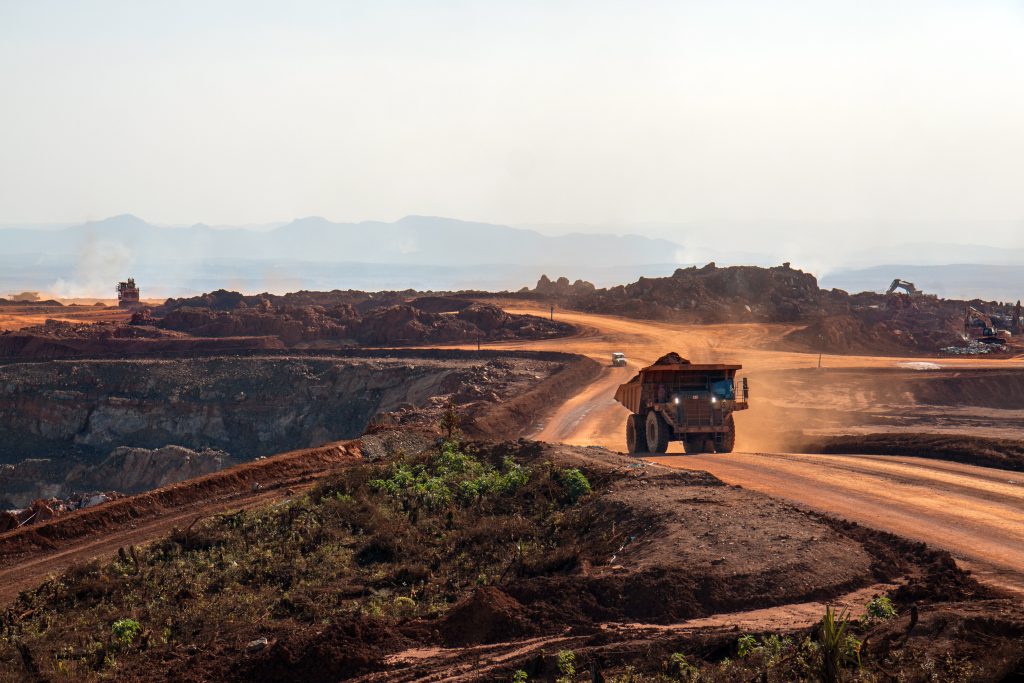
Copper mining presents some of the most demanding corrosion conditions in the entire mining sector. Acidic process chemistry, high humidity in underground operations, abrasive ore handling, and extreme surface temperatures combine to attack steel infrastructure faster than almost any other mining environment. A corrosion resistant coating built for general industrial use rarely survives long in a copper operation, and the cost of getting it wrong is measured in unplanned downtime, premature equipment replacement, and recurring maintenance budgets that never seem to shrink.
Southern Africa sits at the centre of global copper production. Zambia generates roughly 70 percent of the continent’s total copper output, the Democratic Republic of Congo holds an estimated 10 percent of the world’s copper reserves across its Copperbelt provinces, and South Africa’s Palabora operation remains the country’s only fully integrated copper mine, smelter, and refinery complex. For mining operations across this region, finding a corrosion resistant coating for mining infrastructure that can withstand acidic exposure, thermal cycling, and abrasive conditions is not optional. It is fundamental to keeping equipment in service.
TSS, the exclusive Sub-Saharan Africa distributor for CSL Silicones, supplies SI-COAT 579 CM to copper mining and processing operations across South Africa, Zambia, the DRC, Tanzania, and Namibia.
Why Copper Mining Punishes Conventional Coatings
Copper extraction and processing involve some of the most aggressive corrosion chemistry found anywhere in mining. Acidic leaching solutions used in hydrometallurgical processing, sulphuric acid produced as a by-product of smelting operations, and the inherently corrosive nature of copper-bearing ore bodies all combine to create conditions that traditional epoxy and vinyl coatings struggle to withstand for more than a few years.
Underground copper operations add a further complication. High humidity, restricted ventilation, and confined tunnel environments create persistent moisture exposure on structural steel, ore handling equipment, and support infrastructure. Conventional coatings that perform adequately in dry, well-ventilated surface environments often fail prematurely underground, where moisture has nowhere to escape and corrosion creep develops steadily beneath compromised coating films.
Open-pit copper operations face a different but equally punishing set of conditions. Intense ultraviolet exposure, daily temperature swings that can exceed 30 degrees Celsius in desert and semi-arid copper regions, and constant abrasion from ore handling and processing equipment combine to degrade rigid coating systems quickly. Once a coating cracks under thermal stress, acidic moisture penetrates the substrate and corrosion spreads beneath the surface long before visible failure appears.
What a True Corrosion Resistant Coating for Mining Needs to Do
A genuinely effective corrosion resistant coating for mining infrastructure needs to solve three problems simultaneously: chemical resistance to acidic process conditions, flexibility to survive thermal cycling without cracking, and practical application that does not require extensive plant shutdown for surface preparation.
SI-COAT 579 CM is engineered around exactly these three requirements. As a single-component, room-temperature vulcanising silicone coating, it remains elastomeric after curing, flexing with substrate movement rather than cracking under the thermal stress that destroys rigid epoxy films. This flexibility is the foundation of its long-term performance in copper mining environments, where temperature swings and chemical exposure occur simultaneously and continuously.
The coating resists sulphuric acid and other acidic process chemicals common in copper extraction and smelting operations. It adheres strongly to tightly bound rust and existing coatings, which means mining operations can often recoat ageing infrastructure using pressure washing or solvent wipe-down rather than full abrasive blasting. This single advantage alone can cut surface preparation time dramatically on large copper processing facilities, where shutting down equipment for extended sandblasting campaigns carries a real production cost.
SI-COAT 579 CM is applied in a single coat, eliminating the multi-layer build-up that traditional three-coat epoxy systems demand. For copper operations managing hundreds of structural assets, processing tanks, and pipeline networks, this reduces both labour cost and the calendar time required to complete large coating projects.
Underground and Open-Pit Applications
Underground copper mining infrastructure benefits significantly from a coating system that performs reliably in persistent moisture and restricted ventilation. SI-COAT 579 CM’s elastomeric silicone matrix resists the corrosion creep that develops beneath cracked rigid coatings in humid underground environments, protecting structural steel, ventilation ductwork, and support infrastructure through continuous moisture exposure.
Open-pit copper operations across Southern Africa’s semi-arid and desert regions face intense UV exposure and dramatic daily temperature swings. All SI-COAT 579 CM colours are tested to withstand 5,000 hours of accelerated UV weathering with minimal colour change, and the coating maintains performance across a wide temperature range without the brittleness that limits rigid coating systems in extreme thermal cycling conditions.
Processing infrastructure — acid storage tanks, leaching circuits, and structural steelwork surrounding smelting and refining operations — represents some of the highest-value corrosion protection targets in any copper operation. A single coating failure on critical process infrastructure can mean unplanned shutdown, costly emergency repair, and lost production at a scale that dwarfs the cost of proper corrosion protection in the first place.
The Regional Picture for Copper Operations
Zambia’s Copperbelt, centred around operations near Mufulira and Kalumbila, represents one of the largest concentrations of copper processing infrastructure on the African continent. The Democratic Republic of Congo’s Katanga region, home to major operations including Kamoa-Kakula and Tenke Fungurume, continues to expand processing capacity as new smelting infrastructure comes online. South Africa’s Palabora operation in Limpopo remains the country’s sole integrated copper mining, smelting, and refining complex.
Across all three of these operating environments, the corrosion challenges are fundamentally similar: acidic process chemistry, thermal cycling, and in many cases, humid underground or coastal-adjacent conditions that accelerate steel degradation. A corrosion resistant coating for mining infrastructure that has been proven in demanding international copper operations offers a relevant and tested benchmark for what Southern Africa’s copper sector requires.
TSS has documented SI-COAT 579 CM’s performance in acidic mining environments through real-world case studies, including infrastructure exposed to sulphuric acid production in desert mining conditions. This documented performance gives Southern African copper operations confidence that the coating’s chemical and thermal resistance translates directly to the conditions found in Zambia, the DRC, and South Africa’s own copper-producing regions.
Frequently Asked Questions
Is SI-COAT 579 CM suitable for underground copper mining infrastructure?
SI-COAT 579 CM is designed for above-grade atmospheric applications including structural steel, ventilation infrastructure, and support equipment in underground environments. For fully submerged or specialised subsurface applications, contact TSS for tailored recommendations.
How does SI-COAT 579 CM perform against acidic leaching solutions used in copper processing?
SI-COAT 579 CM resists sulphuric acid and other acidic process chemicals commonly encountered in copper extraction and smelting. The elastomeric silicone matrix maintains adhesion and chemical resistance under conditions that cause rigid epoxy coatings to blister and delaminate over time.
Can SI-COAT 579 CM be applied without shutting down copper processing operations completely?
In many cases, yes. Because SI-COAT 579 CM adheres well to tightly bound rust and existing coatings, surface preparation often requires only pressure washing or solvent wipe-down rather than full abrasive blasting, reducing the downtime needed for coating projects on live processing infrastructure.
Is SI-COAT 579 CM available across Zambia, the DRC, and other Southern African copper regions?
Yes. TSS is the exclusive Sub-Saharan Africa distributor for CSL Silicones and supplies SI-COAT 579 CM to mining operations across South Africa, Zambia, the Democratic Republic of Congo, Tanzania, and Namibia.
What is the expected service life of SI-COAT 579 CM in copper mining environments?
TSS has documented SI-COAT 579 CM delivering thirty or more years of protection in harsh mining environments, significantly outperforming the seven to ten year service life typical of traditional epoxy systems exposed to similar acidic and thermal conditions.
Long-Term Corrosion Protection for Southern Africa’s Copper Sector
Copper mining and processing infrastructure across Southern Africa faces corrosion conditions as demanding as any found in the global mining industry. A corrosion resistant coating for mining operations in this region needs to withstand acidic process chemistry, survive thermal cycling without cracking, and minimise the downtime required for application and maintenance.
SI-COAT 579 CM delivers on all three requirements, backed by documented performance in acidic mining environments and a service life that fundamentally changes the maintenance economics of copper infrastructure protection.
To discuss corrosion protection for your copper mining or processing operation, contact us through our contact us page or visit our FAQ page for more information. Proud distributors of CSL Silicones.