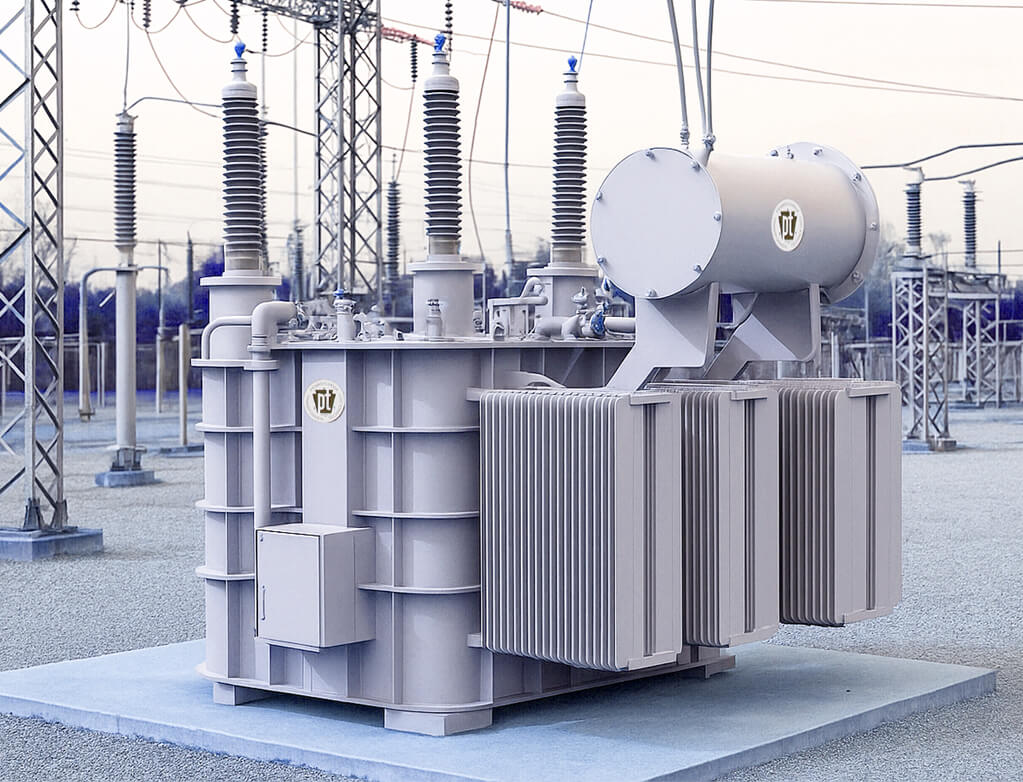
Shunt reactors keep South Africa’s transmission network stable. Consequently, they absorb excess reactive power on long, lightly loaded high-voltage lines. However, a shunt reactor insulator faces the same contamination risks as any outdoor high-voltage component. Over time, dust, coastal salt, and industrial pollution settle on the surface and form a conductive film. As a result, flashover threatens reactor bushings just as it threatens substation insulators and transmission tower hardware.
What Shunt Reactors Do on the Grid
Long transmission lines generate reactive power naturally, especially at night when demand drops. Engineers call this the Ferranti effect. As a result, voltage rises along the line and puts stress on connected equipment. Therefore, utilities install shunt reactors at key substations to absorb that excess reactive power and hold voltage within safe limits. For example, Eskom operates reactors like this across its transmission network, including projects such as the Aries SVC reactor installation in the Northern Cape. Without this reactive power compensation, transmission equipment would face constant overvoltage stress.
Why the Shunt Reactor Insulator Faces Flashover Risk
A shunt reactor connects to the network through high-voltage bushings. These bushings rely on porcelain or composite silicone rubber insulation, much like transformer and switchgear bushings. Consequently, they face identical contamination challenges to any other outdoor high-voltage asset. For instance, coastal sites carry salt spray inland on the wind, while mining operations release fine dust into the surrounding air. In addition, industrial zones add smoke, chemical residue, and particulate pollution to the mix. When these contaminants settle on a dry insulator surface, they create a conductive layer. This layer becomes active during light rain, mist, or morning dew. Engineers call this pollution flashover, and it can trip a reactor offline in seconds. As a result, a single flashover event can damage bushing hardware and force an unplanned outage across the connected substation.
How Hydrophobicity Protects Reactor Bushings
CSL Silicones formulated SI-COAT 570 HVIC as a room-temperature vulcanising silicone rubber coating for exactly this problem. The coating creates a hydrophobic surface on porcelain, glass, and composite insulators, including reactor bushings. Over time, silicone molecules within the coating migrate into contamination deposits. Engineers call this hydrophobicity transfer, and it sets silicone coatings apart from grease-based alternatives. Even after dust and pollutants settle on the surface, the coating renders that contamination hydrophobic too. As a result, rain beads and rolls off the surface instead of spreading into a continuous conductive film. Grease coatings typically last six to twelve months before technicians must reapply them. In contrast, SI-COAT 570 HVIC lasts many years under the same conditions. Therefore, it reduces both material costs and the frequency of planned maintenance outages.
The Duinefontein Proof Point
South Africa already has a real-world example of what RTV silicone chemistry can achieve on high-voltage equipment. A 132kV substation near Cape Town suffered annual contamination flashovers before 2004, including a catastrophic incident in February 1999. However, technicians coated sixty porcelain station post insulators with RTV silicone rubber in 2004. Since then, the substation has recorded zero flashovers, including through a severe coastal pollution event in February 2006. Furthermore, personnel have confirmed the coating still retains its hydrophobic properties more than eighteen years later. SI-COAT 570 HVIC is built on this same proven RTV silicone platform. As a result, engineers can trust that the chemistry holds up under harsh coastal and industrial conditions over the long term.
Application and Maintenance Advantages
Technicians apply SI-COAT 570 HVIC by airless spray, brush, or roller, typically at 300 to 500 microns dry film thickness. This flexibility matters on reactor installations, where bushing geometry and access can vary between substations. South Africa does not perform live insulator washing, unlike some other regions. Consequently, every wash requires a planned outage, and outages on reactive power equipment carry real cost for grid stability. However, a hydrophobic coating reduces how often washing becomes necessary in the first place, since light rainfall keeps the surface self-cleaning between maintenance cycles. Furthermore, the coating restores hydrophobicity to aged composite insulators that have already lost their original water-repellent properties. Therefore, technicians can extend asset life without a full bushing replacement.
Frequently Asked Questions
Can SI-COAT 570 HVIC be applied to reactor bushings without removing them from service?
Live-line application depends on site-specific safety procedures and outage planning. Speak to TSS directly to confirm the correct approach for your installation before scheduling any work.
Does the coating work on both porcelain and composite reactor bushings?
Yes. SI-COAT 570 HVIC suits porcelain, glass, and composite insulators, including the bushing types commonly used on shunt reactors, transformers, and switchgear.
How often does a coated shunt reactor insulator need maintenance?
Coated surfaces require far less frequent attention than grease-based alternatives. Many installations run for several years before recoating becomes necessary, compared with grease reapplication every six to twelve months.
Why does pollution flashover risk increase in coastal and mining environments?
Salt spray, fine dust, and industrial particulate settle faster and more heavily in these environments. This buildup shortens the time between cleaning cycles and increases flashover risk on uncoated insulators.
To discuss shunt reactor insulator protection for your substation, visit /contact-us/ or browse common technical questions at /faq/. You can also explore the full range of high voltage equipment care solutions at /category/high-voltage-equipment-care/.
Proud distributors of CSL Silicones