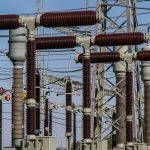
HIGH VOLTAGE INSULATOR COATINGS

SI-COAT 570 HVIC High Voltage Insulator Coating for Transmission and Distribution Infrastructure
SI-COAT 570 HVIC is a room temperature vulcanising RTV silicone high voltage insulator coating manufactured by CSL Silicones and distributed exclusively across Sub-Saharan Africa by Technical Solutions Supplies. It prevents pollution induced flashover on high voltage insulators, transformer bushings, switchgear, busbars and substation equipment by maintaining a permanently hydrophobic surface that stops moisture from forming a conductive film over contamination deposits.
One application before energisation or during a planned maintenance outage delivers more than 15 years of maintenance free flashover protection in the most contaminated environments across Sub-Saharan Africa.
The Flashover Problem That Costs Utilities Millions Every Year
Pollution induced flashover is one of the most disruptive and costly failure modes in transmission and distribution infrastructure. The mechanism follows a predictable sequence that utility engineers across Southern Africa recognise well.
Contamination accumulates on insulator surfaces continuously. Coastal salt aerosol from KwaZulu-Natal and the Western Cape, industrial emissions from the Highveld power corridor, dust from mining operations and arid terrain in the Northern Cape and Namibia all deposit on porcelain, glass and composite insulator surfaces. In dry conditions this contamination presents no immediate risk. When moisture from rain, fog, dew or condensation contacts the contaminated surface, it dissolves soluble salts and chemicals to form a conductive electrolytic film across the insulator.
Leakage current flows across this film. The current generates heat, dries sections of the surface unevenly and creates dry band arcing. That arcing progressively tracks and erodes the insulator surface until it culminates in a full flashover, tripping the line, damaging equipment and in severe cases destroying insulators, transformers and associated plant.
The direct cost of a flashover event on a major substation runs from tens of thousands to tens of millions of rand depending on the equipment affected. The indirect costs in unplanned generation disconnection, emergency maintenance mobilisation and supply interruption penalties extend the total impact significantly further.
SI-COAT 570 HVIC stops this failure mechanism entirely by making the insulator surface permanently hydrophobic, preventing moisture from forming the conductive film that activates contamination into leakage current pathways.
Key Performance Properties
Permanent hydrophobicity is the fundamental performance property of SI-COAT 570 HVIC. The cured silicone film causes water to bead and run off the insulator surface rather than spreading into a continuous conductive film. Moisture cannot activate the contamination layer because it cannot spread uniformly across the hydrophobic surface. Leakage current does not develop. Dry band arcing does not occur. Flashover cannot follow.
Hydrophobicity transfer to contamination is the property that distinguishes RTV silicone coating from every other insulator protection method. Low molecular weight silicone components migrate from the cured film into contamination deposits that accumulate on the coated surface over time, making the contamination layer itself hydrophobic. The coating continues to prevent flashover as pollution builds rather than being overwhelmed by accumulating contamination.
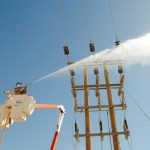
Live-line application capability means SI-COAT 570 HVIC applies to energised high voltage equipment by trained live-line applicators without planned outages. This eliminates the outage scheduling constraints that make conventional insulator maintenance programmes difficult to execute on loaded networks.
Service life exceeds 15 years under field conditions in contaminated environments including coastal, industrial, desert and mining environments. Field performance data from utilities in South Africa, Namibia and across Sub-Saharan Africa confirm 15 year plus performance across the full range of contamination environments encountered on the continent.
Standards compliance covers IEEE 1523, the IEEE Guide for the Application, Maintenance and Evaluation of RTV Silicone Rubber Coatings for Outdoor Ceramic Insulators, and the relevant IEC standards for RTV coatings on outdoor high voltage insulators.
Where SI-COAT 570 HVIC Is Used
Transmission substations on South Africa’s national grid and the SAPP regional interconnection face contamination from coastal salt aerosol, industrial pollution and dust depending on their location. SI-COAT 570 HVIC applied before energisation on new substation builds, or during planned outages on existing infrastructure, eliminates flashover risk for 15 or more years.
Renewable energy substations on wind and solar farms in the Northern Cape, Western Cape and Eastern Cape operate in high dust and coastal salt environments. SI-COAT 570 HVIC applied from commissioning protects the generation and transmission investment for the full expected service life of the facility.
Distribution infrastructure in coastal towns, industrial zones and mining regions across South Africa, Namibia, Zambia and the broader Sub-Saharan network faces contamination that drives flashover frequency on unprotected distribution insulators. SI-COAT 570 HVIC provides cost effective protection across the full distribution voltage range from 11kV through to 765kV.
Transformer bushings are among the highest consequence insulation components in a substation. A bushing flashover can result in transformer fault, fire or destruction. SI-COAT 570 HVIC applied to transformer bushings prevents contamination induced flashover on the most expensive and difficult to replace equipment in the substation.
Switchgear and busbars in outdoor and indoor substation environments face contamination penetration through ventilation and cable entry points. SI-COAT 570 HVIC applied to insulated surfaces prevents moisture activation of internal contamination deposits and eliminates tracking and arcing failure.
Application Summary
Substrate: porcelain, toughened glass and composite high voltage insulators, transformer bushings, switchgear insulation and busbars. Application timing: pre-energisation on new builds, planned outage or live-line on existing in-service equipment. Application method: brush or spray by trained applicators. System: single component RTV silicone, no mixing required. Cure: ambient temperature moisture cure, tack free within 2 hours, full cure within 24 hours. Hydrophobicity: permanent, transfers to contamination layer over time. Live-line capability: yes, by trained live-line applicators using approved work methods. Voltage range: 11kV distribution through to 765kV extra high voltage transmission. Service life: 15 or more years under Sub-Saharan African field conditions. Standards: IEEE 1523 and relevant IEC standards for RTV insulator coatings.
SI-COAT 570 HVIC vs Conventional Insulator Maintenance Methods
Our feature on RTV silicone coating technology was published in ESI Africa’s 2026 Powering Mines & Industry Volume 6, exploring how utilities across Sub-Saharan Africa are reducing flashover incidents and maintenance burdens through protective coating solutions.
Silicone grease requires reapplication every 6 to 12 months in contaminated environments, absorbs contamination into the grease layer reducing effectiveness over time, and slumps and migrates in hot conditions.
Live line washing removes contamination temporarily but does not change the hydrophilic surface property of the insulator. Contamination reaccumulates immediately, the process carries inherent flashover risk during washing, and it generates an ongoing operational cost with no end point.
Composite insulator replacement provides equivalent hydrophobicity on new infrastructure but requires full insulator replacement including line outages, mechanical handling and structural work at a cost significantly higher than coating the existing population.
SI-COAT 570 HVIC delivers a single application with permanent hydrophobicity, hydrophobicity transfer to contamination deposits, 15 year plus service life, live-line application without outages and a fraction of the cost of insulator replacement.
For full technical specifications and application guidelines, download the Technical Data Sheet below or contact Technical Solutions Supplies directly.
Phone: 031 002 7376 Email: sales@tssupplies.co.za
Downloads & Support:
Want to get in contact? Click Here
Related Insulator Coatings Articles:
- High Voltage Insulator Coating South Africa: Everything You Need to Know About SI-COAT 570 HVIC
 High voltage insulator coating is one of the most critical and most overlooked maintenance interventions in South Africa’s electrical infrastructure. Flashover events on contaminated insulators trip substations, shut down transmission lines, and plunge communities and industries into unplanned outages — often with no warning and at enormous cost. Yet the solution has been available for decades, proven at major South African substations, and grid operators, mining operations, and renewable energy developers across the continent are now applying it as they take insulator protection seriously for the first time. This article answers every key question about high voltage insulator coating in… Read more: High Voltage Insulator Coating South Africa: Everything You Need to Know About SI-COAT 570 HVIC
 - Insulator Coating for Mines: Preventing Flashover on Africa’s Mine-Owned Power InfrastructureMining operations across Africa are no longer simply consumers of grid electricity. Persistent load shedding, ageing national grids, and the sheer scale of power demand at modern mining operations have pushed the sector toward generating and distributing its own electricity. Mines are building private substations, transmission infrastructure, and renewable generation facilities at a scale that rivals national utility projects, with single mining-sector substations now designed to handle gigawatt-scale capacity. This shift brings a new operational reality. Mines that once relied on a national utility to manage flashover risk, insulator maintenance, and contamination control now carry that responsibility themselves. An insulator… Read more: Insulator Coating for Mines: Preventing Flashover on Africa’s Mine-Owned Power Infrastructure
- RTV Insulator Coating Southern Africa: 18 Years of Proof at DuinefonteinIn 2004, a 132kV substation situated 600 metres from the South African coastline received a single application of RTV silicone insulator coating. Before that application, the substation experienced flashovers on an annual basis. In February 1999, it had survived a catastrophic Type B instantaneous pollution event — the kind of event that takes substations offline, damages equipment, and costs utilities far more than any planned maintenance programme. After the 2004 coating application, the substation recorded zero flashovers over the next 18 years. That included surviving another catastrophic coastal pollution event in February 2006. Duinefontein is not a laboratory result. It… Read more: RTV Insulator Coating Southern Africa: 18 Years of Proof at Duinefontein
- South Africa’s New Transmission Grid: Why Every New Substation Needs High Voltage Insulator Coating From Day OneHigh Voltage Insulator Coating South Africa: Protecting the Transmission Grid from Day One South Africa is building transmission infrastructure at a scale not seen in a generation. Insulator coating decisions made on new substations today will determine whether that infrastructure performs reliably for decades or begins failing within years. Eskom has approved R26 billion in capital investment for transmission infrastructure, with 47 projects in development that will unlock 37 000MW of grid connection capacity between 2025 and 2033. New substations are rising across the Northern Cape, Western Cape, Eastern Cape and beyond. Every project engineer and asset owner must answer… Read more: South Africa’s New Transmission Grid: Why Every New Substation Needs High Voltage Insulator Coating From Day One
- Insulator Washing: Why Scheduled Maintenance Alone Is Not Enough to Prevent FlashoverSouth Africa recently passed 200 consecutive days without load shedding. Eskom credited disciplined planned maintenance as the primary driver of that milestone. Scheduled insulator washing is a core part of that maintenance discipline. In KwaZulu-Natal and Gauteng, utilities wash insulators during planned winter outages to remove contamination before the wet season. However, insulator washing alone does not change the surface behaviour of the insulator. Once contamination returns, the electrical risk returns with it. What Insulator Washing Actually Achieves Insulator washing removes accumulated contamination from porcelain, glass and composite insulator surfaces during a planned maintenance outage. In South Africa, this typically… Read more: Insulator Washing: Why Scheduled Maintenance Alone Is Not Enough to Prevent Flashover
- Transmission Tower Corrosion: Why Africa’s Power Grid Is One Rust Patch Away from CollapseTransmission tower corrosion is one of the most underestimated threats to electricity infrastructure across Sub-Saharan Africa. While load shedding dominates headlines, a quieter crisis unfolds on steel lattice towers across the continent. Specifically, it develops over years, gives ample warning, and remains almost entirely preventable. The events in Nelson Mandela Bay between 2024 and 2026 prove exactly what happens when that warning goes unheeded. What Is Transmission Tower Corrosion and Why Does It Matter? Transmission tower corrosion is the progressive electrochemical degradation of structural steel in electricity pylons and lattice towers. Steel degrades because moisture, oxygen and atmospheric contaminants attack… Read more: Transmission Tower Corrosion: Why Africa’s Power Grid Is One Rust Patch Away from Collapse
- High-Voltage Silicone Coating for Power Plants – Stop Dust & FlashoverThe Challenge Inside Power Plants Coal-fired and thermal power stations are harsh environments for electrical equipment. Insulators and bushings are constantly exposed to dust, fly ash, coal soot, steam, and chemical contaminants. These pollutants settle on surfaces, creating conductive paths. Add moisture or condensation, and you have the perfect conditions for tracking, dry-band arcing, and flashover—leading to outages, costly repairs, and safety risks. Why Silicone Coating Is the Solution SI-COAT 570 HVIC is engineered to protect high-voltage components in the toughest conditions. Unlike traditional cleaning cycles or grease applications, silicone coatings provide long-term hydrophobic protection and resist contamination. Key Technical… Read more: High-Voltage Silicone Coating for Power Plants – Stop Dust & Flashover
- Hydrophobicity in High Voltage Insulator Coatings.Hydrophobicity in High‑Voltage Insulator Coatings: Why Si‑Coat 570 HVIC Matters Moisture and surface contamination are persistent risk factors for outdoor insulation. When a continuous water film forms on an insulator, it can create conductive paths, elevate leakage current, and increase the likelihood of surface tracking and flashover—especially under polluted or coastal conditions. A hydrophobic, silicone‑based high‑voltage insulator coating (HVIC) changes that surface physics: water beads and rolls off instead of wetting, and contaminants are far less able to dissolve into conductive electrolyte layers. What engineers mean by “hydrophobicity” Hydrophobicity quantifies water repellency. At the surface, the contact angle between a… Read more: Hydrophobicity in High Voltage Insulator Coatings.
- Silicone Insulator Coating Flashover Prevention – Why It WorksSilicone Insulator Coating Flashover Prevention – Why It Works Power utilities across Southern Africa face a growing challenge: silicone insulator coating flashover prevention is becoming essential to stop outages caused by contamination, moisture, and harsh environmental conditions. In coastal regions, salt spray accelerates leakage currents. In desert zones like Namibia, abrasive sand and dust create conductive paths. Traditional methods like washing or applying silicone grease offer temporary relief—but they require frequent maintenance and downtime, increasing operational costs. Why Silicone Insulator Coating Flashover Prevention Matters Flashovers can lead to outages, equipment damage, and safety risks. Silicone insulator coatings provide a long-term… Read more: Silicone Insulator Coating Flashover Prevention – Why It Works
- Infrared Electrical Imaging: Detecting Risks Before They Become Failures – How SI-COAT 570 HVIC Enhances ReliabilityThe Role of Infrared Electrical Imaging Infrared electrical imaging, or thermography, is a critical inspection tool for utilities and industrial operators. It uses thermal cameras to detect heat generated by electrical resistance. This helps spot hot spots on high-voltage equipment before they cause failures. The method requires no contact. As a result, technicians can scan live, energised equipment without shutting down a line or substation. This makes infrared electrical imaging one of the few inspection methods utilities can run on a routine schedule. It does not disrupt supply. Engineers commonly use temperature difference, or Delta T, to judge how urgent… Read more: Infrared Electrical Imaging: Detecting Risks Before They Become Failures – How SI-COAT 570 HVIC Enhances Reliability
- Protecting High-Voltage Equipment in Renewable Energy Projects with SI-COAT 570HSRenewable Energy Growth in South Africa South Africa is rapidly expanding its renewable energy infrastructure, including solar farms and wind power installations. However, these projects face unique challenges such as high-voltage equipment exposure to harsh weather, pollution, and coastal salt spray. Therefore, reliable insulation protection is critical for long-term performance. Why SI-COAT 570HS is Essential SI-COAT 570HS is a high-solids silicone insulator coating engineered for extreme environments. It provides superior electrical insulation, excellent hydrophobicity, and outstanding arc resistance, ensuring that power lines and substation equipment remain operational even under severe conditions. In addition, its UV stability and weatherproof properties make… Read more: Protecting High-Voltage Equipment in Renewable Energy Projects with SI-COAT 570HS
- Protect High Voltage Infrastructure with SI-COAT 570HSHigh-Voltage Insulating Coating for Arcing and Flashover Protection SI-COAT 570HS is a high-voltage insulating silicone coating designed to protect electrical infrastructure from arcing, tracking, and flashover. In high-voltage environments, contaminants like dust, moisture, and pollution can create conductive paths across insulators, leading to dangerous electrical discharge. This phenomenon — known as surface tracking — can escalate into flashover, causing equipment failure, fire risk, and costly downtime. 570HS forms a hydrophobic, non-conductive barrier that resists moisture and surface contamination. Its arc-resistant properties help prevent electrical discharge even under extreme conditions, making it ideal for substations, switchgear, transformers, and other exposed components.… Read more: Protect High Voltage Infrastructure with SI-COAT 570HS