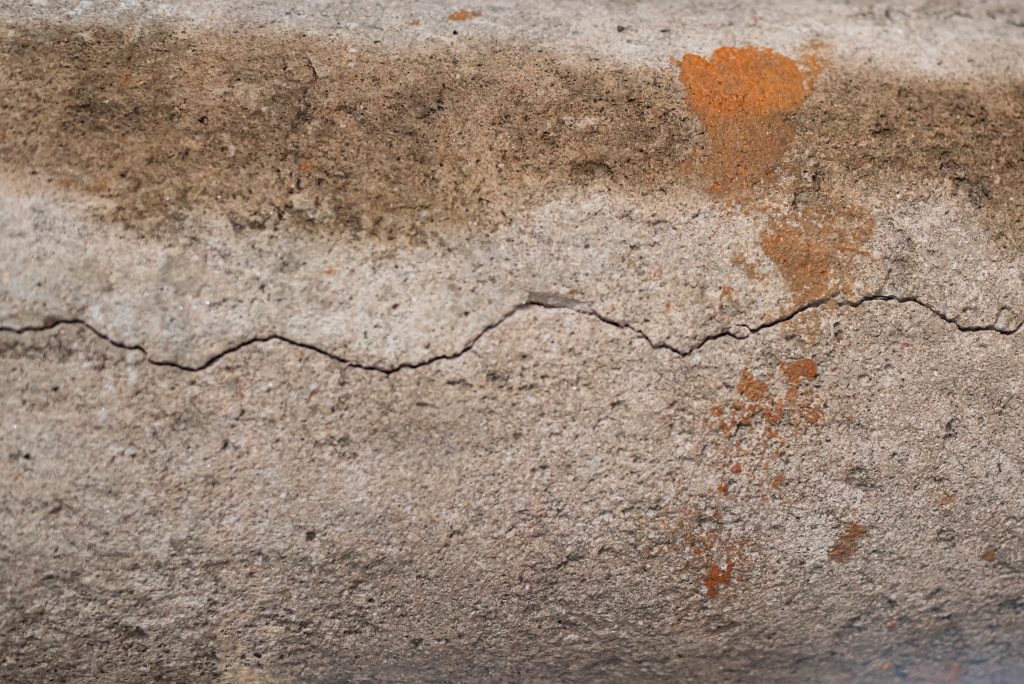
South Africa has committed R1 trillion to public infrastructure over the next three years. This is the largest allocation of its kind in the country’s history. Roads, bridges, water systems, ports and public buildings are all in scope. Most of this investment will be built in concrete. Specifically, concrete joint movement is where much of it will quietly fail, long before any structural damage becomes visible, if the wrong materials go into the joints.
What Is Concrete Joint Movement and Why Does It Matter?
Concrete joint movement is the continuous expansion, contraction, compression and extension that occurs at deliberate gaps in concrete structures. It happens throughout the service life of every concrete structure. Concrete is widely perceived as rigid and immovable. In reality, however, concrete structures are in constant motion from the moment they are completed.
Thermal expansion and contraction drive movement daily and seasonally. Dynamic loading from vehicles, machinery and port equipment adds further stress. Additionally, vibration from traffic and plant operation, long-term settlement and structural creep all contribute to ongoing movement at every joint. This movement is rarely linear or predictable. Joints open, close, compress and extend repeatedly over many years, under varying loads and environmental conditions.
Consequently, joints are not incidental details in concrete construction. They are deliberately engineered interfaces that control where movement occurs and prevent random cracking in the structure. However, a joint that is poorly sealed becomes the structure’s weakest point rather than its strongest.
Why Concrete Joints Exist
Expansion joints, contraction joints and construction joints are all introduced into concrete structures for the same reason: to accommodate movement and control cracking. Without joints, thermal and mechanical stresses build up until they release as uncontrolled cracks. These cracks typically appear in the worst possible locations. Consequently, the joint becomes the controlled point of weakness rather than an uncontrolled one.
When joints function correctly, movement occurs at the joint rather than in the slab or structural member. The concrete remains intact and the joint absorbs the stress. However, the joint itself then becomes a critical interface. It must perform reliably under the same forces it was designed to contain. If the sealant in that joint fails, the protection the joint was designed to provide disappears entirely.
Why Rigid Sealants Fail in Moving Joints
The most common cause of joint sealant failure is a mismatch between sealant movement capacity and actual joint movement. Rigid or low-movement sealants cannot follow ongoing joint movement. As the joint cycles open and closed, a rigid sealant tears internally, debonds from the concrete substrate, or cracks and hardens over time. In each case, the result is the same: the joint fails.
Furthermore, once a sealant fails, the joint opens to water ingress, chemical attack and accelerated deterioration of surrounding concrete. Moisture entering a failed joint causes corrosion of reinforcement, freeze-thaw damage in cold environments, and accelerated concrete failure around joint edges. In a road pavement or bridge deck, this progression from failed seal to structural remediation happens faster than most asset managers anticipate.
Specifically, resealing a joint at the right time costs a fraction of repairing the concrete damage that follows when sealing is deferred or done incorrectly. For South Africa’s R1 trillion infrastructure programme, this is not a minor technical point. It directly determines whether the investment delivers its intended service life or requires expensive early remediation.
Understanding Joint Movement in Sub-Saharan African Conditions
South Africa and the broader Sub-Saharan African region present environmental conditions that intensify joint movement beyond what temperate climate standards anticipate.
Thermal cycling is more extreme here than in the European and North American environments where many sealant specifications originate. In fact, daily temperature ranges on exposed concrete surfaces in South Africa can exceed 40 degrees Celsius in summer. In Zambia, the DRC and Tanzania, high humidity combined with intense UV radiation accelerates the degradation of sealants not engineered for these conditions.
Industrial environments add chemical complexity. Mining operations, petrochemical facilities and coastal industrial sites expose joint sealants to sulphuric acid, chlorides, hydrocarbons and other aggressive contaminants. Conventional sealants that perform adequately in mild commercial environments therefore fail prematurely under these conditions. For more on chemical attack in Sub-Saharan industrial environments, read our article on corrosion protection in Copperbelt mining.
The Role of Flexible Joint Sealants in Concrete Infrastructure
A joint sealant must move with the joint without losing adhesion or elasticity. Flexibility and movement accommodation are therefore essential to long-term joint performance. They are not optional performance characteristics. In fact, without them, a sealant will fail regardless of other properties.
High-performance flexible sealants maintain their elasticity through repeated movement cycles. They stretch as the joint opens and recover as the joint closes. This maintains a continuous, watertight seal without introducing stress into the surrounding concrete. They also maintain adhesion under the shear forces generated by differential movement between adjacent slabs.
Elasticity, adhesion and durability under cyclic movement separate a high-performance joint sealant from a conventional product. These properties determine whether a joint remains watertight for decades or requires remediation within a few years of construction.
CSL 316: Flexible Silicone Joint Sealant for Concrete Infrastructure
CSL 316 is a self-levelling silicone joint sealant developed by CSL Silicones. Technical Solutions Supplies distributes it exclusively across Sub-Saharan Africa. CSL specifically engineered it to handle the continuous concrete joint movement that characterises infrastructure in service.
Its elasticity allows it to stretch and recover as joints cycle through thermal and mechanical movement. It maintains adhesion to the concrete substrate throughout and delivers a durable, watertight seal without introducing stress into the surrounding concrete.
As a silicone sealant, CSL 316 carries inherent UV stability that organic sealants cannot match. It does not harden, crack or lose elasticity under prolonged UV exposure or temperature cycling. This matters particularly in Sub-Saharan Africa, where UV radiation levels significantly exceed those used as the basis for temperate climate product specifications. Conventional polyurethane and acrylic sealants that perform acceptably in European conditions frequently harden and fail prematurely in South African or tropical African conditions.
CSL 316 also resists the chemical contaminants encountered in industrial, coastal and mining environments across the region. Furthermore, its self-levelling formulation suits horizontal joints in road pavements, aprons, warehouse floors and bridge decks. These are applications where consistent joint fill and a flush finished surface are required. For full technical specifications, visit the CSL 316 FAQ. Additional guidance on silicone joint sealant chemistry and performance is available from CSL Silicones.
Designing for Reality: Joints Are Dynamic, Not Static
South Africa’s R1 trillion infrastructure commitment delivers its intended value only if the materials used perform over the full design life of each structure. Concrete does not remain static after construction. Joints are dynamic, and the materials used to seal them must be equally dynamic.
Selecting a joint sealant based purely on initial cost is a false economy. Premature sealant failure leads to water ingress, reinforcement corrosion and concrete deterioration. Remediation costs multiples of the original sealant budget. For SANRAL roads, bridges, water infrastructure and public buildings, the sealant specification decision is therefore a long-term asset management decision — not a procurement line item.
Ultimately, the difference between a concrete structure that performs for 50 years and one that requires significant remediation within a decade often comes down to how well the joints were sealed at the start. Concrete joint movement will not stop. The materials chosen to accommodate it determine whether the investment holds.
Frequently Asked Questions: Concrete Joint Movement
What is concrete joint movement?
Concrete joint movement is the ongoing expansion, contraction, compression and extension that occurs at deliberate gaps in concrete structures throughout their service life. It results from thermal cycling, dynamic loading from vehicles and machinery, vibration, settlement and structural creep. Joints accommodate this movement and prevent uncontrolled cracking in the structure.
Why do rigid sealants fail in concrete joints?
Rigid or low-movement sealants cannot follow the ongoing movement of the joint as it opens and closes. As a result, they tear internally, debond from the substrate, or crack and harden over time. Once the sealant fails, the joint becomes vulnerable to water ingress, chemical attack and accelerated deterioration of adjacent concrete.
What movement capacity does a joint sealant need?
The required movement capacity depends on joint width, temperature range, loading conditions and joint spacing. A high-performance flexible sealant like CSL 316 accommodates the full range of movement in Sub-Saharan African conditions. This includes the extreme thermal cycling caused by large daily temperature ranges and high UV radiation levels.
Why is concrete joint movement more severe in Sub-Saharan Africa?
Daily temperature ranges on exposed concrete surfaces can exceed 40 degrees Celsius in summer. This is significantly more extreme than the conditions assumed in many standard sealant specifications, which originate from temperate European and North American environments. Additionally, UV radiation levels are higher, industrial chemical exposure is more aggressive, and humidity in tropical regions adds further stress to sealant materials.
What is the cost of joint sealant failure in concrete infrastructure?
The direct cost of resealing a failed joint is significantly higher than correct initial installation. Remediation requires removing the failed sealant, preparing the substrate and resealing. The indirect cost is substantially larger. Specifically, water ingress through a failed joint leads to reinforcement corrosion, concrete deterioration and, ultimately, structural repair or replacement. In road pavements and bridge decks, this progression can move from failed seal to structural remediation within a few years.
What makes CSL 316 suitable for concrete joint movement in Sub-Saharan Africa?
CSL 316 is a self-levelling silicone joint sealant with permanent UV stability, flexibility across a wide temperature range, and resistance to chemical contaminants in industrial, coastal and mining environments. Unlike polyurethane and acrylic sealants that harden under Sub-Saharan UV and temperature conditions, CSL 316 maintains its movement accommodation and adhesion throughout its service life.
Technical Solutions Supplies is the exclusive Sub-Saharan Africa distributor for CSL Silicones. For more information on CSL 316 and its application in concrete joint sealing, contact the TSS team directly.