
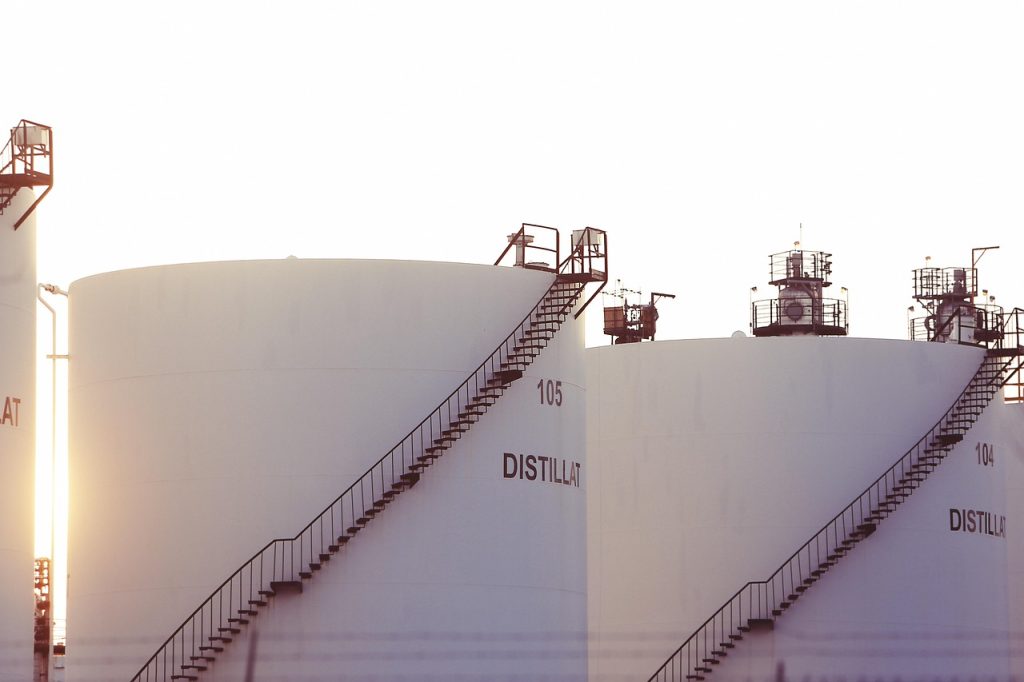
Choosing a silicone coating for petroleum tanks in Southern Africa comes down to one question: how do you protect tank shells, roofs and pipework that cannot come out of service? Coastal tank farms in Durban, Richards Bay and Cape Town sit in salt air, humidity and strong sun. Inland depots face UV and big temperature swings. On top of that, fuel and oil drips land on the steel during normal operations.
This article looks at how Si-COAT 579 CM from CSL Silicones protects the outside of petroleum tanks and terminal pipework, what the evidence says, and where it should not be used.
Why Petroleum Tank Exteriors Corrode
Tank exteriors corrode for a few simple reasons. Salt air settles on the shell and roof. Dew forms overnight and dries by day, which concentrates salts on the surface. In addition, heat cycles flex the steel daily, and floating roofs, wind girders and welds trap moisture.
Once corrosion takes hold, the cost goes well beyond paint. It means downtime, inspection findings and, in the worst case, a loss of containment. So for terminal operators, prevention costs far less than repair.
Where Conventional Tank Coatings Fall Short
Most tank farms still use three coat epoxy and polyurethane systems. They work well on new, blasted steel. However, on tanks in service they bring problems. Abrasive blasting needs containment, hot work permits and long shutdowns. The rigid film also cracks with heat cycles, and once moisture gets under it, rust spreads out of sight.
For example, at Hellenic Petroleum’s tank farm near Athens, a three coat epoxy system showed pinhole rusting within six months of application. Neighbouring towns also objected to the blasting dust each time the tanks were recoated.
Silicone Coating for Petroleum Tanks: What Si-COAT 579 CM Does
Si-COAT 579 CM is a single component, moisture cure RTV silicone coating. It goes onto steel cleaned to SSPC SP2 hand tool cleaning, SSPC SP3 power tool cleaning or SSPC SP12 water jetting to WJ-4, so no abrasive blasting is needed. After a stripe coat on edges, welds and bolts, it goes on as one coat of about 0.2 to 0.5 mm once dry (8 to 20 mil).
It also handles the exposure tank farms see. For example, it passed 3,000 hours of salt fog, and the 36 month Florida Fence Test on the Atlantic coast with no rust creep. In addition, it showed no degradation after 5,000 hours of accelerated UV weathering. And with 180% elongation, it moves with the shell through heat cycles.
On fuel and oil, the TDS rates it for engine oils, mineral and synthetic oils and diesel over 14 days. In a separate CSL test, a coated panel spent five months fully immersed in diesel and absorbed only 2.77% of its weight, with no damage or delamination. That supports drips, spills and splashes on the outside of a tank. However, it does not make it a tank lining.
Proven on Tank Farms
Hellenic Petroleum, Athens. The tank farm sits about 300 m from the sea. In 2004, tank P-701C, 43 m across and 23 m high, received one coat of Si-COAT 579 at about 0.35 mm dry. Preparation was a high pressure water wash at 800 bar, with no blasting. Six people finished the 6,000 m² job in 12 days. On the previous conventional system, the same work took 16 people 42 days. That is about 89% fewer labour hours, and with no blasting, no hot work precautions were needed either. Read our Hellenic Petroleum case study.
Florida Power and Light, West Palm Beach. In 2002, the utility coated an 85 m diameter heated fuel oil storage tank at its fuel terminal. The crew pressure washed the tank and abrasive blasted only the deep pitting, then applied one coat by airless spray. The job took three weeks, against at least two months for a conventional system, at about 50% of the cost.
Both owners chose Si-COAT 579 after their conventional systems failed early in salty coastal air.
Close to Home: Process Piping at a Durban Terminal
In September 2025, Tubetech coated about 100 m of stainless steel process piping at a bulk liquid terminal in Durban. The pipes run under rooftop gantries in an ethyl acrylate area, and pitting had progressed to pinhole leaks. An epoxy system had already failed there, blistering and lifting as the chemical attacked it from underneath.
After mechanical cleaning, Tubetech applied two coats of Si-COAT 579 CM by roller, as a belt and braces approach on stainless steel in an aggressive chemical area. Bolts stayed uncoated so maintenance crews can still torque them. At the February 2026 inspection, the coating showed no delamination, cracking, blistering or underfilm corrosion.
Applying a Silicone Coating to Petroleum Tanks in Service
Because there is no blasting, crews can often coat tanks while they stay in service. A typical sequence looks like this:
- Clean: first remove oil, grease, dirt and salts, then loose rust, loose scale and flaking paint. Old coating that stays must pass the ASTM D3359 tape test at 4A or 4B.
- Stripe coat: about 0.13 mm dry (5 mil) on welds, edges, bolts, wind girders and nozzles.
- Full coat: about 0.2 to 0.5 mm dry, by airless spray on shells and roofs, and by brush or roller on details.
- Conditions: surface between 5°C and 60°C and at least 3°C above the dew point.
- Cure: tack free in 60 minutes, dry in 4 to 6 hours, full properties in 7 days.
As always on a live tank farm, follow the site’s permit and gas free rules.
Coastal Tank Farms and the CM System
Most South African fuel terminals sit on the coast. For the worst exposures, CSL pairs Si-COAT 579 CM with CSL 979 primer. That system passed ISO 12944-6:2018 testing for C5 High. Note, though, that the primer usually needs blasting and dry conditions, 25°C to 40°C and humidity below 75%, so it suits planned shutdowns.
What Silicone Coating on Petroleum Tanks Is Not For
Si-COAT 579 CM protects the outside of tanks and pipework. It is not a tank lining, and CSL did not design it for continuous contact with product, immersion or pooling. So do not use it inside tanks, on floors in contact with product, or in bunds that hold spills. For those, specify a lining system rated for the stored product.
Silicone Coating for Petroleum Tanks FAQ
Is Si-COAT 579 CM suitable for petroleum tanks?
Yes, for tank exteriors, roofs, pipework and structures. It handles salt air, UV, heat cycles and fuel or oil drips. Hellenic Petroleum and Florida Power and Light both used it on large storage tanks.
Can a silicone coating line the inside of petroleum tanks?
Not Si-COAT 579 CM. It is for exterior atmospheric exposure only. Tank linings need a system rated for continuous contact with the stored product.
Does it resist fuel and oil spills?
Yes, for drips and splashes. The TDS lists resistance to engine oils, mineral and synthetic oils and diesel over 14 days. In a five month CSL diesel immersion test, the coating also showed no damage or delamination. Still, clean spills off as part of normal housekeeping.
How long does it last?
On process piping CSL coated at a Florida power plant in 2003, an inspection some 20 years later found the coating thickness unchanged. Of course, real life depends on preparation, thickness and exposure.
Does it need a primer?
Not for standard maintenance work. Si-COAT 579 CM primes itself on most common substrates, after a field adhesion test. For C5 coastal exposure, however, CSL pairs it with CSL 979 primer.
For more, see our guides to surface tolerant coating, anti-corrosion coating for structural steel and corrosion protection methods, or read the Si-COAT 579 CM FAQ.
Technical Solution Supplies distributes CSL Silicones products across Southern Africa, including the DRC and the Seychelles. Contact us for technical specifications and supply.
Proud exclusive distributor of CSL Silicones in Southern Africa.