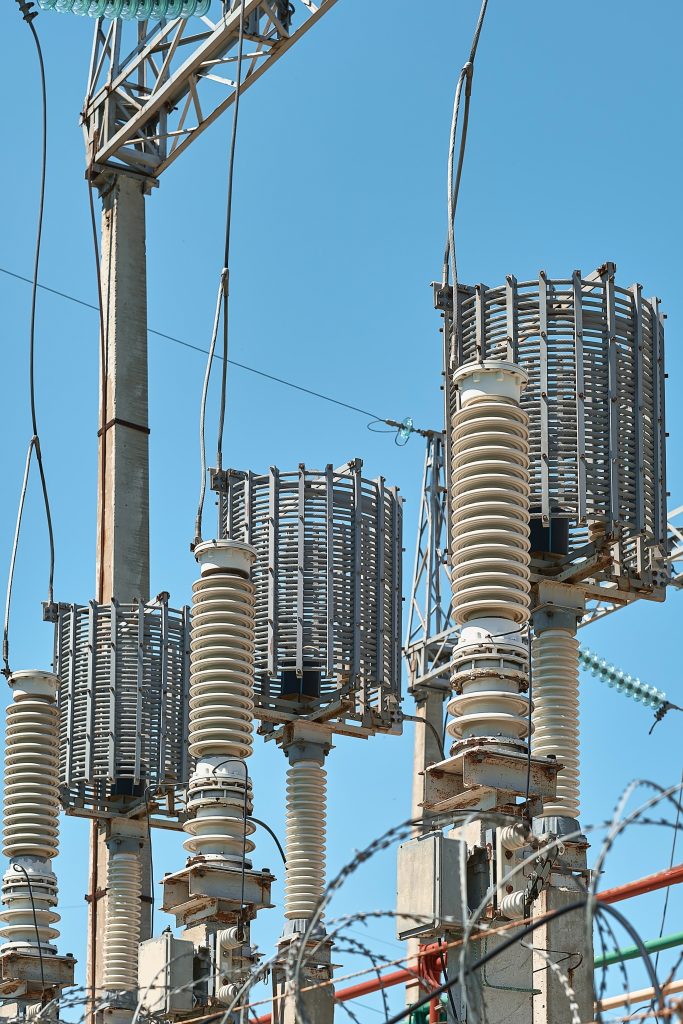
High voltage insulator coating is one of the most critical and most overlooked maintenance interventions in South Africa’s electrical infrastructure. Flashover events on contaminated insulators trip substations, shut down transmission lines, and plunge communities and industries into unplanned outages — often with no warning and at enormous cost. Yet the solution has been available for decades, proven at major South African substations, and grid operators, mining operations, and renewable energy developers across the continent are now applying it as they take insulator protection seriously for the first time.
This article answers every key question about high voltage insulator coating in South Africa — what it is, how it works, when to use it, and why SI-COAT 570 HVIC is the product that South Africa’s electrical infrastructure depends on.
TSS is the exclusive Sub-Saharan Africa distributor for CSL Silicones, supplying SI-COAT 570 HVIC to utilities, mining operations, transmission owners, and renewable energy developers across the region.
What Is High Voltage Insulator Coating?
High voltage insulator coating is a room-temperature vulcanising (RTV) silicone compound that technicians apply to porcelain, glass, or composite insulators on transmission lines, substations, switchgear, and distribution infrastructure. It forms a hydrophobic — water-repelling — surface layer that prevents contamination from forming the conductive film that triggers flashover.
Without protective coating, insulators accumulate dust, salt, industrial pollutants, and biological material during dry periods. When moisture arrives — through fog, light rain, high humidity, or condensation — these contaminants dissolve and form a conductive layer across the insulator surface. Leakage current flows across that layer, heating it in patches and forming dry bands. Arcs bridge those dry bands, and if conditions are severe enough, the arc extends across the full insulator string and trips the circuit. This is a contamination flashover, and it is the primary failure mode for high voltage insulators in South Africa’s polluted coastal, industrial, and arid environments.
SI-COAT 570 HVIC prevents this mechanism from occurring. Its hydrophobic surface stops contamination from forming a continuous conductive film, and light rainfall naturally cleans the protected surface — eliminating the conditions that lead to flashover.
How Does High Voltage Insulator Coating Work?
SI-COAT 570 HVIC works through silicone hydrophobicity transfer. When applied to an insulator surface, the cured silicone coating repels water — water beads and runs off rather than spreading into a conductive film. Furthermore, silicone’s unique low surface energy chemistry transfers hydrophobicity to contamination deposits that accumulate on the coating surface over time. Even when dust and pollutants settle on the insulator, the silicone molecules migrate into the contamination layer and render it hydrophobic, preventing it from becoming conductive when moisture arrives.
This hydrophobicity transfer mechanism is what makes RTV silicone coatings fundamentally superior to greasing — the conventional alternative — for long-term insulator protection. Grease provides temporary hydrophobicity but loses effectiveness within six to twelve months as it absorbs contamination and hardens. SI-COAT 570 HVIC’s silicone chemistry maintains and transfers hydrophobicity continuously throughout its service life, without the reapplication cycle that grease demands.
Where Are High Voltage Insulators Used?
Electrical infrastructure uses high voltage insulators wherever it needs to isolate live conductors from earthed structures. In South Africa’s electrical system, insulators appear on transmission towers carrying 132kV, 220kV, 400kV, and 765kV lines across the country. Substations install them on bus bars, disconnect switches, current transformers, and voltage transformers. Distribution networks use insulators on 11kV and 33kV lines serving industrial, commercial, and residential customers. Mine-owned substations, renewable energy generation facilities, and industrial switchgear all depend on insulators to function safely.
Every one of these insulator applications is vulnerable to contamination flashover in South Africa’s diverse and challenging environment — from the salt-laden coastal corridors of the Western Cape and KwaZulu-Natal to the industrial pollution zones of Mpumalanga, the arid dust environments of the Northern Cape and Karoo, and the mining dust exposure of Limpopo, the Northern Cape, and the broader Sub-Saharan copper and platinum belts.
What Are the Different Types of High Voltage Insulators?
South Africa’s electrical infrastructure uses three main insulator types, all of which are compatible with SI-COAT 570 HVIC.
Porcelain insulators are the traditional standard for transmission and substation applications. They are durable and mechanically robust but have smooth, hydrophilic surfaces that accumulate contamination readily and provide no inherent resistance to flashover in polluted environments. Technicians most commonly apply SI-COAT 570 HVIC to porcelain insulators to provide the hydrophobic surface that porcelain lacks.
Glass insulators share porcelain’s hydrophilic surface characteristics and benefit equally from RTV silicone coating in contaminated environments. Glass insulators have the advantage of self-identifying internal damage through shattering, but this does not protect them from surface contamination flashover.
Manufacturers build composite insulators with silicone rubber housings that provide inherent hydrophobicity. However, composite insulators age over time and can lose hydrophobicity in severely contaminated environments, particularly under UV exposure. SI-COAT 570 HVIC can restore hydrophobicity to aged composite insulators, extending their effective service life.
When Should High Voltage Insulator Coating Be Applied?
The most effective time to apply high voltage insulator coating is before contamination-related problems develop — not after the first flashover occurs. Proactive application eliminates the risk before it materialises, rather than responding to an outage that has already caused operational and financial damage.
However, several specific triggers indicate that insulator coating has become urgent. A history of contamination flashovers at a specific site, particularly after fog or light rain events, confirms that contamination levels have exceeded the insulator’s natural withstand capability. Rapid contamination accumulation — visible deposits forming within weeks of cleaning — indicates a high-pollution environment where maintenance washing alone cannot provide reliable protection. Geographic location in a high-pollution zone, including coastal, industrial, mining, or agricultural areas with significant airborne contamination, warrants proactive coating even before flashover events occur.
For new transmission lines, substations, and mine-owned electrical infrastructure, applying SI-COAT 570 HVIC during construction or commissioning is the most cost-effective approach — eliminating contamination flashover risk before the infrastructure enters service.
What Is the Proof That High Voltage Insulator Coating Works?
The most compelling South African evidence for RTV silicone insulator coating comes from Duinefontein substation, a 132kV facility located in a coastal environment near Cape Town. Prior to coating, the substation experienced annual contamination flashovers, including a severe Type B flashover event in 1999 that caused significant damage. In 2004, technicians coated sixty porcelain station post insulators with RTV silicone rubber coating.
Since that application, Duinefontein has recorded zero flashover events — including through a severe coastal pollution event in 2006 that previously would have caused outages. Personnel monitoring the site confirm that the coating retains its hydrophobic properties many years after application, despite exposure to strong coastal winds, low rainfall, high humidity, and frequent salt fog. This is eighteen-plus years of documented, zero-flashover performance from a single coating application.
This proof point — a real South African substation, a real flashover history, a real outcome — is the foundation of the case for SI-COAT 570 HVIC across Southern Africa’s electrical infrastructure.
How Is High Voltage Insulator Coating Applied?
SI-COAT 570 HVIC application follows a defined process that ensures correct film build and long-term adhesion.
Surface preparation is the critical first step. Technicians must thoroughly clean insulators to remove all contamination, grease, and existing deposits before coating. Dirty surfaces prevent proper adhesion and compromise the coating’s hydrophobic performance. Cleaning methods include high-pressure washing, dry cleaning with abrasive pads, or solvent wiping depending on the insulator condition and site access.
Technicians perform application using airless spray, brush, or roller equipment. They must apply SI-COAT 570 HVIC to achieve the specified dry film thickness — typically 300 to 500 microns — to deliver full hydrophobic protection. Uneven or insufficient film build creates weak points where contamination can penetrate.
Cure occurs through ambient moisture exposure. The coating reaches tack-free condition relatively quickly under standard conditions and develops full physical characteristics over several days. Maintenance teams should protect insulators from contamination during the initial cure period.
Most teams apply the coating to de-energised insulators during scheduled outages. Where live-line application suits a specific site, TSS can advise on qualified personnel and safety procedure requirements beforehand.
How Often Does High Voltage Insulator Coating Need to Be Reapplied?
CSL Silicones designed SI-COAT 570 HVIC’s hydrophobic properties for long-term performance, significantly outlasting grease-based alternatives. The Duinefontein case study demonstrates eighteen-plus years of retained hydrophobicity from a single application in a demanding coastal environment.
Reapplication intervals depend on site-specific contamination severity, UV exposure, and the original film thickness achieved during application. In most South African environments, SI-COAT 570 HVIC delivers many years of effective protection before reapplication becomes necessary — compared to six to twelve months for grease-based systems. Regular site inspections using hydrophobicity classification methods allow maintenance teams to monitor coating condition and plan reapplication before performance degrades to the point where flashover risk increases.
What Is the Difference Between High Voltage Insulator Coating and Insulator Greasing?
Insulator greasing has been the conventional contamination management approach for decades. It works by applying a viscous petroleum or silicone grease to the insulator surface, providing temporary hydrophobicity that prevents contamination from forming a conductive film.
However, greasing has significant limitations. Grease absorbs contamination over time, hardening into a crust that loses hydrophobicity within six to twelve months in contaminated environments. Reapplication requires taking the insulator out of service, cleaning off the old hardened grease, and applying fresh product — a labour-intensive, time-consuming, and costly maintenance cycle. In remote locations or on energised infrastructure where outages are costly, greasing schedules frequently slip, leaving insulators unprotected precisely when contamination levels are highest.
SI-COAT 570 HVIC eliminates this maintenance cycle. Its silicone chemistry transfers hydrophobicity to surface contamination rather than absorbing it, maintaining effective protection far longer than grease. One application replaces many years of greasing campaigns, reducing maintenance cost and outage frequency simultaneously.
Is High Voltage Insulator Coating Suitable for Renewable Energy Infrastructure?
Yes. South Africa’s renewable energy sector is expanding rapidly, with wind farms along the Eastern and Western Cape coastlines and solar PV installations across the Northern Cape and Karoo facing some of the country’s most demanding insulator contamination environments. Coastal salt spray at wind farm sites, combined with the remote locations that make maintenance access difficult and expensive, creates exactly the conditions where SI-COAT 570 HVIC’s long service life and low maintenance requirements deliver the most value.
For renewable energy developers and independent power producers building new transmission connections and substation infrastructure, applying SI-COAT 570 HVIC at commissioning stage protects the full infrastructure investment from day one — eliminating contamination flashover as an operational risk from the outset.
Frequently Asked Questions
What is high voltage insulation?
High voltage insulation refers to materials and coatings that prevent electrical current from flowing between live conductors and earthed structures at high voltage levels. In transmission and distribution infrastructure, porcelain, glass, and composite insulators provide the primary insulation function, with RTV silicone coatings like SI-COAT 570 HVIC providing surface protection against contamination-induced flashover.
How do high voltage insulators work?
High voltage insulators create a physical and electrical barrier between live conductors and the earthed structures that support them. Their creepage distance — the path length along the insulator surface between the live and earthed terminals — determines their ability to withstand voltage stress in polluted conditions. Contamination reduces effective creepage distance by creating conductive pathways across the surface, which is why surface hydrophobicity is critical for maintaining insulator performance in polluted environments.
Is scheduled insulator washing enough to prevent flashover in South Africa?
Not always. Scheduled washing removes contamination but leaves insulators without surface protection until the next washing cycle. In environments where contamination accumulates rapidly — coastal, industrial, mining, and agricultural areas — contamination levels can reach dangerous levels between washing intervals. Furthermore, South Africa does not perform live-line washing, meaning washing requires planned outages that are costly and operationally disruptive. SI-COAT 570 HVIC reduces washing frequency significantly by providing continuous hydrophobic protection between maintenance interventions.
Can SI-COAT 570 HVIC be applied to composite insulators?
Yes. SI-COAT 570 HVIC restores hydrophobicity to aged composite insulators that have lost their inherent surface protection through UV degradation or contamination exposure, extending their effective service life without replacement.
Is SI-COAT 570 HVIC available across Sub-Saharan Africa?
Yes. TSS supplies SI-COAT 570 HVIC across South Africa, Zambia, the DRC, Tanzania, and Namibia as the exclusive Sub-Saharan Africa distributor for CSL Silicones. TSS provides technical support, application guidance, and specification assistance for utility, mining, and renewable energy applications across the region.
The High Voltage Insulator Coating South Africa’s Grid Depends On
South Africa’s transmission infrastructure, mine-owned substations, and renewable energy facilities all share a common vulnerability — contamination flashover on unprotected insulators. SI-COAT 570 HVIC eliminates that vulnerability with a single application, backed by eighteen-plus years of documented zero-flashover performance at a real South African substation.
To discuss SI-COAT 570 HVIC for your transmission, substation, mining, or renewable energy infrastructure, contact us through our contact us page or visit our FAQ page for more information. Proud distributors of CSL Silicones.