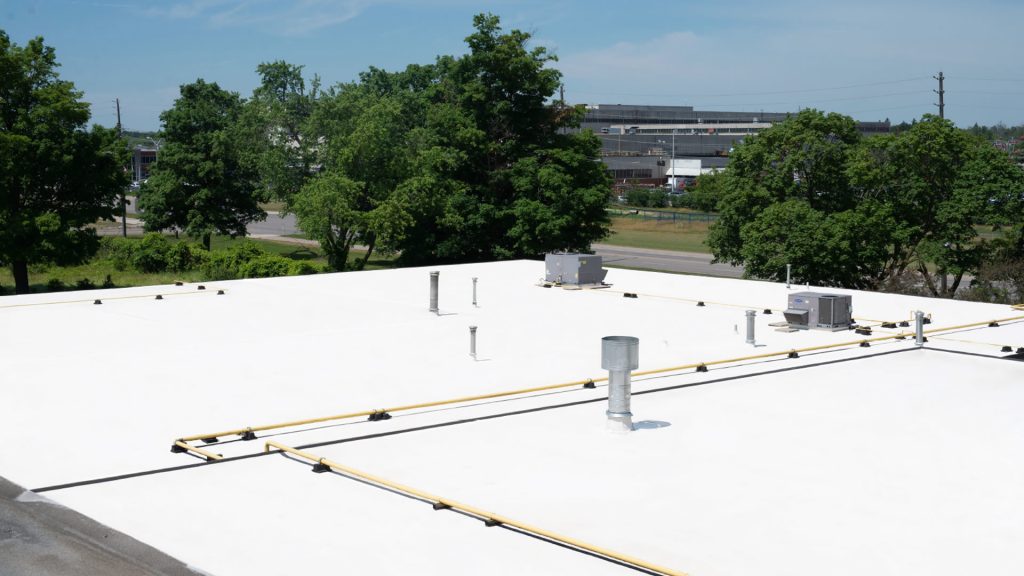
South Africa’s roofs take a relentless beating. Intense UV radiation, extreme heat, seasonal storms, and the expansion and contraction that comes with daily temperature swings attack roof surfaces continuously. Most roof coatings crack, peel, and fail within five years. Then the leaks start — and the real costs begin.
A roof coating in South Africa needs to do more than paint a surface. It needs to flex with the substrate, reflect solar heat, resist UV degradation, and hold its seal through years of thermal cycling and weather exposure. Most products on the market do not meet all four of these requirements simultaneously. SI-COAT 461 RC does.
TSS is the exclusive Sub-Saharan Africa distributor for CSL Silicones, supplying SI-COAT 461 RC silicone roof coating to commercial property owners, industrial facilities, mining operations, and infrastructure asset managers across South Africa, Zambia, the DRC, Tanzania, and Namibia.
What Is Roof Coating?
Roof coating is a liquid-applied protective membrane that bonds to an existing roof surface and forms a seamless, weatherproof barrier. Unlike roof paint, which primarily provides colour and limited surface protection, a roof coating is engineered to deliver waterproofing, UV resistance, thermal reflectivity, and flexibility in a single application.
The distinction between roof coating and roof paint matters significantly. Roof paint is typically an acrylic or bitumen product applied in thin films for aesthetic purposes. It offers limited waterproofing and degrades rapidly under South Africa’s UV conditions. A quality roof coating — particularly an elastomeric silicone coating like SI-COAT 461 RC — forms a thick, flexible membrane that actively protects the substrate from water ingress, heat damage, and structural movement.
Does Roof Coating Work?
Yes — but the answer depends entirely on the coating chemistry. Not all roof coatings deliver equal performance in South Africa’s demanding climate.
Acrylic roof coatings work reasonably well in moderate conditions but crack under severe thermal cycling and degrade under prolonged UV exposure. Bitumen-based coatings soften at high roof surface temperatures — which regularly exceed 70 degrees Celsius on metal roofs in South Africa — and flow away from lap joints and penetrations, creating water entry points. Neither system is elastomeric enough to accommodate the structural movement that South African roofs experience daily.
SI-COAT 461 RC is a silicone elastomeric coating. It flexes with the substrate rather than cracking under thermal stress. It reflects solar radiation rather than absorbing it. It resists UV degradation throughout its service life. Therefore, it outperforms acrylic and bitumen alternatives in every performance category that matters in South Africa’s climate.
What Are the Benefits of Roof Coating in South Africa?
Roof coating delivers several measurable benefits for South African property owners and facility managers.
Waterproofing is the primary benefit. A quality roof coating seals existing cracks, lap joints, and penetrations, stopping water ingress at the source rather than managing leaks after they develop. SI-COAT 461 RC forms a seamless elastomeric membrane that accommodates joint movement without opening water pathways.
Heat reduction is a significant secondary benefit. SI-COAT 461 RC’s reflective white formulation reduces roof surface temperatures by up to 17 degrees Celsius compared to uncoated metal or dark roof surfaces. Lower surface temperatures reduce the heat load into the building below, cutting cooling costs for commercial, industrial, and residential properties across South Africa’s hot interior regions.
Extended roof life follows directly from protection against UV, heat, and water. A roof coating prevents the surface degradation that leads to premature roof failure, extending the effective life of the existing roof substrate and deferring costly replacement.
Cost savings compound over time. A single SI-COAT 461 RC application costs far less than roof replacement, and its long service life eliminates the recoating cycles that shorter-life products require.
What Types of Roof Coating Are Available in South Africa?
Several roof coating categories compete in the South African market. Understanding the differences helps property owners and specifiers make the right choice for their specific application.
Acrylic roof coatings are water-based, easy to apply, and widely available. They suit low-slope roofs in moderate climates but crack under severe thermal cycling and degrade under prolonged UV exposure. They are not suitable for metal roofs in high-UV regions.
Bitumen and tar-based coatings provide reasonable waterproofing on flat roofs but soften at high temperatures, making them unsuitable for metal roofs exposed to direct sunlight in South Africa’s interior regions.
Polyurethane coatings offer better UV resistance than bitumen but share acrylic’s brittleness under thermal cycling. They are typically more expensive than acrylic without delivering proportionally better performance in South African conditions.
Silicone elastomeric coatings represent the highest-performance category for South African roof applications. SI-COAT 461 RC cures to a flexible, UV-resistant membrane that accommodates thermal movement, reflects solar heat, and resists the UV degradation that limits all other coating chemistries. For metal roofs, industrial buildings, and any surface facing severe UV and thermal exposure, silicone is the correct specification.
How Much Does Roof Coating Cost in South Africa?
Roof coating cost in South Africa depends on the roof area, surface preparation required, coating type, and whether application is DIY or professional.
For professional application of a quality silicone roof coating, costs vary by region and project scope. However, total cost must be evaluated against service life. A lower-cost acrylic coating reapplied every three to five years costs significantly more over a ten-year period than a single silicone coating application with a service life measured in decades.
SI-COAT 461 RC’s cost per square metre is higher than basic acrylic products. However, its reflective properties reduce cooling costs from the day of application, and its long service life eliminates recoating costs that other products require. For commercial and industrial properties, this lifecycle advantage makes silicone the most cost-effective roof coating choice in South Africa over any meaningful time horizon.
For accurate pricing on SI-COAT 461 RC for your specific roof area and location, contact TSS directly.
How Much Roof Coating Do I Need?
Coverage depends on the coating’s application rate and the porosity and profile of your roof substrate. SI-COAT 461 RC covers approximately 4.0 to 7.2 square metres per litre depending on application thickness and substrate absorption.
For a standard calculation, divide your total roof area by the coverage rate for your target dry film thickness, then add a loss factor for wastage and substrate absorption. TSS provides application guidance and coverage calculations specific to your roof type and area.
How Do You Apply Roof Coating in South Africa?
Correct application is critical to long-term roof coating performance. Follow these steps for SI-COAT 461 RC:
Step 1 — Inspect and prepare the surface. Remove all loose material, dirt, moss, algae, and deteriorated coating. Clean the roof thoroughly with a pressure washer. Repair any damaged sheeting, loose fasteners, or open joints before coating. SI-COAT 461 RC does not require abrasive blasting or priming on most substrates.
Step 2 — Address penetrations and details. Apply SI-COAT 461 RC to all roof penetrations, flashings, lap joints, and ridge caps first. These are the highest-risk water entry points and require careful attention before the main field coat is applied.
Step 3 — Apply the field coat. Apply SI-COAT 461 RC by airless spray, brush, or roller to achieve the specified dry film thickness. Spray application gives the most consistent coverage on large roof areas. Ensure complete coverage without holidays or thin spots.
Step 4 — Allow to cure. SI-COAT 461 RC becomes tack-free rapidly under standard South African conditions. Protect from rain during the initial cure period. Full physical characteristics develop over several days depending on temperature and humidity.
How Long Does Roof Coating Last in South Africa?
Service life depends on coating chemistry, application quality, and UV exposure severity. Acrylic roof coatings typically last three to seven years in South African conditions before recoating is required. Bitumen coatings perform similarly in temperate climates but fail faster in high-UV and high-temperature regions.
SI-COAT 461 RC significantly outperforms these alternatives in South Africa’s UV-intensive environment. All SI-COAT 461 RC colours are tested to withstand 5,000 hours of accelerated UV weathering with minimal colour change — a performance standard that acrylic and bitumen products cannot match. Properly applied SI-COAT 461 RC on a well-prepared substrate delivers many years of effective protection before reapplication becomes necessary.
Does Roof Coating Stop Leaks?
Yes — when correctly applied to a structurally sound roof surface. SI-COAT 461 RC’s elastomeric membrane seals existing cracks, lap joints, and minor penetrations that allow water ingress. Its flexibility means it accommodates the substrate movement at these points without reopening the seal.
However, roof coating is not a substitute for structural repairs. Severely damaged sheeting, rusted-through metal, broken tiles, or failed structural elements must be repaired before coating. A roof coating seals a surface — it does not rebuild a roof.
What Is the Best Roof Coating for Metal Roofs in South Africa?
Metal roof coating in South Africa presents specific challenges. Metal expands and contracts dramatically with temperature — more than almost any other roofing material. A coating that cannot flex with this movement cracks at fastener points, lap joints, and ridge caps within a few years.
SI-COAT 461 RC is specifically suited to metal roof coating in South Africa. Its elastomeric flexibility accommodates the thermal movement of metal sheeting — including Chromadek, IBR, and corrugated galvanised profiles — without cracking. Its reflective properties address the heat absorption problem that makes metal roofs uncomfortable and energy-intensive to cool. Furthermore, its silicone chemistry resists the UV and chemical exposure that accelerates corrosion on unprotected metal roof surfaces.
What Is the Best Roof Coating for Flat Roofs in South Africa?
Flat roofs present a different set of challenges. Water pooling, membrane fatigue at joints and penetrations, and thermal movement at parapet walls create persistent leak risks on flat and low-slope roofs across South Africa’s commercial and residential building stock.
SI-COAT 461 RC’s seamless elastomeric membrane is well suited to flat roof applications, providing a continuous waterproofing layer that accommodates joint movement and resists the UV degradation that shortens the life of bitumen and acrylic alternatives on exposed flat roof surfaces.
Frequently Asked Questions
What is the best roof coating in South Africa?
For metal roofs, industrial buildings, and any surface facing severe UV and thermal exposure, a silicone elastomeric coating outperforms acrylic and bitumen alternatives in service life, flexibility, and UV resistance. SI-COAT 461 RC from TSS is a high-performance silicone roof coating available across South Africa and Sub-Saharan Africa.
How much does silicone roof coating cost in South Africa?
Silicone roof coating costs more per litre than basic acrylic products but delivers a significantly longer service life. Over a ten to twenty year period, silicone roof coating typically costs less than repeated acrylic recoating campaigns when total lifecycle cost is calculated. Contact TSS for project-specific pricing.
Can roof coating be applied over existing roof paint?
Yes. SI-COAT 461 RC adheres to most existing roof coatings without requiring complete removal. The existing surface must be clean, sound, and free of loose or flaking material before application.
Is roof coating worth it in South Africa?
For any property with a roof experiencing leaks, heat problems, or approaching the end of its coating service life, roof coating delivers a strong return. The alternative — roof replacement — costs significantly more and is not necessary when the underlying structure is sound. Roof coating restores waterproofing, reduces heat load, and extends roof life at a fraction of replacement cost.
Where can I buy roof coating in South Africa?
SI-COAT 461 RC is available through TSS — the exclusive Sub-Saharan Africa distributor for CSL Silicones — across South Africa, Zambia, the DRC, Tanzania, and Namibia.
What is an elastomeric roof coating?
An elastomeric roof coating is a flexible, rubber-like membrane that stretches and returns to its original shape under stress. Unlike rigid coatings that crack under thermal cycling or structural movement, an elastomeric coating accommodates substrate movement without breaking the waterproof seal. SI-COAT 461 RC is an elastomeric silicone roof coating.
The Roof Coating South Africa’s Climate Demands
South Africa’s UV intensity, temperature extremes, and seasonal weather variability demand a roof coating that goes beyond basic paint protection. SI-COAT 461 RC delivers elastomeric flexibility, solar reflectivity, UV resistance, and long-term waterproofing in a single silicone coating — the performance standard that South Africa’s roofs require.
To discuss SI-COAT 461 RC for your roof, contact us through our contact us page or visit our FAQ page for more information. Proud distributors of CSL Silicones.