
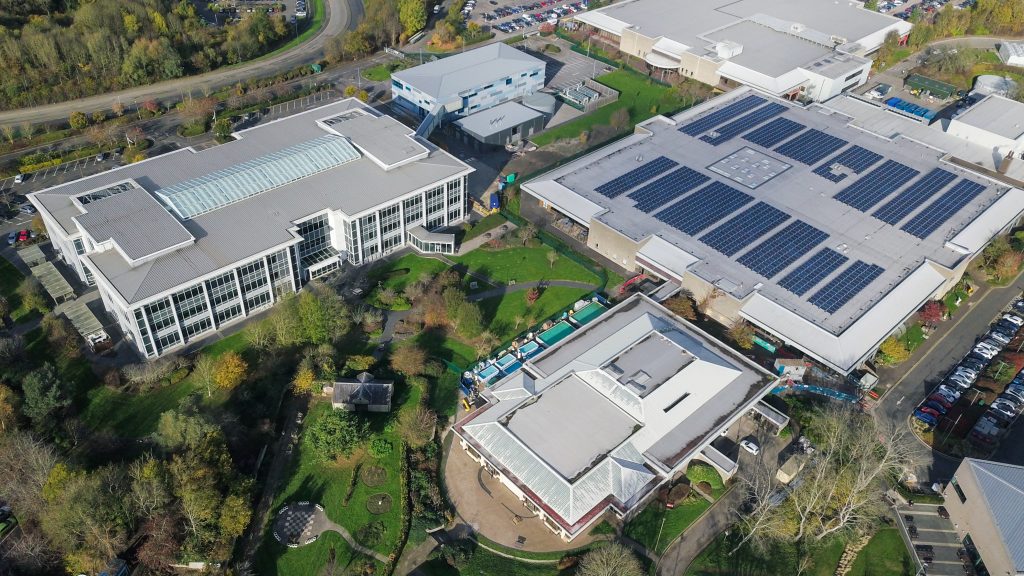
Liquid rubber is one of the most searched answers when people look for a flat roof coating in South Africa, and it is easy to see why. The products are easy to buy, affordable and simple to apply. However, owners of warehouses, shopping centres, factories and logistics buildings should understand what they are buying first. Many liquid rubber products are water based acrylic or bitumen emulsion coatings, made mainly for pitched, tiled, fibre cement and galvanised roofs. Large industrial flat roofs hold water after rain, and that is a very different job. In this article we compare liquid rubber with SI-COAT 461 RC, a silicone roof coating from CSL Silicones.
What Liquid Rubber Products Actually Are
The word rubber usually describes the stretch of the cured film, not the chemistry. In practice, many of these products are acrylic elastomers. On the roofs they were made for, they work well, because pitched roofs shed water quickly and the coating dries out between storms.
On a large flat concrete deck, though, the conditions change completely. As a result, so do the results.
Why Ponding Water Breaks a Flat Roof Coating in South Africa
Large flat roofs rarely drain completely, and that shapes every flat roof coating decision in South Africa. Over time, decks deflect and settle, and low spots form. Water then collects in those spots after every storm and can stand for days. The roofing industry usually calls it ponding when water is still there 48 hours after rain.
Most water based acrylic coatings are not designed to sit under standing water. Over time, water softens the film and weakens adhesion, and the coating starts to blister and lift. This happens slowly and out of sight, until the roof leaks again.
Movement adds to the problem. On a big roof, daily heating and cooling stresses the coating film, so cracks open around penetrations, upstands and outlets. For more on the causes and fixes, see our article on ponding water on a flat roof.
How the Climate Makes It Worse
South Africa has some of the strongest UV in the world. UV breaks down carbon based polymers over time, so many organic coatings chalk, lose flexibility and crack. In addition, a dark roof in full summer sun gets far hotter than the air, then cools sharply at night. That constant cycle concentrates stress at flashings, penetrations and parapets.
On the coast, humidity and salt air add to the load. Buildings in KwaZulu Natal and the Western Cape therefore see their coatings tested from every direction.
Silicone vs Liquid Rubber on a Flat Roof
As a flat roof coating in South Africa, SI-COAT 461 RC takes a different approach. It is a 100% silicone, moisture curing roof coating with 94% volume solids. Silicone is naturally water repellent, and according to the TDS, SI-COAT 461 RC withstands ponding water. That is the single biggest difference from most liquid rubber products.
Silicone is also far more stable under UV, because its silicon and oxygen backbone resists the breakdown that affects carbon based polymers. CSL describes excellent durability, colour stability and chalk resistance. Furthermore, the cured film stays stable from minus 60°C to 200°C, with elongation of 282% at 23°C and 330% at minus 18°C. Consequently, it holds together around penetrations and flashings, where weaker systems fail first.
The white also reflects heat. It carries a CRRC rated initial SRI of 107.9, and a CSL case study recorded 7 to 9°C cooler conditions inside after coating. Our article on heat reflective roof coating explains what that means for a building.
Choosing a Flat Roof Coating for South Africa
Getting the flat roof coating wrong in South Africa is expensive. A leak in a warehouse damages stock, equipment and racking. In a food plant, it can lead to a hygiene shutdown. In a shopping centre, it means tenant complaints and lost trade. In addition, a failed coating usually has to be removed or made sound before anything new goes on, which adds time and disruption.
Liquid rubber still has its place on pitched and tiled roofs. However, for a large flat roof coating in South Africa, the system has to handle ponding, UV and movement together, and that is where silicone fits. To see all the options side by side, read our roof coating comparison or the complete guide to roof waterproofing.
SI-COAT 461 RC Application Summary
- Substrates: concrete, metal sheeting, sprayed polyurethane foam and existing membranes and coatings.
- Preparation: power wash with a suitable detergent, rinse and let the roof dry. Remove loose and failed material.
- Primer: not needed on most substrates. Do an adhesion test patch first, especially on smooth, metal and existing coated roofs. CSL supplies a compatible primer if the test fails.
- Conditions: 5°C to 60°C and at least 3°C above the dew point.
- Thickness: minimum 20 mil (508 µm) dry film. By airless spray, this goes on as a single coat, wet on wet. Brush and roller need more than one coat.
- Coverage: about 2.1 m²/L at 18 mil DFT and 1.7 m²/L at 22 mil DFT, plus a loss factor.
- Cure: skins over in about 68 minutes, dry and ready to recoat in 4 to 6 hours, full properties after 7 days.
- Limits: not for asphalt shingles or contact with potable water. A wet silicone roof is slippery.
Flat Roof Coating FAQ for South Africa
Is liquid rubber suitable for warehouse and mall flat roofs?
Many liquid rubber products are water based coatings made for pitched and tiled roofs. Large flat roofs hold water after rain, and most of these products are not designed for that. For ponding roofs, a 100% silicone coating such as SI-COAT 461 RC is a better match.
What is the best flat roof coating in South Africa?
For large industrial and commercial roofs, a 100% silicone system is a strong flat roof coating choice in South Africa. It withstands ponding water, resists UV and stays flexible across a wide temperature range. For roofs with heavy foot traffic, however, plan walkways or consider a tougher system in those areas.
Why does my roof coating keep failing?
On flat roofs, the usual causes are ponding water, UV breakdown and movement at joints and penetrations. Poor preparation is the other big one. A silicone system addresses the first three, and a proper wash and test patch take care of the last.
How long does a silicone roof coating last?
It depends on thickness, preparation and exposure. CSL reports 461 roofs in service in North America for more than 20 years. In addition, a sound silicone roof can be cleaned and recoated with silicone, with no tear off.
Can SI-COAT 461 RC go over an old liquid rubber coating?
Often, yes, if the old coating is still well bonded and clean. Remove any blistered or loose areas first. Then do an adhesion test patch, and if it fails, CSL supplies a compatible primer.
Does a silicone flat roof coating work on the coast in South Africa?
Yes. Silicone handles humidity, salt air and strong UV well, which suits coastal buildings in KwaZulu Natal and the Western Cape.
Talk to Us
Technical Solution Supplies distributes CSL Silicones products across Southern Africa, including the DRC and the Seychelles. To discuss SI-COAT 461 RC for your flat roof, contact us. For more answers, see the SI-COAT 461 RC FAQ or our article on silicone roof coating for warehouses and malls.