
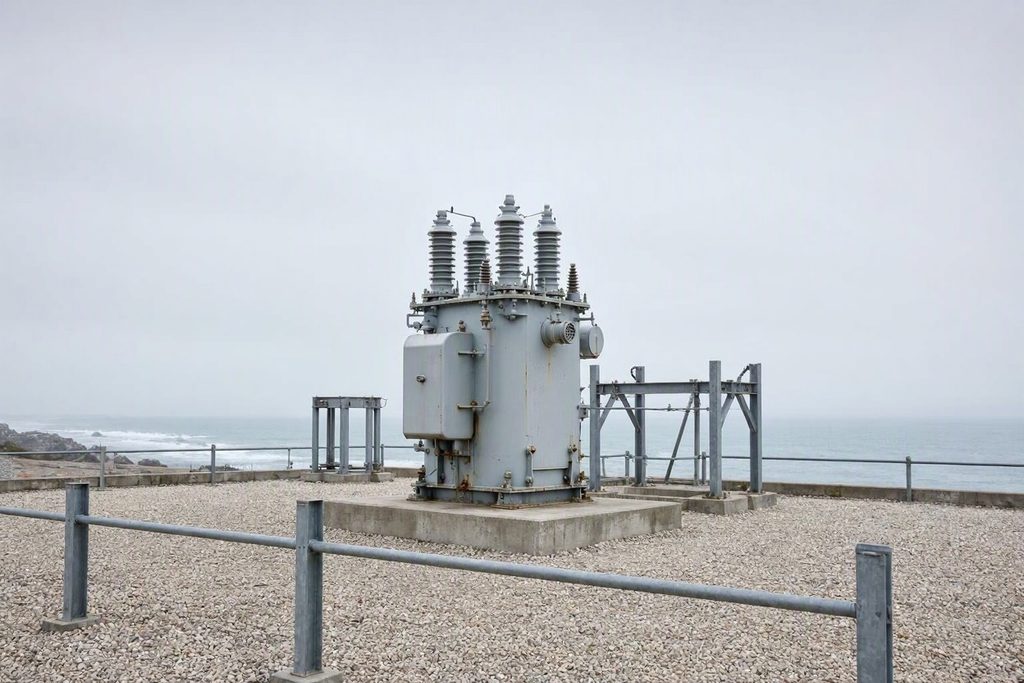
Insulator grease still protects many substations in Southern Africa, but it works by holding the pollution it catches. So once the layer is full, a crew has to strip it and put new grease on. A cured silicone coating works differently. Instead of relying on a thick layer to hold dirt, it stays water repellent and sheds rain as beads. As a result, there is no greasing cycle to run. For a maintenance planner, then, the real question is which product suits the site, the outage plan and the crew.
This article is for the person who owns that greasing schedule. That could be a substation maintenance planner, a mine electrical engineer or a municipal electrical foreman. Technical Solution Supplies (TSS) sells both CSL 880 grease and Si-COAT® 570 HS™ HVIC, so we have no reason to slate either one.
How insulator grease protects an insulator
CSL 880 is a non curing silicone compound. Crews put it on by gloved hand, cloth, brush or spray, about 1 to 2 mm thick. The insulator must be clean and dry first. Because the grease repels water, it stops a continuous wet film forming on porcelain, and that keeps leakage current down. Dust and salt then settle into the layer, and the grease wraps them up. Once the layer carries a heavy load of dirt, its anti-tracking filler protects against tracking.
However, the weakness sits inside the method. Grease holds the pollution, so sooner or later the layer is full. At that point a crew must wipe it off and regrease. That means another outage, more crew hours and more material. CSL makes 880 white for exactly this reason. That way the crew can see a full, even coat, and also when it is time to strip it.
When grease is still the right call
Grease suits some sites well. For example, a utility may specify it in its maintenance standard. Also, a site may already run a proven greasing cycle, with trained crews and outages built into the plan. In those cases, changing products means changing a procedure that already works. CSL also states that 880 has proven effective in conditions from salt fog to cement dust. So if your cycle keeps flashovers away and the outages fit the plan, there is no reason to rush.
Where a silicone coating pulls ahead
A coating suits a planner who wants to stop repeating the same job. Si-COAT 570 HS is a one part RTV silicone that cures to a rubber film. It goes onto glass, porcelain, HTV and LSR silicone and EPDM with no primer and no mixing. In practice that means one application followed by inspections, rather than a strip and regrease routine.
The test data backs the long term behaviour. According to the May 2026 data sheet, the cured film gives a static contact angle of 116° under IEC 62073. As a result, water sits as beads instead of spreading into a conductive film. The coating also passed IEC 60587 inclined plane tracking at 1A 4.5 and 1B 4.5. In addition, it ran more than 1,000 hours on the CEA tracking wheel. After 5,000 hours of UV and salt fog under IEC 61109, it showed no degradation. CSL also reports more than 15 years of field service with zero failures. For more on why beading matters, read our article on hydrophobicity in high voltage insulator coatings.
There is a planning benefit too. Because the coating keeps shedding water, many sites can cut back on washing and greasing outages. That frees crews for other work, which matters on mines and municipal networks where one small team covers everything. Our article on insulator washing looks at the washing side of the same problem. Also, our piece on silicone coating for power plants covers fly ash and soot.
Switching from insulator grease to a silicone coating
Most of the work in a changeover sits in the cleaning, because the coating will not bond over grease. First, remove the bulk of the old grease with a dry abrasive cleaner or by wiping it off with rags. Then clean the surface with an oil free solvent such as acetone, followed by a final wipe with isopropyl alcohol. If the grease has hardened and caked on, treat it like cement build up. In that case, a dry abrasive blast of crushed corn cob or walnut shell mixed with limestone does the job. Finally, let the surface dry fully. If the coating work slips after cleaning, clean the insulators again.
Next, apply Si-COAT 570 HS, preferably by airless spray, at about 0.38 mm once dry (15 mil, 380 µm). Never go below 0.25 mm (10 mil). That works out at roughly half a litre per m² before losses, or 2.0 m²/L in theory. Brush and dip application also work. Crews should keep the surface at 5°C or warmer and the air at least 3°C above dew point. Film thickness is applied in accordance with IEEE 1523.
At 25°C and 50% RH, the film skins in 20 to 25 minutes. Then it is tack free in 30 to 40 minutes. After about 6 hours it has cured through, and it reaches full properties in 7 days. So the job fits inside a planned outage. Better still, coat new equipment before energisation, as our guide to high voltage insulator coating in South Africa explains. The same coating has gone inside MV switchgear as well as onto outdoor substation equipment.
Where not to use Si-COAT 570 HS
Be clear about the limits. Never apply the coating to live equipment, because it goes on before energisation or during a planned outage. Also, do not apply it over grease, oil, dust, salt crystals or condensation, and not on a surface below 5°C. A coating will not fix a cracked or chipped insulator either, so replace damaged units first. Finally, where a utility standard specifies grease, follow that standard or get the change approved before you switch.
Dusty sites have their own story, which our article on insulator coating for mines covers. To see how CSL products perform in the field, look at our case studies. Technical Solution Supplies distributes CSL Silicones products across Southern Africa, including the DRC and the Seychelles.
Insulator grease and coating FAQ
How thick should insulator grease go on?
CSL recommends a layer of 1 to 2 mm of CSL 880 for long term protection. However, the right amount depends on the site. Absorbent pollution such as fertiliser or road salt needs more than non absorbent dirt such as carbon.
Can you coat over old insulator grease?
No. First remove the bulk of the grease, then clean with acetone and wipe with isopropyl alcohol. Only once the surface is fully dry can the coating go on.
Can Si-COAT 570 HS go on live equipment?
No. Apply it before energisation or during a planned outage.
Does TSS still supply grease?
Yes. We supply CSL 880 for sites on a greasing cycle. We also supply CSL 588, an electronic grade sealant for cable entries, terminal boxes and connectors. You will find all the data sheets on our high voltage insulator coatings page, and the Si-COAT 570 HS FAQ answers most application questions.
How long does the coating last?
CSL reports more than 15 years of field service with zero failures. Even so, check it on your normal inspection rounds.
To plan a changeover from grease to coating, contact TSS.
Proud exclusive distributor of CSL Silicones in Southern Africa.