Copper Mine Coating: BHP Escondida, Chile
A copper mine coating in the high Atacama has to handle desert sun, salt, dust and big temperature swings. In November 2016, Si-COAT 579 CM went onto structures at BHP’s Escondida copper mine in Chile, after the original epoxy came to the end of its service life.
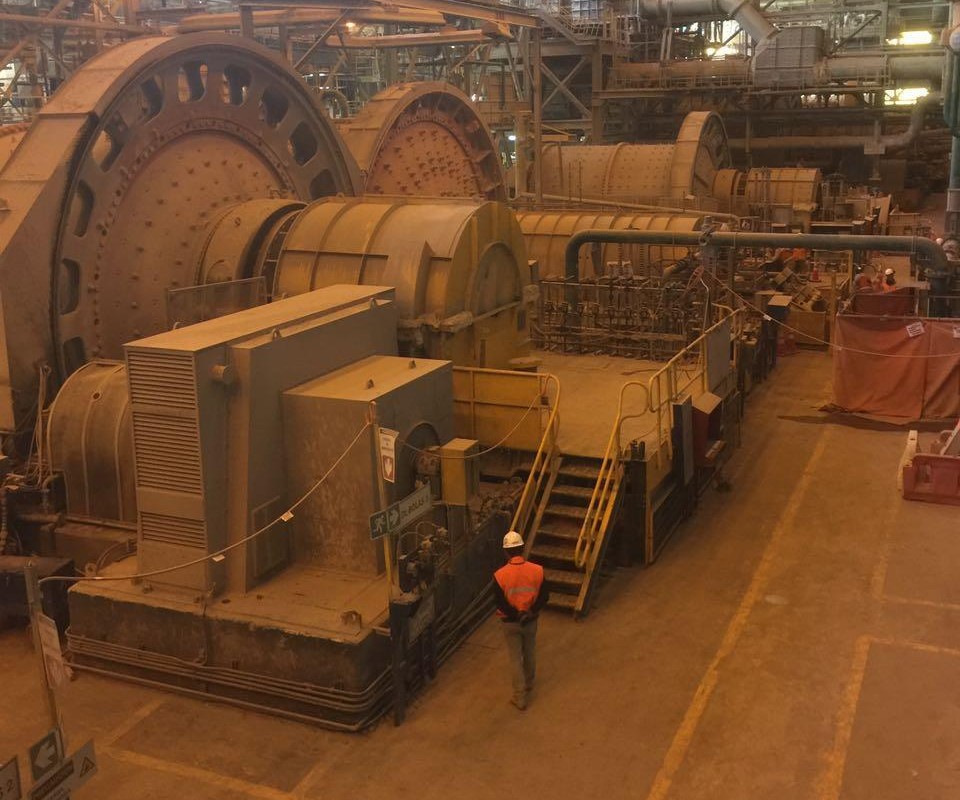
| Owner | BHP, Escondida copper mine |
|---|---|
| Site | Atacama Desert, Antofagasta Region, Chile |
| Asset | Structures first coated with epoxy by the original equipment makers |
| Installed | November 2016 |
| Product | Si-COAT 579 CM, tennis court green |
| Exposure | Desert, high altitude, strong UV, high salinity, extreme temperatures and swings in humidity |
Escondida, the world’s largest copper mine
Escondida sits in the Atacama Desert at about 3,100 m above sea level, roughly 170 km southeast of Antofagasta. By output, it is the largest copper producer in the world. BHP operates it and owns 57.5%, alongside Rio Tinto and a Japanese group.
The site is hard on steel. At that altitude, the UV is fierce, while days run hot and nights drop cold. Meanwhile, the air swings between bone dry and humid, and salt from the desert floor settles on plant and structures. On top of that, crushing and milling throw fine dust over everything.
Why the original epoxy needed replacing
The structures in question came from the original equipment makers with an epoxy coating. However, by 2016 that epoxy had reached the end of its service life. So the mine needed a coating that would last longer in these conditions than the factory epoxy had.
That story is common on mines. Epoxy is hard and rigid, and it chalks in strong sun. As a result, daily heating and cooling can crack it over time, and corrosion then creeps in behind the cracks.
Choosing a copper mine coating for the Atacama
Si-COAT 579 CM is an RTV silicone, so it stays flexible after it cures. Because of that, it moves with the steel through daily temperature swings rather than cracking. It also holds up in strong sun. In CSL testing, 1,000 hours in a Suntest machine caused no discolouring. Similarly, the older CSL data sheet gives a temperature range of minus 60°C to 200°C.
For these reasons, a copper mine coating in 579 CM suits exposed steel at altitude. Also, CSL can match colours, which is why Escondida’s structures went on in tennis court green. In Southern Africa, TSS stocks 579 CM in white and ANSI grey, and any RAL colour is available to order.
What CSL’s record covers
CSL’s case history gives the site, the product, the colour, the date and the reason for the job. It does not give the area coated, the preparation or a later inspection. So we don’t add any of those here. As with all our case studies, we quote CSL’s facts as published and don’t stretch them.
Copper mine coating on the Copperbelt and beyond
Southern Africa has plenty of mines like this. The Copperbelt in Zambia and the DRC deals with heat, dust and acid plants. Further south, the Northern Cape and Namibia bring desert sun and big daily swings, while coastal Namibia adds salt. For all of them, the same problem turns up: rigid coatings crack and rust comes through.
On these sites, TSS has shown that cured 579 CM comes off bolt threads cleanly. So crews can still undo a bolt and simply recoat the spot, with no torching off. Also, on concrete plinths, we carry one continuous coat from the concrete onto the steel, once laitance and curing compound are off. Our articles on corrosion protection for copper mining and mining corrosion protection go into more detail.
Where 579 CM fits, and where it doesn’t
Si-COAT 579 CM is for above ground steel, such as structures, conveyors, pipe racks, walkways and plant exteriors. In acid plants, it handles acid vapour and occasional splash, as the CODELCO acid tanks show. However, it is not for leach tanks, bunds that hold spills, tank linings or buried steel. Also, where a site needs a rated system for C5 High conditions, use the Si-COAT CM System with CSL 979 primer.
Copper mine coating FAQ
Why use silicone as a copper mine coating instead of epoxy?
Epoxy is rigid and chalks in strong UV, so daily temperature swings can crack it. Silicone, by contrast, stays flexible and holds its colour in the sun. At Escondida, the OEM epoxy had reached the end of its life, and the mine moved to 579 CM.
Does a copper mine coating need blasting first?
No. Si-COAT 579 CM goes onto steel cleaned to SSPC SP2 or SP3, or water jetted to SSPC SP12 WJ-4. Loose rust and flaking paint must still come off. Our surface tolerant coating guide explains the prep.
Can you still undo bolts after coating?
Yes. TSS has shown at mining shows that cured 579 CM comes off bolt threads cleanly. So you undo the bolt, do the work, and recoat the area.
Where can I get Si-COAT 579 CM in Southern Africa?
Technical Solution Supplies distributes CSL Silicones products across Southern Africa, including the DRC and the Seychelles. For data sheets, samples and pricing, request a quote with photos of your plant.
More corrosion case studies and articles
- First, the silicone corrosion coating product page and the 579 CM FAQ.
- Also, the Hoopstad fertiliser plant, coated while the plant kept running.
- Next, the Florida Power & Light fuel tank, done at about half the cost of a conventional system.
- Finally, all our case studies in one place.
Proud exclusive distributor of CSL Silicones in Southern Africa.
Send us the problem
Photos and a rough size are enough to start, while drawings and specs can follow later. Then we come back with the right product and a quote.