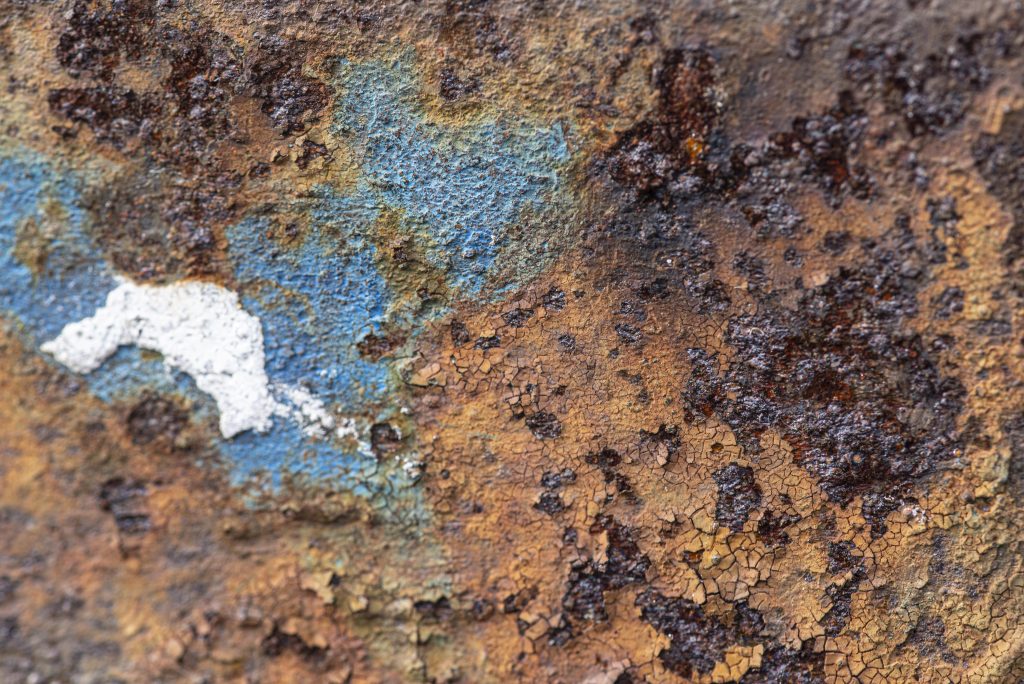
Good mining corrosion protection keeps plant running. Without it, corroded steel structures, equipment housings and process pipelines cost mines across Southern Africa in downtime, replacement parts and emergency repairs. Yet many sites still rely on multi coat epoxy systems that need blasting, several coats and long shutdowns.
It does not have to be that disruptive.
Technical Solution Supplies supplies Si-COAT 579CM, a one coat silicone from CSL Silicones, to mining and industrial sites. This article looks at why it suits mine maintenance, and what the evidence behind it says.
The Real Cost of Corrosion in Mining Environments
Mines are hard on steel. Strong UV, wide temperature swings, salt spray on coastal sites, acid in processing areas and constant moisture all work together. As a result, steel in these conditions does not rust slowly. It deteriorates fast.
A conventional three coat system usually means abrasive blasting, a zinc rich primer, an epoxy intermediate coat and a polyurethane topcoat. Each coat needs its own cure time and overcoat window. In addition, the work needs skilled crews and dry weather.
On a mine, that brings real problems. First, plant cannot stop for weeks of blasting and coating. Second, remote sites struggle to find skilled applicators and manage blasting logistics. Third, abrasive blasting creates dust and waste that need containment and environmental approval. So maintenance often gets deferred until the damage is serious.
Why Epoxy Falls Short in Mining Corrosion Protection
Epoxy is rigid. It does not move well with steel that heats up by day and cools at night. As the steel moves, the film cracks. Moisture and oxygen then get in, and corrosion creeps under the coating where nobody can see it.
In acid areas, such as copper processing plants and acid tank farms, epoxy faces extra stress. Once acid works under a crack, the coating blisters and lifts. Fixing it usually means stripping back to steel, often by blasting. That is costly, and often impractical on a remote or busy site. As a result, the recoating cycle repeats.
Si-COAT 579CM for Mining Corrosion Protection
Si-COAT 579CM is a single component, moisture cure RTV silicone coating made by CSL Silicones. Unlike epoxy, it stays rubbery after cure, with 180% elongation. So it moves with the steel instead of cracking.
Preparation is simpler. The TDS accepts SSPC SP2 hand tool cleaning, SSPC SP3 power tool cleaning or SSPC SP12 water jetting to WJ-4. Crews remove loose rust, loose scale and flaking paint. Sound old coating can stay if it passes the ASTM D3359 tape test at 4A or 4B. No abrasive blasting is needed.
Application is one coat. First, brush a stripe coat onto edges, welds and bolts. Then apply one full coat of about 0.2 to 0.5 mm once dry (8 to 20 mil). That is roughly a third to three quarters of a litre per square metre, before losses. It dries in 4 to 6 hours and reaches full properties in 7 days.
The test evidence is strong. In a three year Florida Fence Test on the Atlantic coast, Si-COAT 579 went onto rusted steel cleaned by hand tools only, with no primer. After 36 months, it showed no rust creep, bleed through, pinholes or loss of adhesion. Meanwhile, three coat zinc, epoxy and polyurethane systems on blasted steel showed heavy rust creep. It also passed 3,000 hours of salt fog and 5,000 hours of accelerated UV weathering with no degradation.
In acid areas, it handles acid vapour and occasional splash, as our case studies show. However, CSL did not design it for pooling or immersion, so contact us where that is likely. For the harshest areas, CSL also pairs it with CSL 979 primer. That system passed ISO 12944-6:2018 testing for C5 High.
For service life, our benchmark is about 20 years. That rests on a CSL Florida power plant pipe coated in 2003, which still protects its steel.
Proven at the Escondida Copper Mine, Chile
At BHP’s Escondida copper mine in Chile, the original epoxy coating on plant structures had reached the end of its life. The site combines desert conditions, high altitude, strong UV, wide temperature swings and high salinity. In November 2016, Si-COAT 579CM went on to replace the failed epoxy.
For mines in Southern Africa, which face strong sun, heat cycles and dust, Escondida is a relevant reference.
Faster Projects and Lower Cost
Documented projects show the difference. In 2002, Florida Power and Light coated an 85 metre fuel oil tank with Si-COAT 579. The team budgeted one week. Bad weather stretched it to three, still well short of the two months or more a conventional system would have needed. The overall project cost came to about 50% of a traditional coating system.
Similarly, Reliant Energy in Texas used it on transmission tower legs. Its crews prepared the steel with wire brushes and brushed the coating on. As a result, project timelines that used to take four months came down to six weeks.
Every site differs, so we work through the numbers with you per project. Still, the pattern is clear: less preparation, one coat and fewer recoats mean a lower lifetime cost.
Why Mines Choose Si-COAT 579CM
First, less disruption. One coat and simpler preparation mean shorter projects, so production keeps running. Hand tool and power tool preparation also avoid blasting dust and waste.
Second, proven performance. CSL references include copper mining at Escondida, sulphuric acid transport tanks for CODELCO in Chile, transmission towers in salt fog on the Texas coast and power utility tanks in Florida.
Third, long life. A longer service life means fewer maintenance cycles over the life of the asset. In addition, Technical Solution Supplies provides technical guidance, application support and supply across the region.
Mining Corrosion Protection FAQ
Can mining corrosion protection go over existing epoxy coatings?
Yes, with Si-COAT 579CM, where the old epoxy is sound. First, remove anything peeling, flaking or blistering. The coating you keep must pass the ASTM D3359 tape test at 4A or 4B. Then clean it and apply. In CSL testing over an aged coating, the old coating cracked in bend and impact tests, while the Si-COAT layer on top bridged the cracks.
What is the cure time before equipment returns to service?
At 25°C and 50% humidity, Si-COAT 579CM skins over in 25 minutes and is tack free in 60 minutes. It dries in 4 to 6 hours and reaches full properties in 7 days. Because there is only one coat, there are no overcoat windows to wait for.
How does Si-COAT 579CM perform in acidic mining environments?
It handles acid vapour and occasional splash. CSL coated sulphuric acid transport tanks for CODELCO in Chile, and our case studies include acid and fertiliser plants. However, it is not for pooling or immersion. In those areas, contact us and we will confirm suitability with CSL.
Is Si-COAT 579CM suitable for underground mining infrastructure?
Yes, for steel in atmospheric exposure, such as structural steel, ducting and supports. It is not for buried or submerged steel. In confined spaces, provide good ventilation or respiratory protection during application, as the TDS requires.
Can mining crews apply Si-COAT 579CM on site?
Yes, with the right skills. The TDS states it is for professional applicators in industrial settings. It goes on by airless spray, brush or roller. In addition, Technical Solution Supplies provides application guidance and on site technical support.
Mining Corrosion Protection That Lasts
Southern Africa’s mines work in some of the world’s most corrosive conditions. Downtime, asset failure and repeated recoating eat into margins every year.
Si-COAT 579CM changes that. It offers one coat, simpler preparation, a benchmark of about 20 years and proven performance on copper mines, acid tanks and coastal structures. So if your site keeps cycling through epoxy recoats, talk to us about a better approach to mining corrosion protection.
To discuss your site, contact us or read the Si-COAT 579CM FAQ. See also our articles on corrosion protection for copper mining and corrosion resistant coating for mining.
Technical Solution Supplies distributes CSL Silicones products across Southern Africa, including the DRC and the Seychelles.
Proud exclusive distributor of CSL Silicones in Southern Africa.
Pingback: Anti-Corrosion Coating for South Africa - Technical Solution Supplies