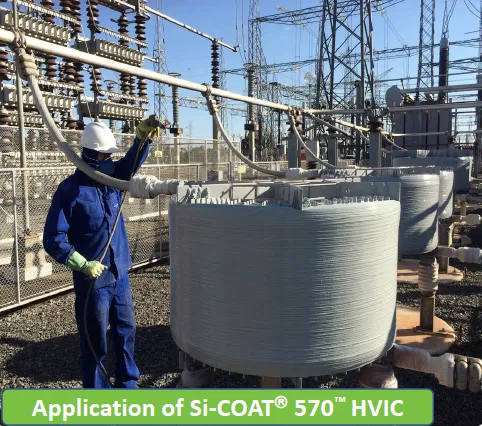
Air core reactor coating protects some of the most exposed equipment in a substation. Air-core-dry-type reactors, static compensators, and harmonic filters sit outdoors year-round. They face sun, rain, dust, and industrial pollution without any enclosure. As a result, the surface coating on this equipment carries real electrical and mechanical consequences.
CSL Silicones documented a clear case study at a 500kV substation in Goiás, Brazil, operated by Furnas. The project involved repair and recoating of air-core-dry-type reactors and two static compensators, CE01 and CE02. Furthermore, technicians applied SI-COAT 570 HVIC, an RTV silicone rubber compound, directly onto this equipment. As a result, the results give utilities and mining operators in South Africa, Zambia, DRC, Tanzania, and Namibia a real-world reference point.
Why Air Core Reactors, Static Compensators, and Harmonic Filters Need Protection
Air-core-dry-type reactors regulate current and voltage across transmission and distribution networks. Static compensators stabilise voltage on the grid, and harmonic filters remove unwanted frequencies from the power supply. However, all three sit exposed to weather and UV radiation for decades. Cracked or degraded coatings expose the underlying windings and insulation to moisture. Consequently, this moisture ingress can lead to corrosion, reduced dielectric performance, and unplanned outages. Furthermore, repeated thermal cycling stresses rigid coatings and accelerates surface cracking.
The Furnas/Goiás Case Study
Before recoating, the reactors and compensators at the Goiás substation showed visible surface cracking. Therefore, CSL Silicones documented this deterioration through a dedicated crack repair service. Technicians first cleaned and treated the cracked surfaces, then filled and levelled the damaged areas. In addition, once the repair cured, the team applied SI-COAT 570 HVIC over the entire unit. As a result, the finished coating restored a smooth, UV-resistant surface across each air-core-dry-type reactor and static compensator.
Comparing Coating Approaches
Some units at the site received an epoxy isocyanate coating after minimal surface preparation. The team used only washing and isopropyl alcohol cleaning to prepare those surfaces. However, other units, including the CE01 and CE02 static compensators, received SI-COAT 570 HVIC instead. This side-by-side application gives a rare direct comparison on the same site. In addition, the RTV silicone coating brought superior adhesion to the substrate, resistance to UVA and UVB exposure, and 180 percent elasticity. Consequently, the coated units can flex with thermal expansion instead of cracking under stress. Therefore, CSL Silicones reports a service life greater than ten years for this application.
Measurable Benefits of Air Core Reactor Coating
The Goiás project demonstrates several benefits utilities can expect from air core reactor coating. UV resistance protects the surface from South Africa’s high solar exposure. Furthermore, superior adhesion keeps the coating intact through vibration and thermal cycling. High elasticity allows the coating to move with the substrate rather than fracture. In addition, the considerable increase in service life reduces the frequency of maintenance outages. Therefore, this matters in South Africa, where planned outages carry a high operational cost.
Relevance for South African and Sub-Saharan African Utilities
South African, Zambian, and Tanzanian substations operate air-core reactors, static compensators, and harmonic filters under similarly harsh outdoor conditions. However, coastal humidity, mining dust, and intense UV exposure all accelerate coating failure on unprotected equipment. Therefore, the Goiás case study offers a directly transferable lesson for Eskom, ZESCO, TANESCO, and NamPower engineering teams. Consequently, TSS supplies SI-COAT 570 HVIC for exactly this application across the region. Utilities considering a recoating programme can review the full range at /category/high-voltage-equipment-care/.
What is air core reactor coating?
Air core reactor coating is a protective surface treatment applied to air-core-dry-type reactors, static compensators, and harmonic filters. The coating shields these units from UV degradation, surface cracking, and moisture ingress.
Why did the Goiás substation need reactor recoating?
The reactors and static compensators at the Goiás substation developed surface cracking after years of outdoor exposure. CSL Silicones repaired the cracks and applied RTV silicone coating to restore protection.
How does SI-COAT 570 HVIC compare with epoxy coatings?
SI-COAT 570 HVIC delivers 180 percent elasticity and resists UVA and UVB exposure. As a result, it flexes with the substrate rather than cracking, unlike more rigid epoxy coatings.
Can this coating apply to South African substations?
Yes. South African, Zambian, and Tanzanian substations face similar UV exposure and thermal cycling. Consequently, the same RTV silicone chemistry used at Goiás suits local air-core reactors, static compensators, and harmonic filters.
For guidance on recoating air-core reactors, static compensators, or harmonic filters at your site, contact the TSS team at /contact-us/. Our technical team can review your equipment condition and recommend the right coating approach. Visit /faq/ for answers to more technical questions.
What are the advantages of using air core reactor coating in electrical equipment?
Air core reactor coating shields windings and insulation from UV degradation, moisture ingress, and surface cracking. As a result, coated equipment avoids the corrosion and dielectric failures that untreated units eventually suffer.
What types of air core reactor coating suit high voltage applications?
RTV silicone coatings such as SI-COAT 570 HVIC suit high voltage applications because they combine UV resistance with high elasticity. Therefore, they flex with thermal cycling instead of cracking like rigid epoxy alternatives.
Which companies offer air core reactor coating services in South Africa?
TSS offers air core reactor coating application and technical support across South Africa as the exclusive Sub-Saharan Africa distributor for CSL Silicones. Consequently, utilities can source both the coating and qualified application guidance from a single supplier.
How much does professional air core reactor coating application cost?
Costs vary with equipment size, surface condition, and site access. However, coating typically costs far less than the extended outages and equipment replacement that untreated cracking eventually causes.
Proud distributors of CSL Silicones.