
Transformer Bushing Coating: Algorta Norte Iodine Mine, Chile
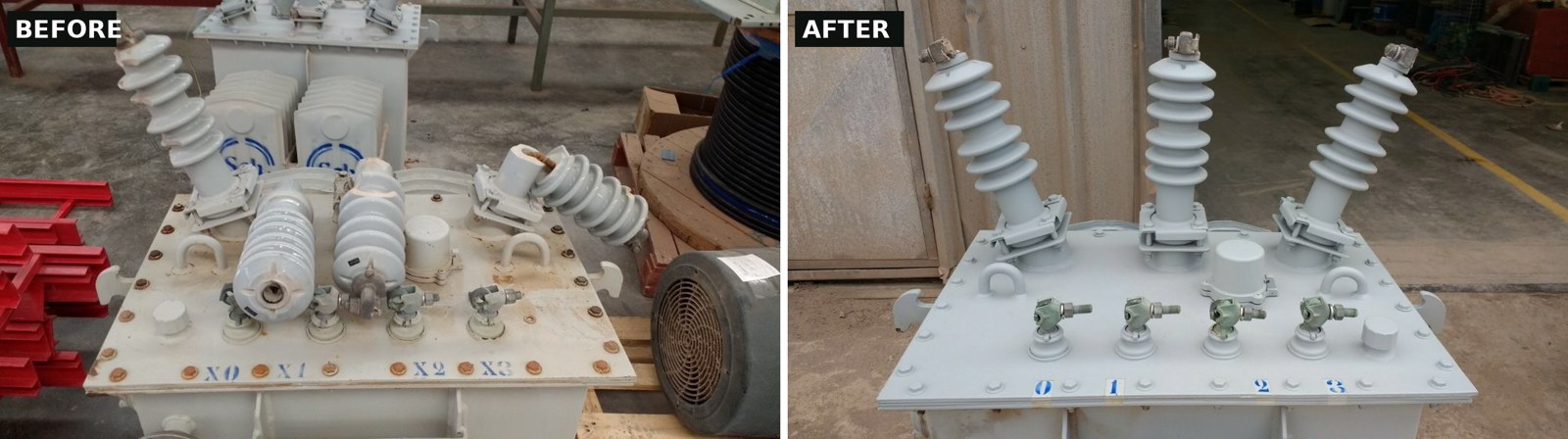
A transformer bushing coating had to stop salt flashovers on a 66 kV line at the Algorta Norte iodine mine in Chile’s Atacama Desert. Since 2019, Si-COAT 570 HS on the insulation and Si-COAT 579 CM on the casings have given four years with no flashovers, and cleaning dropped from monthly to once every four years.
| Owner | Algorta Norte, an iodine mine |
|---|---|
| Site | Atacama Desert, Antofagasta Region, northern Chile |
| Asset | Transformers on the mine’s 66 kV line |
| Problem | Salt on the insulation every day, constant flashovers and insulation breakdown |
| Products | Si-COAT 570 HS on the insulation, Si-COAT 579 CM grey on the casings |
| Applicator | Grupo NTI, Chile |
| Since | 2019 |
| Result | Four years with no flashovers and no casing corrosion. Cleaning went from monthly to once every four years |
Salt, dust and a 66 kV line
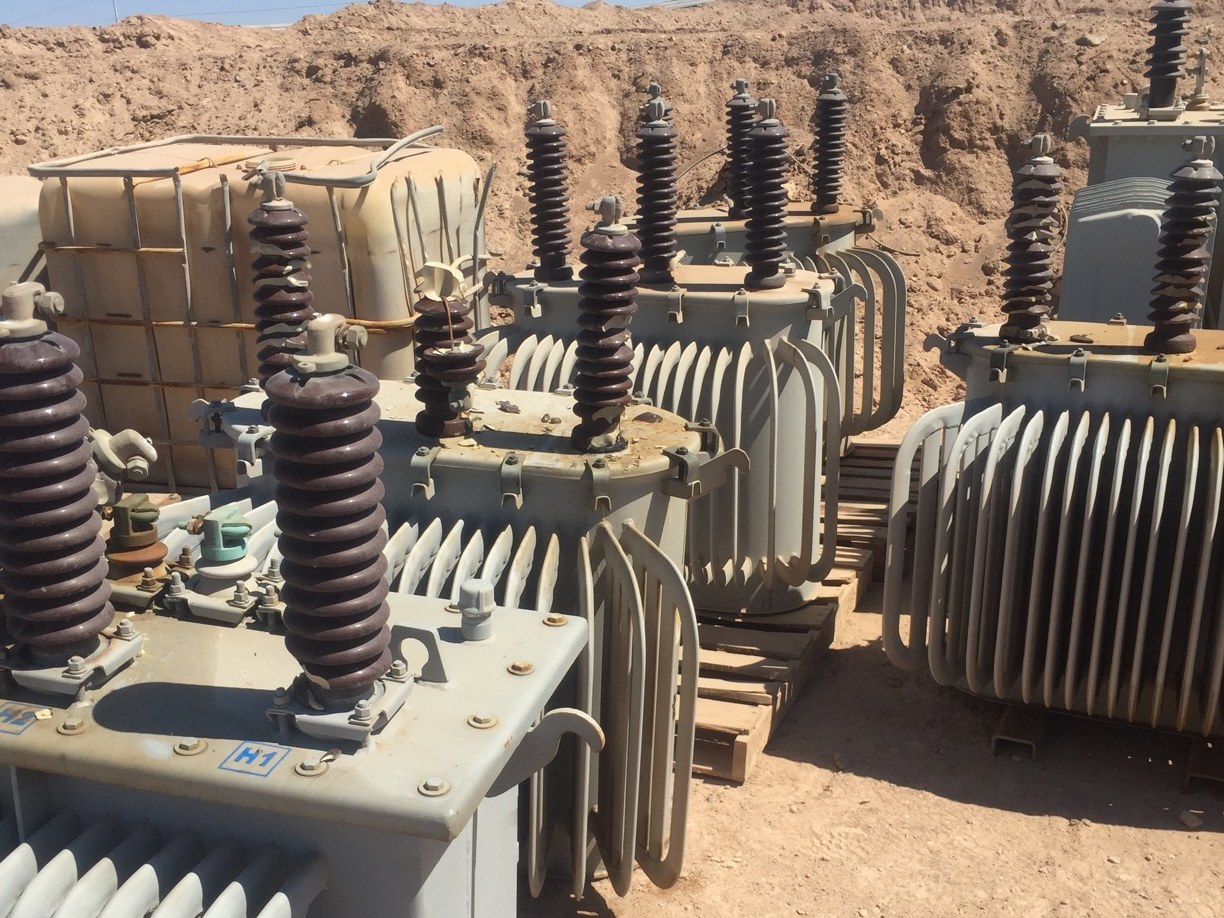
Algorta Norte mines caliche for iodine near Baquedano, in the Antofagasta Region. The mine also runs its process on untreated seawater, pumped in from the coast. It feeds its plant through a 66 kV line with its own transformers.
According to the applicator, those transformers took a coat of salt every day. The desert gets almost no rain to wash insulators clean. So the salt builds up, and then a morning fog or a light drizzle wets it. At that point the salt layer becomes a conductive film, leakage current flows, and the insulation flashes over.
Monthly washing versus a transformer bushing coating
By 2018 the mine had constant flashovers and insulation breakdown on these transformers. Its answer until then was to clean the insulation every month. However, washing only resets the clock. Within weeks the salt is back, and each flashover still risks a trip, a damaged bushing or a lost day of production.
Meanwhile, the steel casings had their own problem. Salt and damp attack painted steel, and rust on a transformer lid soon reaches the bolts and gaskets. As a result, the mine asked Grupo NTI, CSL’s applicator in Chile, for a fix to both.
The transformer bushing coating and casing system
From 2019, NTI coated the insulation with Si-COAT 570 HS and the casings with Si-COAT 579 CM in grey. In other words, one silicone family covers the whole transformer, porcelain and steel alike.
Here is how the 570 HS side works. The cured coating keeps releasing a thin layer of low molecular weight silicone to its surface. That layer wraps each salt particle, so water beads up on top instead of forming a film. Because no continuous wet film forms, leakage current stays low and dry band arcing doesn’t start.
On the casings, 579 CM goes over hand or power tool cleaned steel, with no blasting. It stays flexible, so it moves with the steel as the desert heats and cools each day.
Transformer bushing coating results after four years
According to NTI, the mine went four years with no flashovers on the coated transformers. Also, the protective casings showed no corrosion. Finally, the big one for the maintenance team: insulation cleaning went from every month to a preventive clean once every four years.
That is roughly 48 washes cut to one. On a mine, each wash means a crew, a water truck and often an outage. Equally, every flashover that doesn’t happen is a trip that doesn’t stop the plant.
Proof behind Si-COAT 570 HS
This job is a field result. In addition, Si-COAT 570 HS has passed both IEC TR 62730 tests at independent accredited high voltage laboratories: the 5,000 hour multiple stress test and the tracking and erosion wheel test. The full test reports are available on request from TSS.
Also in Chile, two other power companies use 570 HS through NTI. ENEL coats 220 kV transformers at wind farms on the salty, industrial coast of Coquimbo. Likewise, TEN coats 500 kV transformers and autotransformers near Antofagasta, where mining dust is the problem. In both cases, the aim is less washing and less corrosion.
Where this fits in Southern Africa
Southern Africa has plenty of sites like Algorta. For example, the Namibian coast has salt fog and almost no rain. Similarly, the Northern Cape and the Copperbelt bring mine dust, and coastal substations in KwaZulu-Natal and the Western Cape take salt spray. Also, near cooling towers and smelters, insulators collect contamination fast.
On all of these, the same pattern turns up: dirt builds, damp arrives, and the line trips. So if your team washes insulators on a schedule, a transformer bushing coating can stretch that schedule from months to years. Si-COAT 570 HS has also gone onto air core reactors at a 500 kV substation.
Transformer bushing coating FAQ
Can you coat transformer bushings that are already in service?
Yes. Si-COAT 570 HS goes onto existing porcelain, glass and composite insulators. First, the surface must be clean and dry, so crews take the unit out of service for the work. It is never applied to live equipment.
How long does a transformer bushing coating last?
Si-COAT 570 HS has a service life of more than 15 years. At Algorta, the coated insulation needed only one preventive clean in four years.
Why coat the steel casing as well?
Because salt that causes flashovers also rusts the tank. With 579 CM on the casing, the coating protects the whole transformer. Also, at Algorta, the casings showed no corrosion after four years.
Where can I get Si-COAT 570 HS in Southern Africa?
Technical Solution Supplies distributes CSL Silicones products across Southern Africa, including the DRC and the Seychelles. For data sheets, the test reports and pricing, request a quote with photos of your insulators.
More high voltage case studies and articles
- First, the insulator coating product page and the 570 HS FAQ.
- Next, the IEC TR 62730 test results for Si-COAT 570 HS.
- Also, the Reliant Energy transmission towers, coated in a tidal swamp.
- Finally, all our case studies in one place.
Proud exclusive distributor of CSL Silicones in Southern Africa.
Send us the problem
Photos and a rough size are enough to start, while drawings and specs can follow later. Then we come back with the right product and a quote.