Copper mining puts a corrosion resistant coating for mining to one of its toughest tests. Acid process chemistry, humid underground workings, abrasive ore handling and strong sun all attack steel at once. A coating made for general industry rarely lasts long here. When it fails, the cost shows up as unplanned downtime, early equipment replacement and maintenance budgets that never shrink.
Southern Africa matters to world copper supply. The DRC is Africa’s largest producer, and Zambia is second. In fact, Zambia relies on copper for more than 70% of its export earnings. In South Africa, Palabora in Limpopo is the country’s only producer of refined copper. So for mines across the region, a coating that handles acid exposure, heat cycles and abrasion is not optional. It keeps equipment in service.
Si-COAT 579 CM, made by CSL Silicones, is a silicone corrosion maintenance coating built for this kind of work. Technical Solution Supplies distributes CSL Silicones products across Southern Africa, including the DRC and the Seychelles.
Why Copper Mining Punishes Conventional Coatings
Copper processing brings some of the harshest corrosion chemistry in mining. Hydrometallurgical plants leach ore with acid solutions. Smelters capture sulphur dioxide and turn it into sulphuric acid, as Palabora does. As a result, acid mist and splash reach the steel around these processes. Traditional epoxy and vinyl coatings often struggle within a few years.
Underground workings add humidity and poor ventilation. Moisture sits on structural steel, ore handling equipment and services. Where a rigid coating cracks, corrosion creeps in underneath and spreads out of sight.
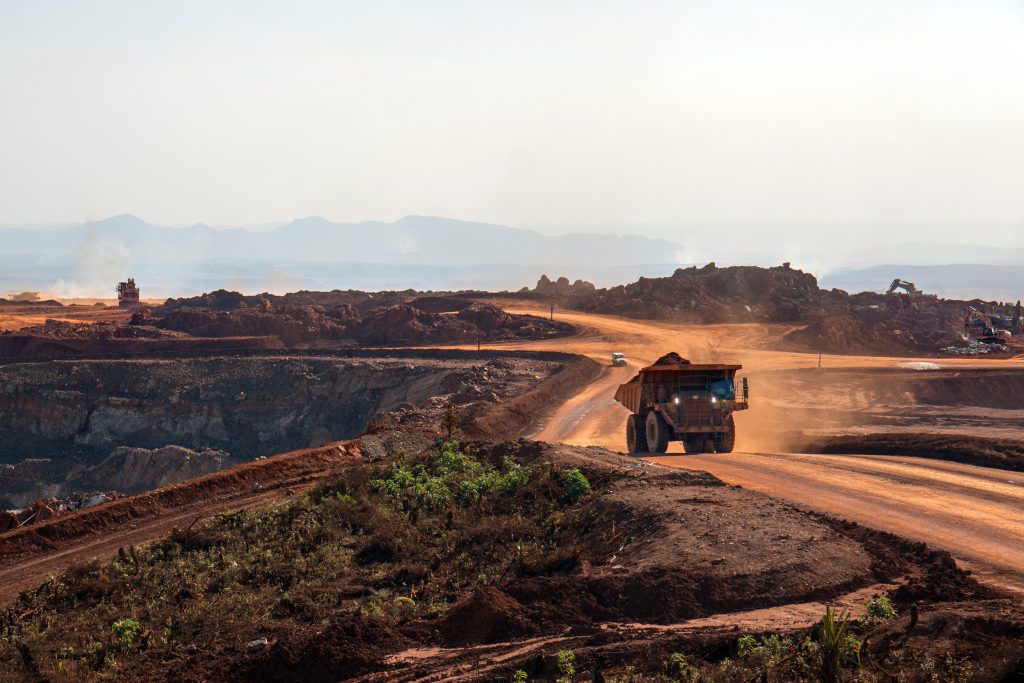
Open pits bring a different problem: strong UV and big daily temperature swings, plus constant abrasion from ore handling. Rigid coatings crack under that thermal stress. Then acidic moisture reaches the steel long before anyone sees the damage.
What a Corrosion Resistant Coating for Mining Needs to Do
A corrosion resistant coating for mining has to do three things at once. It must tolerate acid exposure, flex through heat cycles without cracking, and go on without long shutdowns for blasting.
Si-COAT 579 CM is a single component, moisture cure RTV silicone. It stays rubbery after cure, with 180% elongation, so it moves with the steel instead of cracking.
On chemical exposure, CSL rates it for excellent tolerance to airborne chemicals. In practice, it handles acid vapour and occasional splash, as our case studies show. However, CSL did not design it for pooling or immersion. Where severe splashing or pooling is likely, contact us and we will confirm suitability with CSL.
On surface preparation, the TDS accepts SSPC SP2 hand tool cleaning, SSPC SP3 power tool cleaning or SSPC SP12 water jetting to WJ-4. So crews remove loose rust, loose scale and flaking paint, and keep any sound old coating that passes a tape test. No abrasive blasting is needed.
Application is one coat. First, brush a stripe coat onto edges, welds and bolts. Then apply about 0.2 to 0.5 mm once dry (8 to 20 mil). That is roughly a third to three quarters of a litre per square metre, before losses. On large sites with hundreds of assets, this saves both labour and calendar time.
For the harshest areas, CSL pairs it with CSL 979 primer. That system, about 0.3 mm in total, passed ISO 12944-6:2018 testing for C5 High. The C5 result applies to the system only, not to Si-COAT 579 CM on its own.
Corrosion Resistant Coating for Mining: Underground and Open Pit
Underground, Si-COAT 579 CM suits structural steel, ventilation ducting and support steel in humid workings. That is still atmospheric exposure, which the data sheet covers. When applying in confined spaces, however, provide good ventilation or respiratory protection, as the TDS requires.
In open pits, UV and heat do the damage. Si-COAT 579 CM showed no degradation after 5,000 hours of accelerated UV weathering, with a colour change below 1 delta E. Its flexibility also copes with wide daily temperature swings.
In processing areas, protect the steel around the process. That means acid storage tank shells, structural steel, pipe racks and walkways near leaching, smelting and refining. The leaching circuits themselves, and anything that holds or carries acid inside, need a different lining system.
The Regional Picture for Copper Operations
Zambia’s copper mining centres on Copperbelt Province towns such as Kitwe, Chingola and Mufulira, and on the North Western Province mines of Kansanshi and Sentinel. Over the border, the former Katanga region of the DRC hosts major operations such as Kamoa Kakula and Tenke Fungurume. Meanwhile, in South Africa, Palabora runs its mine, smelter and refinery at Phalaborwa.
The corrosion problems are much the same everywhere: acid process chemistry, heat cycles and, often, humid underground conditions.
There is international evidence too. CSL coated sulphuric acid transport tanks for CODELCO in Chile. At the Escondida copper mine, also in Chile, Si-COAT 579 CM replaced failed epoxy in desert, high altitude conditions. Closer to home, our case studies include a fertiliser plant in the Free State and a chlorine plant in Johannesburg.
Corrosion Resistant Coating for Mining FAQ
Is Si-COAT 579 CM suitable for underground copper mining infrastructure?
Yes, for steel in atmospheric exposure, such as structural steel, ventilation ducting and supports. It is not for submerged or buried steel. In confined spaces, also ensure good ventilation during application.
How does Si-COAT 579 CM perform around acid leaching in copper processing?
It handles acid vapour and occasional splash on the steel around leaching and smelting areas. However, it is not for direct contact with leach solutions, pooling or immersion. For those, contact us and we will confirm the right system with CSL.
Can Si-COAT 579 CM go on without shutting down copper processing?
In many cases, yes. Crews prepare the steel with hand tools, power tools or water jetting instead of abrasive blasting. Sound existing coating can stay if it passes the ASTM D3359 tape test at 4A or 4B. As a result, the work often fits inside normal maintenance windows.
Is Si-COAT 579 CM available in Zambia, the DRC and other copper regions?
Yes. Technical Solution Supplies distributes CSL Silicones products across Southern Africa, including the DRC and the Seychelles.
What service life can a corrosion resistant coating for mining deliver?
Our benchmark for Si-COAT 579 CM is about 20 years. CSL’s longest running reference is a Florida power plant pipe coated in 2003, which still protects its steel. Of course, real life depends on preparation, thickness and exposure.
Long Term Corrosion Protection for Southern Africa’s Copper Sector
Copper mines in Southern Africa face corrosion as tough as any in the world. A coating here must handle acid exposure, survive heat cycles and keep downtime low.
Si-COAT 579 CM covers all three, with the CM System for the harshest areas. To discuss your site, contact us or read the Si-COAT 579 CM FAQ. For more on the Copperbelt, see our article on corrosion protection for copper mining.
Proud exclusive distributor of CSL Silicones in Southern Africa.