
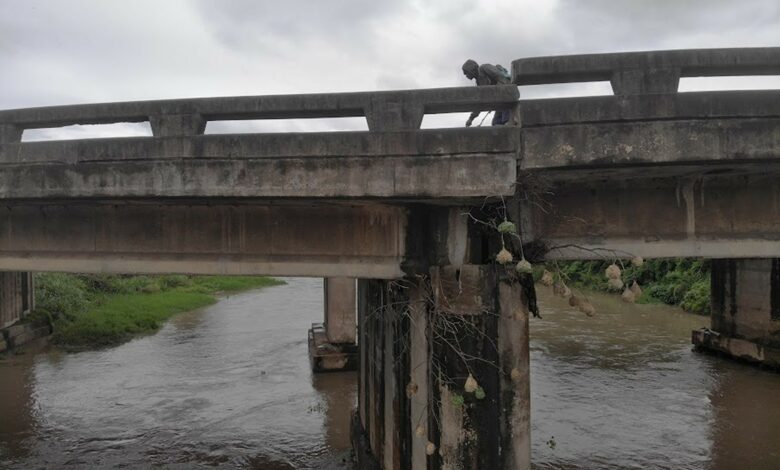
In November 2024, the Ezimbokodweni River Bridge on the N2 south of Durban partially collapsed. It happened just nine months after the bridge scored 98% in its February assessment. For anyone responsible for bridge corrosion protection and maintenance, that gap is the real story. Ageing structures can fail between inspections, and the cause is often hidden until it is too late.
SANRAL’s preliminary findings traced the failure to span four. Its bearings malfunctioned, particularly the concrete rocker bearing on the east side and the central bearings. SANRAL said vibration, along with possible age related deterioration, likely caused spalling and cracking of the concrete. The collapse also followed a weekend of heavy rain across KwaZulu Natal. SANRAL closed the southbound carriageway, fitted a temporary fix and reopened the bridge about two weeks later, with full repairs to follow.
South Africa’s Bridge Corrosion Problem Is Structural and Growing
The Ezimbokodweni bridge dates from the early 1960s. SANRAL’s CEO described it as old, and built with technology the agency no longer uses. It is not alone. According to SANRAL, most of South Africa’s national road infrastructure went up in the 1970s and early 1980s.
At the same time, the load on that network keeps growing. In the 2024/25 financial year, SANRAL took over 3,099 km of provincial roads, many in poor condition and without budgets attached. As a result, its bridge condition measure came in at 89.1% against a 90% target. SANRAL has also raised concern about heavy freight that would be better suited to rail.
The environment adds to the strain. On the coast, salt air attacks exposed steel. Inland, wide daily temperature swings work joints and coatings loose. Heavy traffic then adds vibration on top. Together, these open paths for moisture and oxygen, which is all corrosion needs.
Why Traditional Bridge Corrosion Protection Falls Short
The usual system for bridge steel has three coats: a zinc rich primer, an epoxy intermediate coat and a polyurethane topcoat. It works well when you apply it in ideal conditions. However, bridge maintenance rarely happens in ideal conditions.
Access to bridge steel is difficult and costly. Traffic management is a major constraint. In addition, abrasive blasting next to a live road creates dust, debris and noise, with safety and environmental problems to match. A three coat system also needs several mobilisations, dry weather and strict overcoat windows.
So in practice, owners defer the work until the coating failure is obvious. By then, the steel underneath has already lost section. The job is now bigger and more disruptive, so it gets deferred again. Over time, the cycle feeds itself.
Rigid coatings have another weakness. Epoxy and polyurethane do not move well with a bridge as loads shift and temperatures cycle. Hairline cracks form, and moisture gets in. Corrosion then spreads under the film, often out of sight. Our article on surface preparation for corrosion maintenance covers why blasting standards rarely match maintenance reality.
What Si-COAT 579 CM Does Differently for Bridge Corrosion Protection
Si-COAT 579 CM is a single component, moisture cure RTV silicone corrosion maintenance coating made by CSL Silicones. CSL lists bridges among its typical uses. It goes onto steel cleaned to SSPC SP2 with hand tools, SSPC SP3 with power tools, or SSPC SP12 by water jetting. As a result, a normal maintenance crew can prepare the steel without blasting.
It is also a one coat system. First, the crew brushes a stripe coat onto edges, welds and bolts. Then they apply one full coat of about 0.2 to 0.5 mm once dry (8 to 20 mil). There is no primer stage, no intermediate coat and no overcoat window to chase. On a bridge with short traffic windows, that often decides whether the job happens at all.
The evidence is solid. In a 36 month Florida Fence Test on the Atlantic coast, CSL applied it straight onto rusted steel cleaned by hand tools only. It showed no rust creep, bleed through, pinholes or loss of adhesion. By contrast, three coat zinc, epoxy and polyurethane systems on blasted steel showed heavy rust creep. In addition, it passed 3,000 hours of salt fog and 5,000 hours of accelerated UV weathering with no degradation.
With 180% elongation, the film moves with the steel through vibration and heat cycles instead of cracking. And CSL’s longest running reference, a Florida power plant pipe coated in 2003, has now protected its steel for about 20 years.
Where Bridge Corrosion Protection Matters Most
The parts of a bridge that corrode fastest are usually the hardest to reach. Knowing where they are helps owners and engineers set maintenance priorities.
Beam ends and bearing zones. Moisture and road runoff collect here, and air barely moves. Steel bearing plates, base plates and girder ends need protection most. Where steel meets concrete, we carry one continuous coat from the concrete onto the steel, so no joint is left for water. First, though, remove laitance and any curing compound from the concrete. Note that a coating on exposed steel does not reach reinforcement inside concrete. Concrete bearings and cracked or spalled concrete need inspection and proper concrete repair.
Fascia girders and parapets. These take full sun and, on the coast, salt spray. Here, UV stability counts, because organic topcoats chalk and fade under strong sun. Si-COAT 579 CM showed a colour change below 1 delta E after 5,000 hours of accelerated weathering.
Box sections and under deck steel. These get the least attention, yet they trap moisture. Because Si-COAT 579 CM needs no blasting and goes on in one coat, crews can treat them during routine maintenance. In enclosed box sections, however, ensure good ventilation or use respiratory protection, as the data sheet requires.
Expansion joint zones. Movement concentrates here, so rigid coatings crack first. The flexibility of Si-COAT 579 CM suits these areas well.
Proactive Maintenance vs Emergency Repair
The N2 closure brought weeks of detours and heavy congestion for commuters and freight. In the end, an emergency repair always costs more than planned maintenance, in money, disruption and risk. Moreover, the same pattern repeats across South Africa’s ageing road and rail network. Our article on corrosion protection methods in South Africa compares the main options.
The value of Si-COAT 579 CM is not only in the protection itself. It also makes the maintenance practical. When a crew can mobilise, work inside a traffic window and finish with standard tools, the work actually gets done. That is what breaks the deferral cycle on exposed bridge steel.
For technical detail and application guidance, see the Si-COAT 579 CM FAQ and our case studies.
Frequently Asked Questions: Bridge Corrosion Protection
What is the best coating for structural steel on South African bridges?
For maintenance on bridges in service, a single component silicone such as Si-COAT 579 CM is a strong option. It stays flexible, it is UV stable without a topcoat, and it needs no blasting. For new steel or the harshest coastal exposure, CSL also offers the Si-COAT CM System, with CSL 979 primer under 579CM. That system passed ISO 12944-6:2018 testing for C5 High.
Can you coat rusted steel without sandblasting?
Yes. Si-COAT 579 CM goes onto steel cleaned by hand tools, power tools or water jetting. First, remove loose rust, loose mill scale, grease and any flaking paint. Sound existing coating can stay, provided it passes the ASTM D3359 tape test at 4A or 4B.
How long does a silicone corrosion coating last on a bridge?
Our benchmark is about 20 years, based on a CSL Florida power plant pipe coated in 2003 that still protects its steel. It also passed a 36 month Florida Fence Test with no rust creep. Of course, real life depends on preparation, thickness and exposure.
Why do bridge coatings fail early in South Africa?
The main causes are UV breakdown of organic resins, cracking from movement and heat cycles, and salt on the coast. Deferred maintenance makes all three worse. Rigid coatings crack as the structure moves, and moisture then gets under the film.
Is Si-COAT 579 CM suitable for coastal bridges in KwaZulu Natal and the Western Cape?
Yes, for exposed steel above the water. It passed 3,000 hours of salt fog and the Florida Fence Test on the Atlantic coast. On coastal sites, however, check chloride levels on the steel before coating. For the very worst marine exposure, specify the Si-COAT CM System with CSL 979 primer.
What surface preparation does bridge corrosion protection need?
For Si-COAT 579 CM, the data sheet accepts SSPC SP2 hand tool cleaning, SSPC SP3 power tool cleaning, or SSPC SP12 water jetting to WJ-4. In other words, it does not need near white metal blasting. That matters on bridges, where blasting is often restricted next to live traffic.
Technical Solution Supplies distributes CSL Silicones products across Southern Africa, including the DRC and the Seychelles. For advice on Si-COAT 579 CM for bridge steel, contact us.
Proud exclusive distributor of CSL Silicones in Southern Africa.