Concrete Joint Sealant for Heavy Traffic: Why Standard Products Fail in Depots and Ports
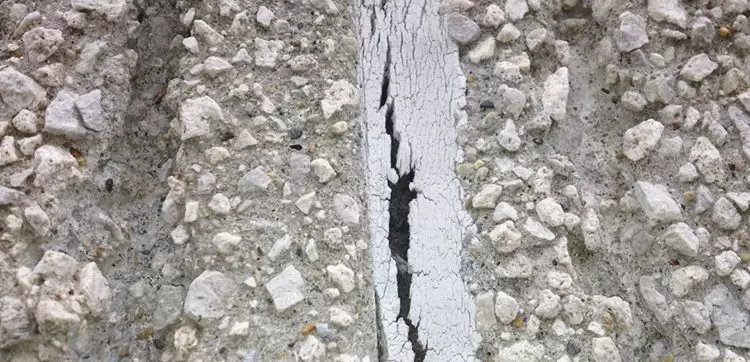
In depots, container yards, and logistics facilities across Southern Africa, concrete joints fail before the slabs do. The surrounding concrete remains structurally sound while the joint opens, fills with debris, and begins shedding edges. Maintenance teams patch it. It fails again. The cycle repeats.
This is not a workmanship problem. It is a product selection problem. Most concrete joint sealants were not designed for the conditions that heavy vehicle traffic creates.
How Heavy Vehicle Traffic Stresses a Concrete Joint
Highway pavement design assumes fast-moving loads with brief contact time over any given point. Industrial yards operate on a fundamentally different loading model. Forklifts, reach stackers, articulated trucks, and container handlers move slowly and stop frequently. They brake across joint lines, turn sharply over them, and reverse repeatedly in confined spaces.
This slow, heavy loading profile increases dwell time over the joint — the period during which full load bears down on the sealant. Vertical compression, horizontal shear, and torsional forces all act simultaneously. A sealant rated for road traffic may pass laboratory tests and still fail within months under these conditions because the laboratory never replicated this loading pattern.
Why Rigid Sealants Fail Under These Conditions
When a high-modulus or rigid sealant encounters compressive load, it resists deformation rather than accommodating it. Under repeated loading, this resistance causes internal tearing, debonding from the joint face, or extrusion out of the joint entirely. Once the sealant loses contact with the joint wall, water and incompressible debris enter. Joint edge spalling follows. What began as a sealant failure becomes a concrete maintenance problem.
Many repair strategies compound this by selecting even stiffer products to resist extrusion, overfilling joints to “reinforce” them, or ignoring joint geometry and backer rod placement entirely. These repairs may hold for weeks. Under continuous heavy traffic, they rarely hold for months.
What Low-Modulus Silicone Does Differently
A low-modulus sealant does not resist deformation — it accommodates it. Under load, the sealant deforms. When the load passes, it recovers. This elastic behaviour is the key to long-term performance in high-traffic joints, and it is the reason silicone outperforms polyurethane and polysulphide systems in these environments.
CSL 316 is a self-levelling, low-durometer 100% silicone joint sealant developed specifically for horizontal concrete joints subjected to extreme movement. Available across Sub-Saharan Africa exclusively through Technical Solutions Supplies, it maintains adhesion and elasticity under the repeated shear and compression loads that depots and ports generate. Because it deforms gradually rather than resisting abruptly, stress transfer to joint edges reduces and internal damage to the sealant body is minimised over time.
The self-levelling characteristic provides a further practical advantage. When installed with correct recess depth and backer rod support, CSL 316 forms a uniform profile across the joint that distributes point loads more evenly. Edge tearing — one of the primary failure modes in high-traffic joints — becomes significantly less likely.
For full technical specifications, visit the CSL 316 product page on the TSS website.
The Long-Term Cost of Getting It Wrong
Once a joint sealant fails under heavy vehicle traffic, secondary damage follows quickly. Water ingress initiates pumping of fines beneath the slab. Slab edges spall progressively. Joint width increases as edge material is lost. Safety hazards develop for both vehicles and personnel operating in the yard.
The maintenance cost of repeated joint repairs in a busy logistics facility is rarely captured in the original product specification decision. Selecting a concrete joint sealant that tolerates the actual loading conditions from the outset avoids this compounding cost. It also reduces facility downtime, which in port and depot environments carries a direct operational cost per hour.
Specifying for Southern African Conditions
Southern African industrial infrastructure combines high ambient temperatures, intense UV exposure, and heavy operational loads. Joint sealants in these environments must tolerate both thermal cycling and mechanical abuse simultaneously. A product that performs in a temperate European logistics yard may degrade faster under Durban or Gauteng conditions where surface temperatures regularly exceed 50°C.
CSL 316 is formulated for these conditions. Its silicone chemistry maintains flexibility and adhesion across a wide temperature range, making it suitable for coastal, highveld, and inland industrial environments across Southern Africa. For more information on CSL Silicones’ full product range, visit www.tssupplies.co.za.
Frequently Asked Questions
Why do concrete joint sealants fail before the surrounding slabs in logistics yards?
Joints concentrate movement and stress into a narrow zone. Under heavy vehicle traffic, the sealant experiences shear, compression, and torsional forces that exceed the elastic limits of rigid products long before the concrete itself shows distress.
Are standard road-grade sealants suitable for depot and port applications?
Not reliably. Road sealants are typically designed for fast-moving traffic with brief load dwell time. Depots and ports require sealants that tolerate slow, heavy, repeated loading — a fundamentally different stress profile that road-grade products are not tested for.
What makes a low-modulus sealant better for heavy traffic joints?
Low-modulus sealants deform under load and recover afterward. This elastic behaviour absorbs repeated shear and compression without internal tearing or debonding. Rigid sealants resist deformation, which causes them to fail under the sustained loading that heavy vehicles apply.
Is CSL 316 suitable for joints in South African depots and container yards?
Yes. CSL 316 is a self-levelling, low-durometer silicone sealant designed for horizontal concrete joints with extreme movement. Its formulation suits the loading conditions, temperature range, and UV exposure of Southern African industrial environments. It is available exclusively through Technical Solutions Supplies.
What happens if a joint sealant fails in a high-traffic facility?
Water ingress through failed joints leads to pumping of fines beneath slabs, progressive edge spalling, joint widening, and safety hazards for vehicles and personnel. Repeated patch repairs add maintenance cost and facility downtime. Selecting the correct sealant from the outset avoids this failure cycle.
Where can I source CSL 316 concrete joint sealant in Southern Africa?
Technical Solutions Supplies is the exclusive Sub-Saharan Africa distributor for CSL Silicones. Contact TSS directly for pricing, technical data, and supply.
Hi. Im looking for a penetrating hydrophobic liquid chemical that can be used to treat exixsting cement stabilised infrastructure such as a road subbase. Kindly let me know if you are available for a brief call so that you can explain the benefits of the product. Thank you
Thank You for getting in contact with us, it was a pleasure speaking to you.