Desert Corrosion Protection: Si-COAT 579 CM at Dakhla
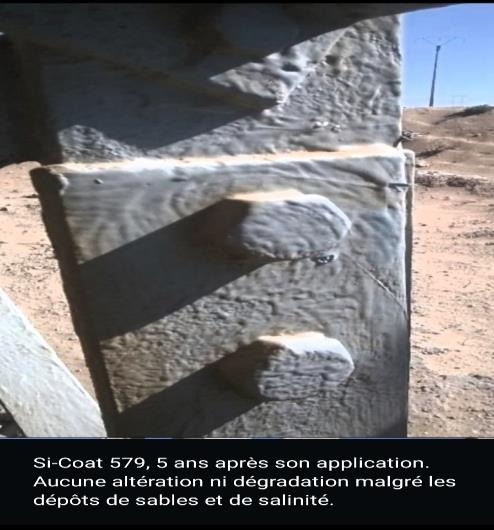
Desert corrosion protection has to handle blowing sand, salt air and fierce sun all at once. At Dakhla, on the Atlantic edge of the Sahara, applicator ESE Ait Hamou photographed Si-COAT 579 CM on steel after five years, with no alteration or breakdown despite the sand and salt.
| Applicator | ESE Ait Hamou Lahcen, an electrical installation and coating contractor based in Dakhla |
|---|---|
| Site | Dakhla, on the Atlantic coast of the Sahara |
| Asset | Steel structures |
| Product | Si-COAT 579 CM |
| Exposure | Desert sand, high salinity and severe weather |
| Photo | Five years after application |
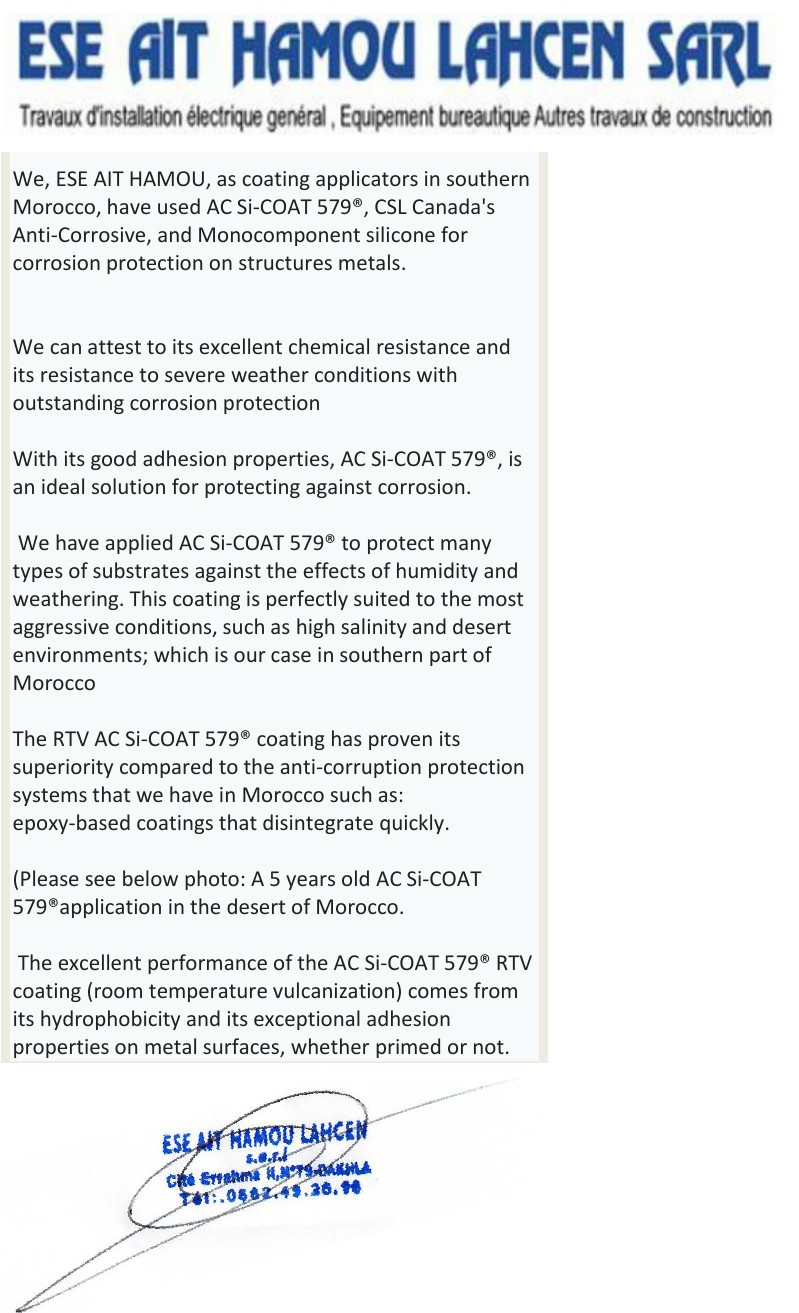
| Source | Signed letter to CSL Silicones, August 2022, in French and English |
Where the desert meets the sea
Dakhla sits on a long sand spit between the Atlantic and a lagoon, with the Sahara behind it. So steel there gets two attacks at once. Salt comes off the ocean on a constant wind. Meanwhile, that same wind carries sand that sandblasts every exposed surface.
Add strong sun and big swings between hot days and cool, damp nights, and you have one of the hardest places on earth to keep steel painted. In the applicator’s own words, these are the most aggressive conditions: high salinity and desert.
Why epoxy struggles here
ESE Ait Hamou compared 579 CM with the systems used locally. Their verdict was blunt: epoxy based coatings there disintegrate quickly. That fits what we see in Southern Africa. Epoxy is hard and rigid, and it chalks in strong UV. Then daily heating and cooling can crack it, and sand wears through the chalky surface.
By contrast, a silicone stays flexible, so it moves with the steel instead of cracking. It also doesn’t chalk in the sun. On top of that, the surface sheds water, so salt gets less chance to sit wet on the steel.
Desert corrosion protection after five years
The photo shows bolted steel coated with 579 CM, five years after application. The coat is thick and continuous over the plate edges and bolt heads, which is where rust usually starts. According to the applicator, there is no alteration or degradation despite the sand deposits and the salt.
In their letter, they credit two things for that: the coating’s water repellence and its adhesion on metal, whether primed or not. They also report applying 579 CM on many types of substrate against humidity and weathering.
What the letter covers, and what it doesn’t
The letter gives the applicator, the setting, the product and a five year photo. It doesn’t name the owner or the structure, or give the area coated or the preparation used. So we quote what ESE Ait Hamou wrote and add nothing to it, as with all our CSL case studies.
Desert corrosion protection in Southern Africa
Southern Africa has its own coastal deserts. For example, the Namib runs right down to the sea at Walvis Bay, Swakopmund and Lüderitz, where fog brings salt inland every morning. Similarly, the Northern Cape coast and the Kalahari bring sand, dust and fierce sun to mines, solar farms and power lines.
On all of these, the same problem turns up: rigid coatings crack, sand wears them, and rust follows. Our article on silicone coatings for corrosion protection in Namibia covers the Namibian coast in detail. Also, the BHP Escondida case study shows 579 CM high in the Atacama Desert.
Desert corrosion protection FAQ
What is the best desert corrosion protection for steel?
Use a flexible, UV stable coating that won’t crack in daily temperature swings. Si-COAT 579 CM is one example. At Dakhla, it showed no breakdown after five years of sand and salt.
Does desert corrosion protection need blasting first?
No. Si-COAT 579 CM goes onto steel cleaned to SSPC SP2 or SP3 with hand or power tools. Even so, loose rust, flaking paint and sand must come off first. Our steel surface preparation guide explains the prep.
How thick should it go on?
First, stripe coat edges, bolts and welds. Then apply one full coat of 0.2 to 0.5 mm dry (200 to 500 microns, 8 to 20 mil). On sand blown sites, aim for the upper end of that range.
Where can I get Si-COAT 579 CM in Southern Africa?
Technical Solution Supplies distributes CSL Silicones products across Southern Africa, including the DRC and the Seychelles. For data sheets and pricing, request a quote with photos of your steel.
More case studies and articles
- First, the silicone corrosion coating product page and the 579 CM FAQ.
- Next, Morocco’s national grid pylons, coated in one coat with no blasting.
- Also, the Algorta Norte iodine mine, in the Atacama Desert.
- Finally, all our case studies in one place.
Proud exclusive distributor of CSL Silicones in Southern Africa.
Send us the problem
Photos and a rough size are enough to start, while drawings and specs can follow later. Then we come back with the right product and a quote.