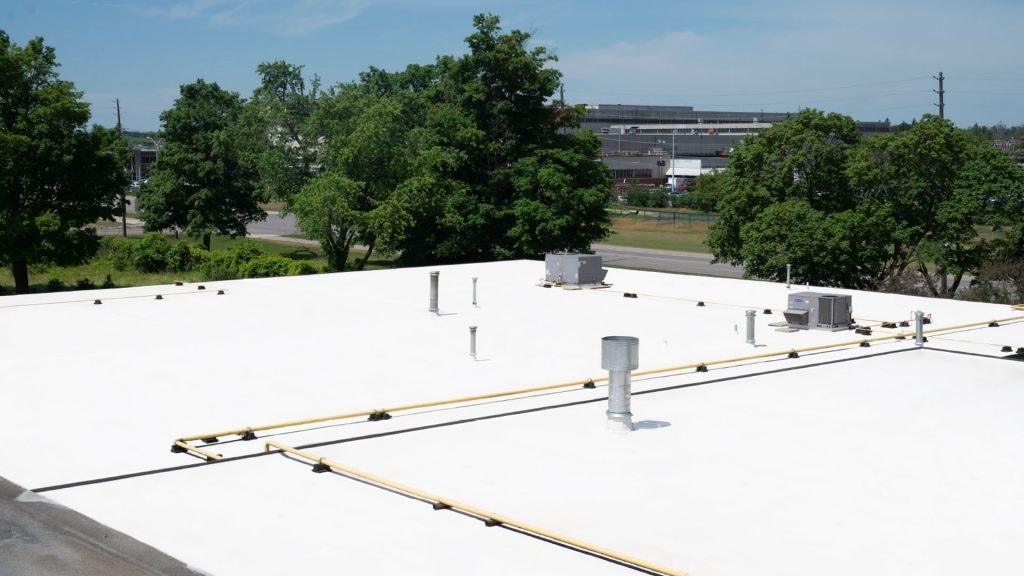
More contractors in South Africa now quote a high solids roof coating instead of a traditional acrylic or polyurethane system. SI-COAT 461 RC from CSL Silicones is a 94% solids silicone that goes on thick, sits under ponding water and can be recoated later without a tear off. This guide covers surface preparation, application, coverage and cure times, all taken from the CSL technical data sheet.
Why Contractors Choose a High Solids Roof Coating
South African roofs are hard on coatings. Durban has coastal humidity and salt air, the Northern Cape has extreme UV, and flat industrial roofs in Gauteng hold water after every storm. As a result, many traditional systems fail early and generate callbacks.
Silicone handles these conditions well. According to the TDS, SI-COAT 461 RC withstands ponding water, while most acrylics are not designed to sit under standing water. CSL also describes excellent durability, colour stability and chalk resistance. In addition, a high solids roof coating loses very little to evaporation, so almost everything you spray stays on the roof as cured film and you reach thickness faster. For a full comparison, see acrylic vs PU vs silicone roof coatings.
For contractors, fewer callbacks mean lower warranty risk and better client relationships.
Surface Preparation: Where Most Jobs Fail
Even a high solids roof coating is only as good as the surface it bonds to. In practice, poor preparation causes far more failures than the product does. Follow these steps on every job:
- Clean thoroughly. Power wash with a suitable detergent and rinse. Remove all dirt, grease, moss and loose material.
- Repair first. Fix cracks, open laps, loose fasteners and damaged areas before coating. A roof coating is not a crack filler.
- Let it dry. The TDS calls for a clean and dry roof, so allow proper drying time after washing.
- Test adhesion. No primer is needed on most substrates, but bitumen and torch on membranes always need a primer first. On everything else, CSL recommends a field adhesion test patch, especially on smooth surfaces, metal and existing coatings. If the result is poor, CSL supplies a compatible primer and you repeat the test.
How to Apply a High Solids Roof Coating
SI-COAT 461 RC can go on by airless spray, squeegee, brush or roller. CSL recommends airless spray because it gives the most even film on large commercial and industrial roofs.
Apply it as a single coat. With spray, build the full thickness with wet on wet passes before the first pass skins over. Brush and roller also work, but they need extra passes to reach the same thickness, again wet on wet in the same session.
Apply when the air and surface are between 5°C and 60°C and at least 3°C above the dew point. On hot metal roofs in summer, an early start is still easier on the crew and the spray pattern. Also remember that a wet silicone roof is slippery, so plan safe access.
High Solids Roof Coating Coverage and Cure Times
The minimum is half a millimetre once dry (20 mil, 508 µm), which works out to roughly half a litre per square metre before losses. The maximum is about 1.3 mm dry (50 mil). For quoting, allow these TDS coverage rates plus a loss factor for the roof profile and texture:
- About 2.1 m²/L at 18 mil DFT
- About 1.7 m²/L at 22 mil DFT
Rough or porous roofs will use more, so measure your high solids roof coating film on the first area you spray. For timing, a 20 mil film skins over in about 68 minutes. It is dry, cured and ready to recoat in 4 to 6 hours, and it reaches full properties after 7 days.
Reflectivity: A Selling Point With Real Numbers
Building owners pay for cooling, so reflectivity sells jobs. The white SI-COAT 461 RC carries a CRRC rating with an initial solar reflectance of 0.856 and an SRI of 107.9. Even soiled, it holds an SRI of 88.9. Furthermore, a CSL case study recorded temperatures 7 to 9°C cooler inside the building after coating.
Lead with these figures when you quote commercial clients. That way the conversation moves from cost to value, and you come across as an advisor rather than just an applicator. Our article on heat reflective roof paint explains SRI in plain terms.
The Recoat Advantage
A silicone roof does not need to be torn off at the end of its life. Instead, you clean it and recoat it with silicone, with no disposal and little disruption to the building. For that reason, a high solids roof coating works well as part of a long term maintenance programme. Explain this model to clients from the first meeting, because clients who understand it tend to come back to the same contractor.
Warehouse and mall owners are a natural fit, as we cover in our article on silicone roof coating in South Africa.
High Solids Roof Coating FAQ
Does SI-COAT 461 RC need a primer?
Not on most common substrates. Bitumen and torch on membranes are the exception and always need a primer first. Otherwise, do an adhesion test patch, especially on smooth, metal and existing coated roofs. If it fails, CSL supplies a compatible primer.
Can it go over an existing silicone coating?
Yes. Silicone bonds to clean, sound silicone, which is why the recoat model works. As always, clean the old coating well and do a test patch.
How long does a high solids roof coating last?
It depends on thickness, preparation and exposure. That said, CSL reports 461 roofs in service in North America for more than 20 years.
Does it work on pitched metal roofs?
Yes. It works on flat and pitched roofs on commercial, industrial and residential buildings. However, it is not for asphalt shingles or contact with potable water.
Where can contractors buy SI-COAT 461 RC?
Technical Solution Supplies distributes CSL Silicones products across Southern Africa, including the DRC and the Seychelles. Contact us for technical support and supply. For more answers, see the SI-COAT 461 RC FAQ or our complete guide to roof waterproofing.
Pingback: Silicone Anti-Corrosion Coating for Structural Steel
I have several clients facing the end of warranty on their torch on roofs. Your silicon coating maybe a solution. I would like more info and pricing.