Acid Resistant Coating for Sulphuric Acid Tanks: CODELCO, Chile
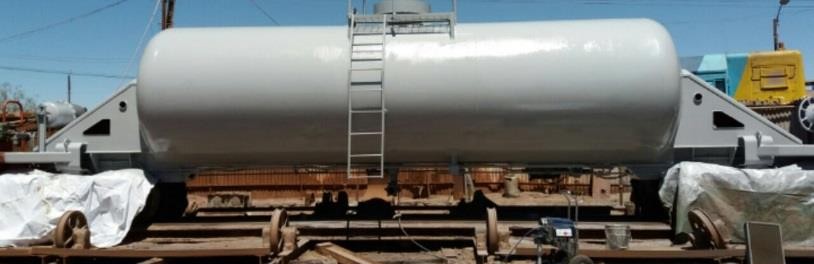
An acid resistant coating on a sulphuric acid tank exterior has to handle acid vapour, splash, sun and heat all at once. From 2016 to 2018, CODELCO used Si-COAT 579 CM on sulphuric acid transport tanks in Chile’s Antofagasta Region.
| Owner | CODELCO |
|---|---|
| Region | Antofagasta, Chile |
| Asset | Sulphuric acid transport tanks, exteriors |
| Period | 2016 to 2018 |
| Product | Si-COAT 579 CM |
| Exposure | Acid vapour and splash, desert sun and big daily temperature swings |
Why acid plants need an acid resistant coating
Copper smelters turn the sulphur in their furnace gas into sulphuric acid. At CODELCO’s Chuquicamata smelter, for example, each of the two newer acid plants can produce up to 2,048 tonnes of market grade acid a day. So acid moves around these sites constantly, in tanks, pipes and transport tanks.
The steel outside those tanks lives in harsh conditions. Acid vapour and occasional splash attack the coating film. Meanwhile, the desert sun and big swings between day and night temperatures stress it from the other side.
Why rigid coatings crack in acid service
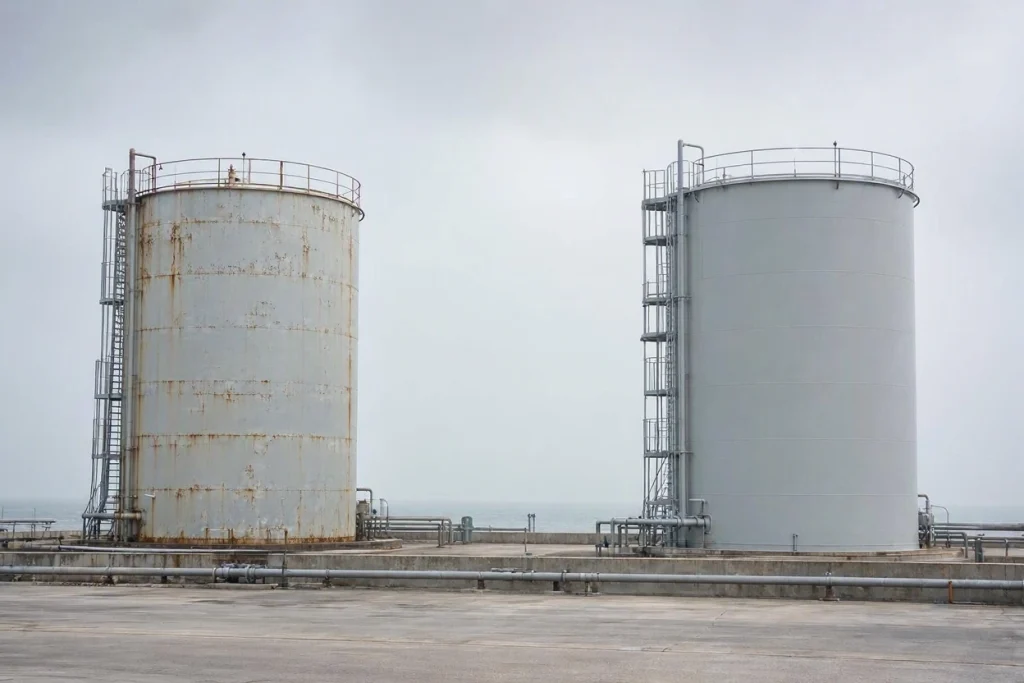
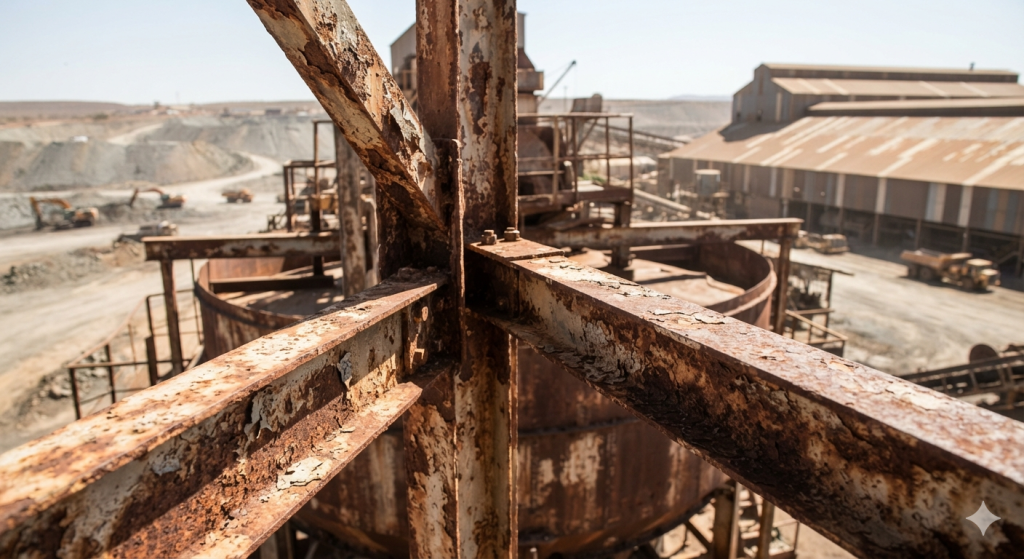
Epoxy and vinyl ester coatings resist chemicals well, but they are rigid. As tanks fill, empty, heat up and cool down, the steel moves, and a rigid film eventually cracks. Acid vapour and moisture then get in through those cracks. Corrosion starts under the film, where it stays hidden until blisters or peeling show it.
Recoating is also hard on a working acid plant. Shutdowns are expensive, and blasting off failed coating on live acid steel is both costly and disruptive.
The CODELCO acid resistant coating job
Between 2016 and 2018, CODELCO coated sulphuric acid transport tanks with Si-COAT 579 CM in Chile’s Antofagasta Region. The coating went on the tank exteriors, where it faces acid vapour, splash, UV and desert temperature swings. The job appears in the CSL Silicones case history for 579 CM, alongside the BHP Escondida copper mine in the same region.
For more detail on this job, ask us for the CSL case history.
Why silicone works as an acid resistant coating
Si-COAT 579 CM is a single component RTV silicone coating made by CSL Silicones. Because silicone stays flexible, the film moves with the steel through heat and process cycling instead of cracking. It has 180% elongation at break, so the barrier stays whole. CSL also rates it for excellent tolerance to airborne chemical exposure.
It goes on in one coat of 0.2 to 0.5 mm dry (200 to 500 microns, 8 to 20 mil), with no primer. It also bonds to tightly bound rust and sound existing coatings. So older acid plant steel can often get a new coat without blasting, after hand or power tool cleaning (SSPC SP2 or SP3) or water jetting (SSPC SP12, WJ-4).
Our own jobs back this up. At the Hoopstad fertiliser plant and a chlorine plant in Johannesburg, the coating has held up to chemical fumes with no primer and no hot work. For full product details, see our silicone corrosion coating page.
Where it fits, and where it doesn’t
579 CM is for above ground exteriors: tank shells and roofs, structural steel, pipe racks and supports around acid plants. It handles acid vapour and occasional splash. However, it is not a tank lining. So never use it on tank interiors, in immersion, on buried steel or in bunds that hold spills. In those areas, specify a lining system rated for immersion instead. For severe exposure or pooling acid, CSL must confirm suitability first.
Acid resistant coating for Southern African plants
Southern Africa has its own acid plants and acid handling sites, serving copper, gold and base metal operations in South Africa, Zambia and the wider region. The chemistry and the thermal stress are the same as in Chile. Likewise, our sites see high UV and big temperature swings, and some coastal sites add salt air on top.
Technical Solution Supplies distributes CSL Silicones products across Southern Africa, including the DRC and the Seychelles. We help mines, smelters and acid plants specify Si-COAT 579 CM for tank exteriors, structural steel and process steel. See also our articles on corrosion protection for copper mining and mining corrosion protection.
Acid resistant coating FAQ
Is Si-COAT 579 CM an acid resistant coating for tank exteriors?
Yes, for exteriors. It handles acid vapour and occasional splash on tank shells, structural steel and the steel around acid plants. However, tank interiors and anything in constant contact with acid need a lining system rated for that service.
How does 579 CM compare with epoxy in acid service?
Epoxy is rigid, so thermal cycling in acid plants cracks it over time, and corrosion then creeps in under the film. By contrast, 579 CM stays flexible and moves with the steel, so the film stays whole.
Does 579 CM need blasting on acid plant steel?
In most cases, no. It bonds to tightly bound rust and sound existing coatings. Prep is hand or power tool cleaning (SSPC SP2 or SP3) or water jetting (SSPC SP12, WJ-4) to remove salts, acid residue, loose rust and flaking paint. Without blasting, downtime on live process steel drops.
Is Si-COAT 579 CM available in Southern Africa?
Yes. Technical Solution Supplies distributes CSL Silicones products across Southern Africa, including the DRC and the Seychelles. For pricing and technical data, request a quote.
More corrosion protection articles
- Corrosion Coating Cost: How to Compare Quotes on Total Cost of Ownership

- Corrosion Protection in South Africa: Comparing the Methods That Actually Work

- Corrosion Protection Coating South Africa: Everything You Need to Know
- Corrosion Resistant Coating for Mining: Protecting Copper Operations Across Southern Africa
- Mining Corrosion Protection in South Africa: Why SI-COAT 579 CM Outperforms Traditional Coatings

- Anti-Corrosion Coating for Structural Steel: Why Silicone Outperforms Epoxy


Send us the problem
Photos and a rough size are enough to start, while drawings and specs can follow later. Then we come back with the right product and a quote.