Choosing a roof coating in South Africa is harder than it looks, because our roofs take a relentless beating. Intense UV, extreme heat, summer storms and daily expansion and contraction attack the roof surface all year. Many roof coatings crack, peel and fail within a few years. Then the leaks start, and the real costs begin.
A roof coating here needs to do more than paint a surface. It must flex with the substrate, reflect solar heat, resist UV, and hold its seal through years of thermal cycling. Most products on the market do not meet all four of these requirements at once. SI-COAT 461 RC does.
Technical Solution Supplies distributes SI-COAT 461 RC silicone roof coating for CSL Silicones, supplying commercial property owners, industrial facilities, mines and infrastructure owners across South Africa and into Zambia, the DRC and Malawi.
What Is Roof Coating?
A roof coating is a liquid applied protective membrane that bonds to the existing roof and forms a seamless, weatherproof barrier. Unlike roof paint, which mainly adds colour and limited protection, a roof coating is built to deliver waterproofing, UV resistance, heat reflection and flexibility in one application.
The difference matters. Roof paint is usually an acrylic or bitumen product applied in thin films, mostly for looks. It offers limited waterproofing and breaks down fast in our UV. A quality roof coating, especially an elastomeric silicone like SI-COAT 461 RC, forms a thick, flexible membrane at a minimum of 20 mil (508 microns) dry, which protects the roof from water, heat and movement.
Does Roof Coating Work?
Yes, but it depends entirely on the chemistry. Not every roof coating performs equally in our climate.
Acrylic works reasonably in moderate conditions, but it cracks under severe thermal cycling and breaks down in prolonged UV. Bitumen coatings, on the other hand, soften at high roof temperatures, which regularly pass 70°C on metal roofs here, and flow away from laps and penetrations. Neither is elastic enough to follow the movement our roofs go through every day.
SI-COAT 461 RC is a silicone elastomeric coating. It flexes with the substrate instead of cracking, reflects solar heat instead of absorbing it, and stands up to UV. As a result, it outperforms acrylic and bitumen on the things that matter most in our climate. For a full comparison, read acrylic vs polyurethane vs silicone roof coatings.
What Are the Benefits of Roof Coating in South Africa?
A roof coating brings several measurable benefits for property owners and facility managers.
Waterproofing is the main one. A quality coating seals cracks, laps and penetrations, stopping water at the source instead of chasing leaks afterwards. SI-COAT 461 RC forms a seamless elastomeric membrane that follows joint movement without opening up. It also withstands ponding water, according to the TDS.
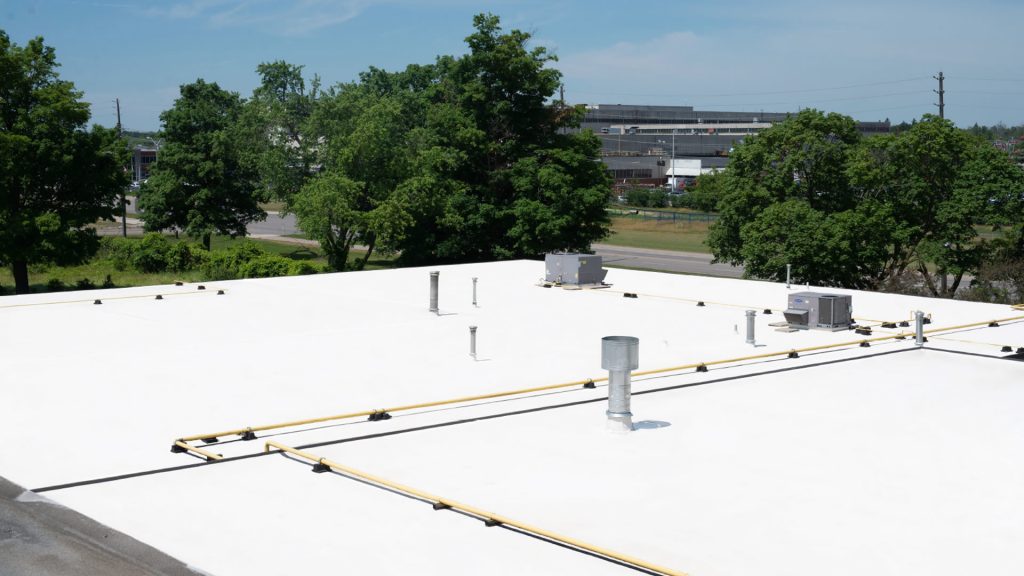
Heat reduction is a major second benefit. The white SI-COAT 461 RC is rated by the Cool Roof Rating Council with an initial solar reflectance of 0.856 and an SRI of 107.9, so it reflects most of the sun’s energy. In a CSL case study, the building ran 7 to 9°C cooler inside after coating. That cuts cooling costs for commercial, industrial and residential buildings, especially in our hot interior. Read more on heat reflective roof paint.
Longer roof life follows from protection against UV, heat and water. A coating stops the surface breakdown that leads to early roof failure, so it extends the life of the existing roof and puts off costly replacement.
Cost savings build up over time. A single SI-COAT 461 RC application costs far less than a new roof, and its long service life avoids the recoating cycles that shorter life products need.
What Types of Roof Coating Are Available in South Africa?
Several roof coating types compete in the local market. Knowing the differences helps owners and specifiers choose correctly.
Acrylic roof coatings are water based, easy to apply and widely available. They suit pitched roofs in moderate climates, but they crack under severe thermal cycling, break down in prolonged UV and fail under ponding water.
Bitumen and tar based coatings give reasonable waterproofing on flat roofs, but they soften at high temperatures, which makes them a poor choice for metal roofs in direct sun.
Polyurethane coatings are tougher and more elastic than acrylic. However, most grades yellow and lose flexibility in sustained UV unless they get an aliphatic topcoat, and they need recoating sooner than silicone.
Silicone elastomeric coatings are the highest performing category for South African roofs. SI-COAT 461 RC cures to a flexible, UV resistant membrane that follows thermal movement, reflects solar heat and needs no topcoat. For metal roofs, industrial buildings and flat roofs with ponding water, silicone is the right specification. See also silicone vs liquid rubber.
How Much Does Roof Coating Cost in South Africa?
Cost depends on roof area, surface preparation, coating type, and whether a professional applies it.
For a quality silicone coating, costs vary by region and project. However, total cost must be weighed against service life. A cheaper acrylic that needs regular recoating can cost far more over ten years than one silicone application that lasts for decades.
SI-COAT 461 RC costs more per square metre than basic acrylic. Even so, its reflectivity cuts cooling costs from day one, and its long life removes the recoating costs other products bring. For commercial and industrial buildings, that makes silicone the most cost effective choice over any meaningful period.
For accurate pricing for your roof area and location, contact TSS directly.
How Much Roof Coating Do I Need?
Coverage depends on the film thickness and on how rough or porous your roof is. According to the TDS, SI-COAT 461 RC covers 2.1 m² per litre at 18 mil and 1.7 m² per litre at 22 mil dry film thickness. The minimum is 20 mil, which works out at about 1.9 m² per litre in theory.
To estimate, divide your roof area by the coverage rate for your target thickness, then add a loss factor for wastage, overspray and rough surfaces. TSS can work out quantities for your specific roof type and area.
How Do You Apply Roof Coating in South Africa?
Correct application decides how long the coating lasts. Follow these steps for SI-COAT 461 RC.
Step 1, prepare the surface. Remove all loose material, dirt, moss, algae and failed coating. Then pressure wash the roof with a suitable detergent and rinse. Repair damaged sheeting, loose fasteners and open joints before coating. SI-COAT 461 RC needs no abrasive blasting and no primer on most substrates, but bitumen always needs a primer. Do an adhesion test patch on metal, smooth and previously coated roofs first.
Step 2, treat the details. Seal penetrations, flashings, laps and ridge caps first, using compatible CSL Silicones sealants or a stripe coat. These are the highest risk leak points.
Step 3, apply the field coat. Apply SI-COAT 461 RC as a single coat to at least 20 mil dry, by airless spray, brush, roller or squeegee. Airless spray gives the most even finish on large roofs. Where one pass is not enough, go over it again while it is still wet, before it skins at about 68 minutes, so it cures as one continuous coat. Make sure there are no holidays or thin spots.
Step 4, let it cure. It can be walked on for further work after 4 to 6 hours and reaches full properties in 7 days. Protect it from rain during the first hours of cure. Remember that silicone coated roofs are very slippery, especially when wet.
How Long Does Roof Coating Last in South Africa?
Service life depends on chemistry, application quality and UV exposure. Acrylic roof coatings need recoating far sooner than silicone in South African conditions. Bitumen coatings last longer in mild climates but fail faster in high UV and heat.
SI-COAT 461 RC far outlasts these alternatives. CSL describes it as having excellent durability, colour stability and chalk resistance, and CSL reports 461 roofs in service in North America for more than 20 years.
Does Roof Coating Stop Leaks?
Yes, when it is correctly applied to a sound roof. SI-COAT 461 RC’s elastomeric membrane seals cracks, laps and minor penetrations, and because it is flexible, it follows movement at those points without reopening.
However, a coating is not a substitute for structural repair. Badly damaged sheeting, rusted through metal, broken tiles or failed structure must be repaired first. In short, a roof coating seals a surface, it does not rebuild a roof.
What Is the Best Roof Coating for Metal Roofs in South Africa?
Metal roofs bring their own challenges. Metal expands and contracts a lot with temperature, and a coating that cannot flex with it cracks at fasteners, laps and ridge caps within a few years.
SI-COAT 461 RC suits metal roofs well. Its elasticity follows the movement of Chromadek, IBR and corrugated galvanised sheeting without cracking. Its reflectivity also tackles the heat that makes metal buildings uncomfortable and expensive to cool. In addition, it protects the metal from the UV and airborne chemicals that speed up corrosion. For mine and plant roofs, see roof coating for mining.
What Is the Best Roof Coating for Flat Roofs in South Africa?
Flat roofs bring a different set of problems. Ponding water, fatigue at joints and penetrations, and movement at parapet walls create constant leak risks on flat and low slope roofs.
SI-COAT 461 RC’s seamless membrane suits flat roofs well, because it withstands ponding water, follows joint movement and resists the UV that shortens the life of bitumen and acrylic. Read more on ponding water on flat roofs and our complete guide to roof waterproofing.
Frequently Asked Questions
What is the best roof coating in South Africa?
For metal roofs, industrial buildings and any roof facing severe UV, heat or ponding water, a silicone elastomeric coating outperforms acrylic and bitumen on service life, flexibility and UV resistance. SI-COAT 461 RC from TSS is a high performance silicone roof coating available across South Africa.
How much does silicone roof coating cost in South Africa?
Silicone roof coating costs more per litre than basic acrylic, but it lasts far longer. Over ten to twenty years, it usually costs less than repeated acrylic recoating once the full lifecycle cost is counted. Contact TSS for project specific pricing.
Can roof coating be applied over existing roof paint?
Usually, yes. SI-COAT 461 RC bonds to most existing roof coatings without full removal. The surface must be clean, sound and free of loose or flaking material, and CSL recommends an adhesion test patch on existing coated roofs first.
Is roof coating worth it in South Africa?
For any roof with leaks, heat problems, or a coating near the end of its life, a roof coating gives a strong return. The alternative, roof replacement, costs far more and is not needed when the structure is sound. A coating restores waterproofing, cuts heat load and extends roof life at a fraction of the replacement cost.
Where can I buy roof coating in South Africa?
SI-COAT 461 RC is available through Technical Solution Supplies, distributor of CSL Silicones products, across South Africa and into Zambia, the DRC and Malawi.
What is an elastomeric roof coating?
An elastomeric roof coating is a flexible, rubber like membrane that stretches and returns to shape under stress. Unlike rigid coatings that crack under thermal cycling or movement, it follows the substrate without breaking the waterproof seal. SI-COAT 461 RC is an elastomeric silicone roof coating, with 282% elongation at break.
The Roof Coating South Africa’s Climate Demands
South Africa’s UV, temperature extremes and seasonal storms demand a roof coating that goes beyond basic paint. SI-COAT 461 RC delivers elastomeric flexibility, solar reflectivity, UV resistance and long term waterproofing in a single silicone coating, which is the standard our roofs require.
To discuss SI-COAT 461 RC for your roof, contact us or read the SI-COAT 461 FAQ. Proud distributors of CSL Silicones.
I am Giba from knysna in western Cape
Where can I buy S1-Coat 461 RC in western cape
TSS is based in KZN
Does it have a branch in western Cape