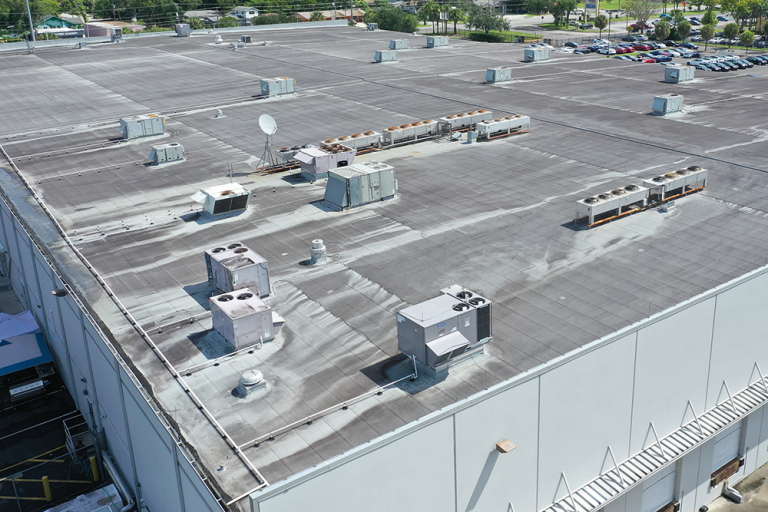
Data centres run cooling systems around the clock, and every bit of heat that comes in through the roof adds to that load. A data centre roof coating tackles this at the source by reflecting sunlight before the heat reaches the building. For facility managers in South Africa, it is therefore not a cosmetic upgrade. Instead, it is a practical lever on energy use, uptime and long term protection of the roof. In this article we look at SI-COAT 461 RC from CSL Silicones and what its technical data supports.
Why a Data Centre Roof Coating Lowers Cooling Costs
Data centre operators track Power Usage Effectiveness (PUE) as a core efficiency measure. PUE compares total facility energy with the energy the IT equipment uses. Cooling makes up a large share of that overhead. Consequently, a data centre roof coating that cuts the heat load on the building improves PUE without touching the servers.
South African roofs take intense sun for most of the year. A dark or weathered roof absorbs that energy and passes it into the structure below. As a result, the HVAC plant works harder to hold the tight temperature and humidity limits that server halls need. Over time, this adds to both the electricity bill and the wear on cooling equipment.
How SI-COAT 461 RC Reduces Heat Gain
SI-COAT 461 RC is a high solids silicone roof coating with 94% volume solids. The white carries a CRRC rating (product ID 1368-0002) with an initial solar reflectance of 0.856, thermal emittance of 0.89 and a Solar Reflectance Index (SRI) of 107.9. After weathering, the soiled values are still a solar reflectance of 0.723 and an SRI of 88.9. In practice, a CSL case study recorded temperatures 7 to 9°C cooler inside the building after coating. For a plain explanation of SRI, see our article on heat reflective roof paint.
The coating also lasts in strong sun. CSL describes excellent durability, colour stability and chalk resistance. Furthermore, elongation at break is 282% at 23°C and 330% at minus 18°C, so the film moves with the roof through daily heat cycles instead of cracking. On a data centre, that matters, because a crack or open lap above live equipment means a leak risk nobody can afford.
How a Data Centre Roof Coating Protects Uptime
Data centre operators cannot easily schedule downtime for major roof work, which is where a data centre roof coating has a clear edge. A full replacement brings noise, dust and open roof sections directly above server halls and cooling plant. Therefore, any roof work needs to keep live operations safe.
SI-COAT 461 RC goes over the existing roof, so there is no tear off. The roof is power washed with a suitable detergent and left to dry. No primer is needed on most substrates, but bitumen and torch on membranes always need a primer first. CSL also recommends an adhesion test patch, especially on smooth surfaces, metal and existing coatings. The coating goes on as a single coat, at least half a millimetre once dry (20 mil, 508 µm), built up with wet on wet passes before the first pass skins over. Airless spray is recommended, and brush or roller simply need more passes in the same session. The film skins over in about 68 minutes, is dry and ready to recoat in 4 to 6 hours, and reaches full properties after 7 days.
Substrate Suitability and Ponding Water
Most data centres in South Africa are large, low slope industrial buildings, much like warehouses, so a data centre roof coating has to suit several substrates. SI-COAT 461 RC suits metal roofing, including IBR, corrugated and prepainted steel sheeting, as well as concrete and existing coatings. This matters because data centre campuses often grow in phases, so older and newer roof sections sit side by side.
Flat roofs also do not always drain completely after heavy rain. According to the TDS, SI-COAT 461 RC withstands permanent ponding water, so there is no need to rebuild the falls just to protect the coating. Our article on ponding water on a flat roof covers this in more detail.
Coverage and Long Term Performance
For planning, allow roughly half a litre per square metre at the minimum thickness, before losses. In TDS terms, CSL gives coverage of about 2.1 m²/L at 18 mil DFT and 1.7 m²/L at 22 mil DFT. Allow a loss factor for the roof profile on top of that. In terms of service life for a data centre roof coating, CSL reports 461 roofs in service in North America for more than 20 years. In addition, a sound silicone roof can be cleaned and recoated with silicone later, again without a tear off.
SI-COAT 461 RC holds ASTM D6694, UL, Title 24 and Miami Dade listings. Note that it is not for contact with potable water, and a wet silicone roof is slippery, so plan safe walkways for maintenance teams.
Data Centre Roof Coating FAQ
How does a cool roof reduce energy use in a data centre?
A reflective data centre roof coating sends more of the sun’s energy back out, so less heat enters the building. That lowers the base cooling load, and the HVAC plant uses less energy to hold server room conditions.
How do cool roofs improve PUE?
Cooling is a big part of total facility energy in the PUE calculation. Consequently, any drop in cooling demand improves PUE, because IT energy stays the same while total facility energy falls.
How does a data centre choose the right roof coating?
Look at the substrate, the condition of the existing roof, sun exposure and any ponding. Then check the coating against independent data such as a CRRC rating. Technical Solution Supplies can help match the system to the building.
Can the coating go on while the data centre is running?
Yes. The coating goes over the existing roof after cleaning, with no tear off, so operations below carry on. As always, plan access and safety with the facility team first.
Who supplies data centre roof coating in South Africa?
Technical Solution Supplies distributes CSL Silicones products across Southern Africa, including the DRC and the Seychelles. Contact us for technical support and supply.
Talk to Us
To discuss SI-COAT 461 RC for your facility, contact us. For more detail, see the SI-COAT 461 RC FAQ, our article on silicone roof coating in South Africa or the complete guide to roof waterproofing.