JOINT SEALANTS

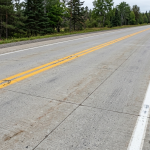
CSL 316 is a one part self levelling silicone sealant for horizontal concrete joints, made by CSL Silicones. Contractors use it on roads, bridges, airport aprons and taxiways, harbours, industrial floors and logistics yards. Because it flows level into the joint, it gives a smooth finish, and it cures at ambient temperature and humidity.
On standards, it complies with ASTM D5893 Type SL, the specification for silicone joint sealants in concrete pavements. Per ASTM C719, it is also rated for +100/−50% joint movement. In addition, it conforms to the COTO specification used on SANRAL projects. Finally, CSL reports 316 joints in service in North America for more than 20 years, and backs the sealant with a 10 year product warranty.
Why Polyurethane Joint Sealants Keep Failing on South African Infrastructure
Polyurethane joint sealants dominate the South African market because they cost less upfront and bond to most substrates. For decades that made them the default on roads, bridges, airports and industrial floors. However, their record in local conditions is less convincing.
South Africa has some of the highest UV levels in the world. Polyurethane is an organic polymer, and UV breaks it down through photo oxidation. As a result, the sealant hardens, chalks and cracks over time. Once a joint sealant cracks, it stops sealing. Water then reaches the subgrade and starts the erosion that leads to potholes and pavement failure.
Thermal cycling also adds to the damage. On the Highveld, the gap between overnight lows and afternoon highs is often more than 20°C. So the slabs move every day, and a standard Class 25 polyurethane, rated for ±25% movement, is pushed past its limit and tears.
A failed joint never costs only the sealant. On roads, water through failed joints weakens the subgrade. On bridges, water through deck joints reaches the reinforcing steel and starts corrosion, as our article on bridge corrosion protection explains.
CSL 316 deals with both causes. First, silicone resists UV far better than polyurethane, and the TDS records no degradation in accelerated weathering to ASTM C793. Second, its +100/−50% movement rating gives four times the extension and twice the compression of a Class 25 sealant.
Self Levelling Silicone Sealant Properties
Movement. Rated +100/−50% per ASTM C719. So the sealant can stretch to twice its installed width and compress to half of it without failing. As a result, it covers the thermal and traffic movement in highway, bridge and airport joints.
UV resistance. CSL states that 316 resists sunlight, ozone, rain, snow and temperature extremes. That is because the silicon oxygen backbone does not break down under UV the way polyurethane does.
Self levelling. The sealant flows under its own weight to a smooth, level surface across the joint. Then tool it against the joint faces for the best adhesion.
Flexibility. Elongation at break is 1000% and hardness is 10 Shore A. As a result, the low modulus puts very little stress on the joint faces as the slabs move.
Temperature range. The cured sealant also keeps its properties from −60°C to 200°C.
Fuel resistance. CSL tested 316 using a modified ASTM C719 cycle, with seven days of exposure to JP-4 jet fuel, Skydrol B hydraulic fluid, other hydraulic fluid and a 50:50 glycol and water mix. Therefore it suits airport aprons, fuel handling areas and port pavements. The test summary is in the documents below.
Neutral cure. 316 uses an oxime cure, so it releases no acetic acid as it cures.
Primer. No primer is needed on most substrates. Still, run a trial bead on the actual concrete and check adhesion after 7 days. If it falls short, we will advise on a primer with CSL.
Where This Self Levelling Silicone Sealant Is Used
Roads and highways. National and provincial roads carry thousands of metres of concrete joints. 316 also conforms to the COTO specification used on SANRAL projects and handles the movement from daily temperature swings and heavy freight. For example, a supplier to the Texas Department of Transportation ordered three truckloads of 316, about 124,800 cartridges, in 2021 for highway joints. The case history is in the documents below.
Bridge decks. Deck joints take traffic loading, thermal movement of the structure, and water and salt from road drainage. So the high movement rating and low modulus suit these joints well.
Airports. Aprons and taxiways see fuel spills, aircraft loads and full sun on the concrete. Because 316 keeps its seal after jet fuel exposure, it cuts the number of shutdowns for joint repair.
Harbours and ports. Port pavements face salt air, heavy container handlers and constant wetting and drying. However, silicone does not break down in salt air or chlorides.
Industrial floors and logistics yards. Forklifts and trucks load the joints thousands of times a day. Even so, the low modulus lets 316 recover from that movement again and again.
Water infrastructure. For joints that get wet, such as canal linings and reservoir decks, 316 stays flexible and keeps its seal. However, for joints that are permanently under water, or in contact with drinking water, contact us before specifying.
Application Summary
- Substrate: concrete and steel, clean, dry and free of dust, frost, oil and old sealant
- Joint faces: first sandblast the top 25 mm of each face, then blow out with oil free compressed air in one direction
- New concrete: allow at least 7 days to cure and dry before sealing
- Joint width: 6 to 25 mm
- Sealant thickness: about half the joint width, 6 to 12 mm, recessed 6 to 12 mm below the surface
- Backer rod: polyurethane or expanded polyethylene foam, a snug fit on both sides, because it sets the depth and prevents three sided adhesion
- Application: one part, so no mixing. First fill from the bottom up in one continuous pass, then tool against the joint faces
- Application temperature: ambient up to 50°C. For colder conditions, however, check with us first
- Cure at 25°C and 50% humidity: tooling time 22 minutes, tack free 90 minutes, cured 48 hours, full properties 7 days
- Traffic: a properly recessed joint can take traffic after installation and clean up are complete
- Standards: ASTM D5893 Type SL, movement +100/−50% per ASTM C719, conforms to the COTO specification used on SANRAL projects
- Colour: grey, and custom colours are also available
- Packaging: 300 ml cartridges, 18.9 L pails, 189 L drums
Self Levelling Silicone Sealant vs Polyurethane
Standard polyurethane joint sealants are typically rated Class 25, or ±25% movement. They also break down under South African UV, so on exposed infrastructure they need replacing far sooner than silicone.
CSL 316, by contrast, is rated +100/−50% per ASTM C719, resists UV according to CSL, keeps its seal after jet fuel exposure, and has a service record of more than 20 years in North America. In addition, CSL offers a 10 year product warranty against material defects, on its standard terms.
Technical Solution Supplies distributes CSL Silicones products across Southern Africa, including the DRC and the Seychelles. For full technical data, see the CSL 316 FAQ, download the documents below, or contact us.
Joint Sealant Technical Documents
Want to get in contact? Click Here
Proud exclusive distributor of CSL Silicones in Southern Africa.
Related Joint Sealant Articles
- Expansion Joint Sealer: What South African Contractors Need to Know
 Every concrete structure moves. Temperature swings, traffic loads and settlement make joints open and close all year. Without a reliable expansion joint sealer, water and debris get into those gaps, and damage follows. So choosing the right sealer decides how long a joint lasts before it fails. South African contractors face particularly harsh conditions. For example, coastal humidity in KwaZulu Natal and the Western Cape speeds up material breakdown, while inland regions swing between scorching summers and cold winters. As a result, an expansion joint sealer here must handle wide temperature changes without cracking, shrinking or losing its bond. What… Read more: Expansion Joint Sealer: What South African Contractors Need to Know
- Concrete Joint Sealant: The Complete Guide for South African StructuresA concrete joint sealant protects every joint in a slab, floor or road from water, dirt and grit. Structures move all the time. Temperature swings, traffic loads and ground settlement all put stress on concrete. So without a reliable sealant, joints open up, water gets in, and repair costs climb fast. This concrete joint sealant guide explains what a sealant does, which types perform best, and how to apply CSL 316 SL correctly in South African conditions. Concrete Joint Sealant Guide: What a Sealant Does A joint sealant fills the gap between two sections of concrete. That gap, the joint,… Read more: Concrete Joint Sealant: The Complete Guide for South African Structures
- Self Levelling Silicone Sealant South Africa: Everything You Need to Know About CSL 316 SL Self Levelling Silicone SealantSelf levelling silicone sealant is one of the most specified products in South African civil engineering and infrastructure maintenance. Contractors use it on highways, bridges, airport aprons, parking decks and industrial yards. However, finding a product that genuinely performs in our climate is not always straightforward. CSL 316 SL Self Levelling Silicone Sealant is a one part, moisture cure, room temperature vulcanising silicone joint sealant. TSS distributes it in South Africa for CSL Silicones. This article answers the key questions about self levelling silicone sealant and explains why CSL 316 SL belongs in your next specification. What Is Self Levelling… Read more: Self Levelling Silicone Sealant South Africa: Everything You Need to Know About CSL 316 SL Self Levelling Silicone Sealant
- Concrete Joint Sealants: How Polyurethane, Hybrid, and Silicone Handle Movement in South African InfrastructureChoosing a concrete joint sealant starts with one fact: concrete moves. Temperature swings, drying shrinkage and traffic loads all make slabs expand and contract. In South Africa, from the humid coast to the Highveld, that movement never stops. When the concrete moves and the sealant cannot, the joint fails. The seal tears or lets go of the joint face, and water gets in. As a result, the concrete and the layers beneath it start to deteriorate. Even so, choosing the right concrete joint sealant still confuses many asset managers and contractors. Three sealant types dominate the market: polyurethane, hybrid and… Read more: Concrete Joint Sealants: How Polyurethane, Hybrid, and Silicone Handle Movement in South African Infrastructure
- Why Polyurethane Joint Sealants Keep Failing on South African Roads and InfrastructurePolyurethane is the default joint sealant in South Africa. Contractors specify it on roads, bridges, airport aprons and industrial floors almost without thinking. However, its record as a joint sealant in South Africa tells a different story from the one on the data sheet. Strong UV and wide temperature swings age it faster than in milder climates, and the result is cracked joints, water in the structure below, and maintenance that never seems to end. Why Polyurethane Became the Default Joint Sealant in South Africa Polyurethane became the default on local projects for simple reasons. It bonds to almost everything,… Read more: Why Polyurethane Joint Sealants Keep Failing on South African Roads and Infrastructure
- Heavy Vehicle Traffic: Why Joint Sealants Fail in Depots, Ports, and Logistics YardsConcrete Joint Sealant for Heavy Traffic: Why Standard Products Fail in Depots and Ports A concrete joint sealant for heavy traffic has a harder life than almost any other sealant. In depots, container yards and logistics facilities across Southern Africa, the joints often fail long before the slabs do. The concrete stays sound, but the joint opens, fills with debris and starts losing its edges. Maintenance teams patch it, it fails again, and the cycle repeats. Usually this is not a workmanship problem. Instead, it is a product selection and joint detailing problem, because most sealants were never designed for… Read more: Heavy Vehicle Traffic: Why Joint Sealants Fail in Depots, Ports, and Logistics Yards
- Concrete Joint Movement: Why South Africa’s R1 Trillion Infrastructure Bet Depends on Getting the Details RightIn the 2025 Budget, South Africa committed more than R1 trillion to public infrastructure over three years. Roads, bridges, water systems, ports and public buildings are all in scope, and most of it will be built in concrete. Concrete joint movement is where much of that investment can quietly fail, long before any structural damage shows, if the wrong materials go into the joints. What Is Concrete Joint Movement and Why Does It Matter? Concrete joint movement is the continuous expansion, contraction, compression and extension at the deliberate gaps in concrete structures. It carries on for the whole life of… Read more: Concrete Joint Movement: Why South Africa’s R1 Trillion Infrastructure Bet Depends on Getting the Details Right
- Silicone Self-Levelling Joint Sealant for Harbours: Why CSL 316 Delivers Long-Term PerformanceWhy Harbours Need a Silicone Joint Sealant for Harbours, Not a Standard Product A silicone joint sealant for harbours has to survive one of the toughest settings in infrastructure. Quay decks and container aprons face salt spray, regular wetting from tides and rain, heavy container handlers, fuel spills and abrasive grit. In addition, the concrete moves every day with the temperature, so the joints open and close all the time. When a joint fails, water and chlorides get into the joint and the concrete around it. As a result, the reinforcement starts to corrode, the joint edges spall, and repairs… Read more: Silicone Self-Levelling Joint Sealant for Harbours: Why CSL 316 Delivers Long-Term Performance
- Self-Levelling Silicone Joint Sealant – The Smart Choice for Airport ApronsSelf-Levelling Silicone Joint Sealant: The Smart Choice for Airport Aprons A self-levelling silicone joint sealant is the right answer for airport aprons, where concrete joints take some of the hardest punishment in infrastructure. Heavy aircraft loads, jet fuel spills and big temperature swings work on the joints every day. When a joint fails, water gets under the slab, the edges spall, and the apron needs repairs on a live operational surface. However, traditional sealants often break down quickly under these conditions. Why a Self-Levelling Silicone Joint Sealant Matters on Aprons CSL 316 is a self-levelling silicone joint sealant made for… Read more: Self-Levelling Silicone Joint Sealant – The Smart Choice for Airport Aprons
- The Hidden Cost of Joint Failure in South African InfrastructureThe hidden cost of joint failure is easy to miss on a project budget, but it shows up later in every maintenance plan. Concrete expansion joints absorb movement from temperature changes, traffic and structural shifts. When the sealant in them fails, the damage goes well beyond a cracked joint. In South Africa, with strong sun, heavy freight and coastal salt, it is a quiet threat to long term performance. Why Joint Failure Happens Poor material choice and poor sealing are the main causes. Many traditional sealants lose elasticity under thermal cycling, or break down under UV and chemicals. Once the… Read more: The Hidden Cost of Joint Failure in South African Infrastructure
- CSL 316 Self-Levelling Silicone Sealant – Built for South Africa’s Toughest InfrastructureCSL 316 Self-Levelling Silicone Sealant: Built for Tough Infrastructure CSL 316 Self-Levelling Silicone Sealant is a one part, 100% silicone joint sealant for horizontal concrete joints on roads, airports, harbours and industrial yards. It stays flexible, bonds to clean concrete and steel without primer, and stands up to sun, water and fuel. In short, it is made for the joints that ordinary sealants cannot hold. It complies with ASTM D5893 Type SL, the specification for silicone joint sealants in concrete pavements. It is also rated for +100/−50% movement per ASTM C719, so a joint can open to twice its width… Read more: CSL 316 Self-Levelling Silicone Sealant – Built for South Africa’s Toughest Infrastructure