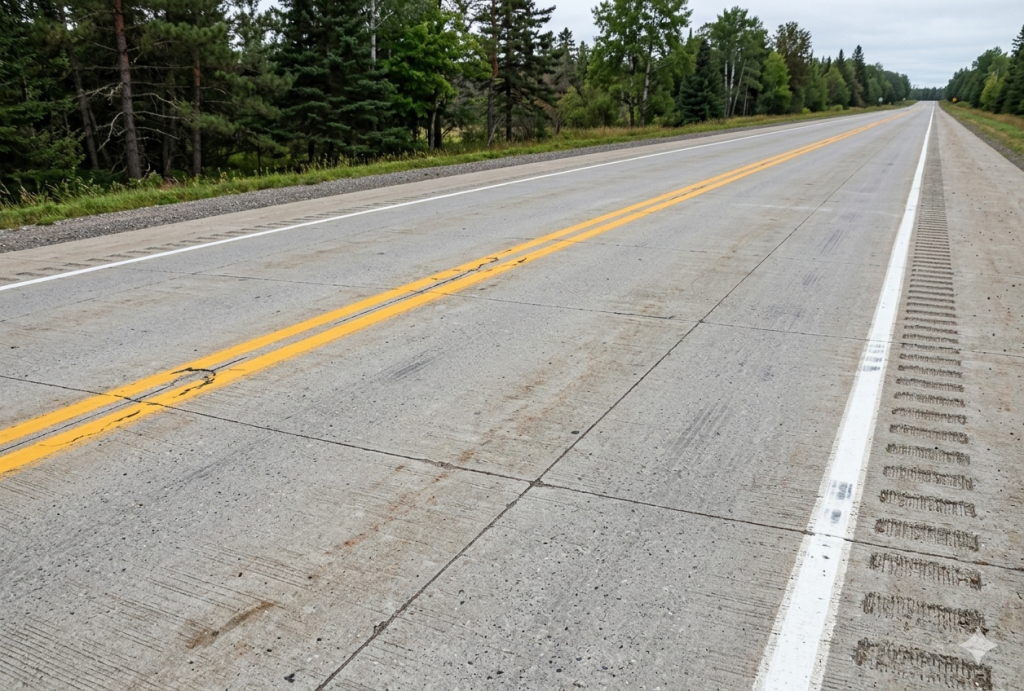
Concrete joint sealant protects every joint in a slab, floor, or road from water, dirt, and grit. Structures move constantly. Temperature swings, traffic loads, and ground settlement all place stress on concrete. Without a reliable sealant, joints crack, water penetrates, and repair costs climb fast.
This guide explains what concrete joint sealant does, which types perform best, and how to apply CSL 316 SL correctly across South African conditions.
What Does Concrete Joint Sealant Actually Do?
A concrete joint sealant fills the gap between two sections of concrete. This gap, called a joint, allows the slab to expand and contract without cracking. However, an unsealed joint invites water, sand, and debris straight into the structure.
Consequently, water erodes the sub-base beneath the joint or works its way deeper with every cycle of expansion and contraction. Over time, this movement widens cracks and undermines the surrounding concrete. Therefore, the right sealant keeps the joint watertight while still allowing it to move.
What To Use To Seal Concrete Joints
Contractors typically choose between three sealant families: polyurethane, polysulphide, and silicone. Each chemistry behaves differently once installed.
Polyurethane sealants bond well initially, but they harden over time. As a result, they lose flexibility and often crack under repeated movement. Polysulphide sealants resist chemicals well, yet they demand careful mixing and controlled application temperatures.
Silicone sealants, by contrast, stay flexible for decades. CSL 316 SL is a 100% silicone, moisture-cure sealant built specifically for this purpose. It carries an ultra-low modulus, so it places minimal stress on joint walls even as the slab moves. In addition, it resists UV degradation without chalking or embrittling, which matters throughout South Africa’s high-UV climate.
Concrete Joint Sealant Types Compared
Understanding sealant chemistry helps specifiers choose correctly. Conventional polyurethane sealants generally perform for shorter service periods before they need replacement. Hybrid sealants attempt to combine properties from multiple chemistries, though they often compromise on movement capability.
Silicone sealants, however, combine long service life with genuine flexibility. CSL 316 SL delivers a service life of 20 years or more in highway and infrastructure applications. This single fact changes the entire maintenance calculation for facility managers and municipalities alike.
How To Seal Concrete Joints Correctly
Correct application determines whether a sealant performs for years or fails within months.
First, clean and dry the joint completely. Remove old sealant, dust, oil, and any loose material. Second, install a closed-cell polyethylene backer rod. The rod should sit roughly 25% larger than the joint width, sized to create a 2:1 width-to-depth ratio.
Backer rod matters more than most contractors realise. Without it, sealant bonds to three sides of the joint instead of two. This three-sided adhesion restricts movement and causes the sealant to tear internally, long before its expected service life ends.
Third, apply CSL 316 SL by pouring or extruding it into the joint. Because the sealant is self-levelling, it flows naturally into place without tooling. Finally, allow the joint to cure. CSL 316 SL reaches tack-free status within 80 minutes and achieves full cure within 7 to 14 days, though the joint needs protection from traffic for the first 24 hours.
Notably, Portland cement concrete and asphalt need no primer before application. On other substrates, a field adhesion test remains good practice before full installation.
Concrete To Steel Joint Sealant Considerations
Joints between concrete and steel present different challenges than concrete-to-concrete joints. Steel expands and contracts at a different rate than concrete, so the sealant must accommodate two dissimilar movement patterns simultaneously.
CSL 316 SL’s ultra-low modulus makes it well suited to these mixed-substrate joints. Nevertheless, a field adhesion test on the steel surface remains worthwhile, since coatings and surface preparation vary between installations.
Concrete Joint Sealant For Driveways And Smaller Joints
Not every concrete joint sits inside a highway or industrial floor. Driveways, walkways, and residential slabs also need protection, though loads and movement are generally lighter.
Even so, the same principles apply. A backer rod prevents three-sided adhesion, and a flexible, UV-stable sealant outperforms a rigid one over the life of the driveway. Homeowners and smaller contractors benefit from the same silicone chemistry used on major infrastructure projects, simply applied at a smaller scale.
Concrete Joint Sealant Price And Cost Factors
Concrete joint sealant price depends on several variables rather than a single fixed rate. Joint length, joint width, substrate condition, and accessibility all influence total project cost.
Furthermore, cheaper sealants often carry a hidden cost. Polyurethane and hybrid options may cost less upfront, yet they typically need replacement sooner. This means repeated labour and material expenses across a structure’s lifetime. CSL 316 SL’s documented service life of 20 years or more frequently makes it the less expensive option overall, even where the initial price sits higher.
Contractors and specifiers should request a quotation based on actual joint dimensions and site conditions, since generic pricing rarely reflects real project costs.
Why Does South Africa’s Climate Matter For Joint Sealant Selection?
South Africa’s intense UV exposure, wide temperature swings, and coastal humidity all place extra demand on joint sealants. A sealant that chalks or hardens under UV stress fails faster here than in milder climates. CSL 316 SL’s silicone chemistry resists this degradation throughout its service life, which is one reason SANRAL has approved it for South African road projects.
Does Concrete Joint Sealant Need A Primer?
No primer is necessary on Portland cement concrete or asphalt. TSS recommends a field adhesion test on other substrates, since surface composition varies and adhesion cannot be assumed without verification.
How Long Does Concrete Joint Sealant Take To Cure?
CSL 316 SL becomes tack-free within 80 minutes. The joint needs protection from traffic for 24 hours, and full cure follows within 7 to 14 days depending on ambient conditions.
Can Concrete Joint Sealant Be Used On Expansion Joints And Control Joints?
Yes. The same self-levelling silicone sealant suits both expansion joints, which allow larger structural movement, and control joints, which manage shrinkage cracking in a slab. Correct backer rod sizing remains essential in both cases.
To discuss concrete joint sealant for your project, visit our Joint Sealant category page at /category/joint-sealant/, contact us through /contact-us/, or visit our FAQ page at /faq/ for more information. Proud distributors of CSL Silicones.