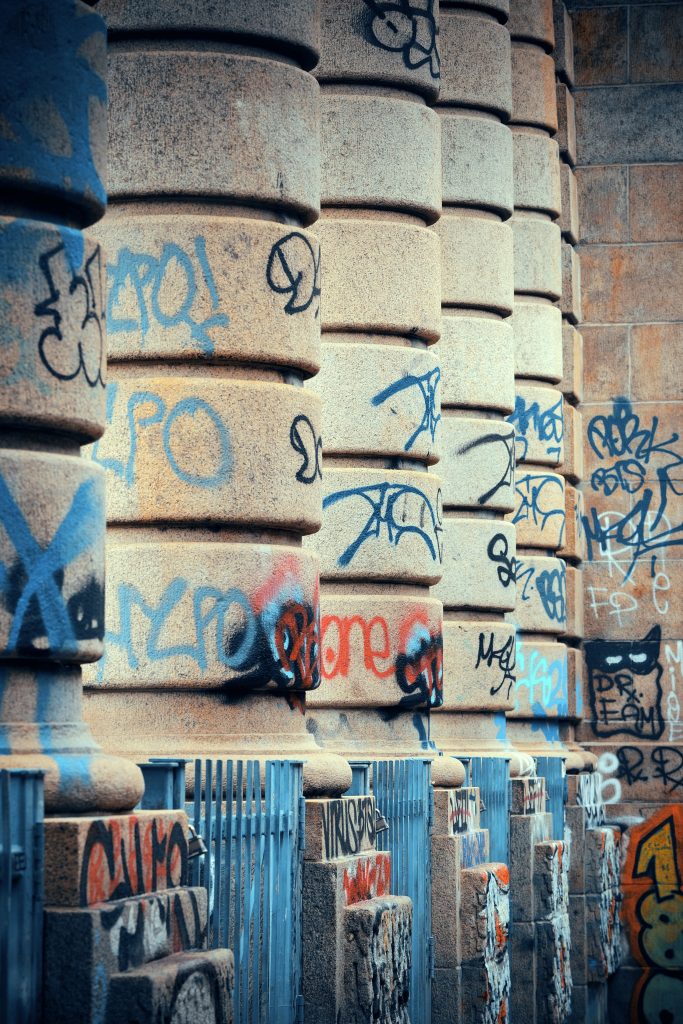
Graffiti is a costly, repeat problem for property owners, municipalities and facility managers. Vandals tag a wall, someone cleans it, and the tags often return within days. Each round of cleaning uses harsh chemicals and paid labour. To break that cycle, Technical Solution Supplies (TSS) distributes permanent anti-graffiti coating South Africa wide, made by CSL Silicones.
Our lead product is Si-COAT 531AG Clear. Because it is clear, it goes over any colour, so painted trains, branded shopfronts and face brick keep their look. Once it cures, most graffiti washes off with cold water and no solvents. We also supply Si-COAT 528AG, the pigmented version, for jobs that need a colour.
Anti-Graffiti Coating South Africa: Why Clear Si-COAT 531AG Leads
A clear coating protects without changing the colour underneath. For example, a rail operator can coat carriages in their livery, and a retailer can protect a branded shopfront without repainting. Likewise, face brick, natural stone and murals keep their natural look. In addition, there is no colour to match or order, which keeps the specification simple. Still, Si-COAT 531AG dries to a semi gloss sheen, so try a test patch on matte surfaces first.
How a Permanent Anti-Graffiti Coating Works
Si-COAT 531AG is a single component, room temperature vulcanising (RTV) polysiloxane coating that cures with moisture from the air. It bonds chemically to the host surface, so it needs no abrasive blasting. In most cases it needs no primer either, although CSL recommends a quick field adhesion test first. Because the cured film is water repellent, paint sits on top of it rather than soaking in. As a result, a cold water pressure wash lifts most graffiti off, and the coating stays in place.
Permanent vs Sacrificial Coatings
There are two types of anti-graffiti coating. A sacrificial coating washes off with the graffiti, so it must go back on after every clean. As a result, the product and labour cost returns with every tag. A permanent coating, by contrast, stays bonded through repeated cleaning. Both Si-COAT 531AG and 528AG are permanent, non sacrificial coatings. Therefore, on surfaces that vandals hit often, the choice decides whether you pay once or over and over.
Proven on Infrastructure Worldwide
CSL has documented Si-COAT 528AG, the pigmented version, on major infrastructure in North America. The same chemistry and the same cold water removal apply to 531AG Clear. For example, specifiers chose 528AG for the decorative concrete retaining walls of the President George Bush Turnpike in Dallas. It also protects a bridge underpass on the Royal Recreation Trail in Guelph. In Montreal, crews clean the Rue du Fort tunnel walls with nothing but a cold water pressure washer.
In addition, the list includes the City of Duarte welcome wall in California and stone masonry at the Metrolinx GO Station in Guelph. Similarly, 528AG protects the Pearson Airport monorail columns in Toronto. CSL Silicones holds ISO 9001 certification. For the full set of projects and photos, see our anti-graffiti case studies.
Anti-Graffiti Coating South Africa: Where to Use It
CSL lists metal, concrete, brick, stone, wood, fibreglass and existing coatings as suitable surfaces. In practice, that covers most of what vandals target. For municipalities, that means retaining walls, bridges, underpasses and public buildings. Rail operators can also coat stations, carriages and boundary walls. In addition, commercial owners use it on facades, shopfronts, signage and perimeter walls. Utilities, too, can protect kiosks, substations and electrical boxes.
TSS supplies anti-graffiti coating South Africa wide for all of these, with technical support on every project. Bridges and underpasses often need corrosion work as well, as our article on bridge corrosion protection explains.
Applying Si-COAT 531AG Clear
First, remove any existing graffiti, because the coating protects against new tags but does not hide old ones. Next, clean the surface so it is dry and free of dirt, chalking paint, loose rust, mill scale, grease, oil, curing compounds and laitance. Then mix the coating with a powered agitator at 300 to 400 rpm for at least 5 minutes.
Airless spray gives the best finish and suits large areas. Brush or roller works on small areas, although they need more than one coat. Aim for 0.15 to 0.25 mm dry film thickness (6 to 10 mil, 152 to 254 microns). That is roughly 0.22 to 0.36 litres per square metre, before losses. Apply only when air and surface sit between 5°C and 60°C and at least 3°C above the dew point. Otherwise, condensation can leave a matte finish.
At 25°C and 50% humidity, the coating skins in 20 to 30 minutes and is tack free in 60 to 90 minutes. It cures through in 4 to 6 hours and reaches full properties in 7 days. Finally, note that CSL intends it for professional applicators only.
Removing Graffiti From a Coated Surface
Remove graffiti as soon as you can, using a cold water pressure washer at about 83 bar (1,200 psi). If paint has stayed on for more than 10 days and resists cold water, switch to a warm water wash. In rare cases, specialty paints with adhesion primers may still hold. For those, apply a biodegradable surfactant such as dish soap with a cleaning pad, then rinse straight away. However, always test any cleaner on a small, hidden patch first.
Because the method relies on water, no solvents run off into stormwater drains. Our article on graffiti removal in South Africa compares this with chemical removal.
Anti-Graffiti Coating South Africa: Cost Over Time
A permanent coating costs more upfront than paint or a sacrificial product. However, the real comparison is cost over time. A sacrificial system goes back on after every incident, and each clean brings labour, chemicals and site disruption. Si-COAT 531AG, by contrast, turns that repeat spend into a once off application. On new infrastructure, it also makes sense to coat at construction stage, before the first tag appears.
In Cape Town, for example, the Central City Improvement District runs graffiti removal as an ongoing service. Our article on graffiti removal costs in Cape Town looks at that case. For anti-graffiti coating South Africa pricing on your project, contact us with the area, substrate and site location.
Anti-Graffiti Coating South Africa FAQ
Can anti-graffiti coating go over existing paint?
Yes. CSL lists existing coatings as a suitable surface, as long as the paint is sound and clean. However, chalking or flaking paint must come off first.
Will it change the look of heritage or decorative surfaces?
The colour underneath shows through, because 531AG is clear. Still, it dries to a semi gloss sheen, so always do a test patch first. Also, buildings older than 60 years fall under the National Heritage Resources Act. So check with the provincial heritage authority before coating one.
How does it handle our sun and heat?
The cured coating stays stable from minus 60°C to 200°C. For colour work, CSL tests all Si-COAT 528AG colours to 5,000 hours of accelerated UV weathering, with minimal colour change. That matters in our high UV conditions, and TSS supplies 528AG alongside 531AG Clear.
Is a permanent coating worth it?
For any surface that vandals hit regularly, yes. One permanent application replaces repeat chemical cleaning and recoating. Furthermore, crews clean with water, which is safer for them and for stormwater.
Where can I buy it?
Technical Solution Supplies distributes CSL Silicones products across Southern Africa, including the DRC and the Seychelles. We supply both Si-COAT 531AG Clear and the pigmented 528AG. For more answers, see our anti graffiti coating FAQ.
Proud exclusive distributor of CSL Silicones in Southern Africa.