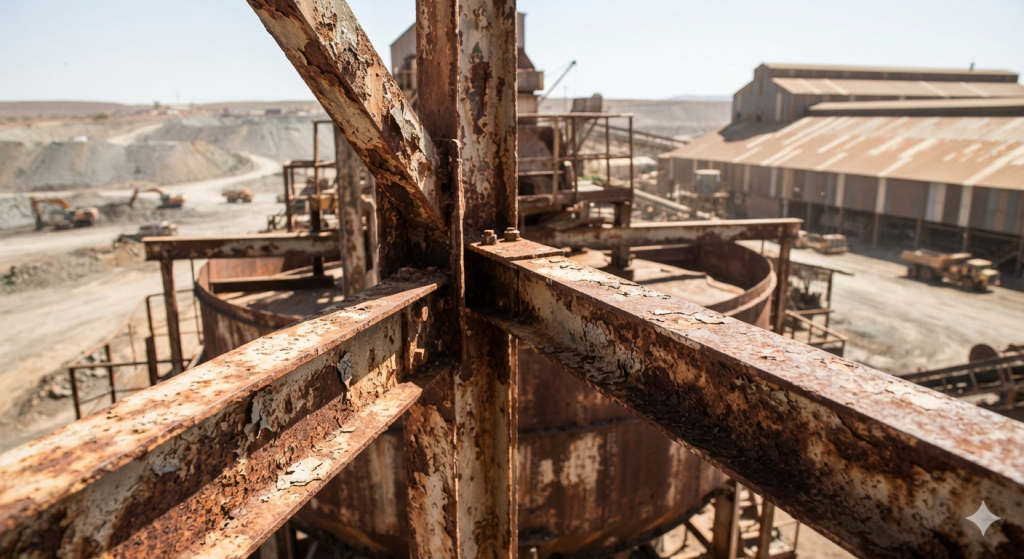
Corrosion protection covers several distinct approaches, and South African asset owners rarely get a straight comparison between them. Galvanizing, cathodic protection, and protective coatings all claim to extend the life of exposed steel. However, each method solves a different problem, and the right choice depends on the asset, the environment, and the maintenance budget available.
This article breaks down the main corrosion protection methods used across South African industry, explains where each one fits, and looks at why coating technology has changed considerably in the last decade.
What Corrosion Protection Actually Means for South African Industry
Corrosion is an electrochemical process. Steel reacts with oxygen and moisture, and it slowly converts back into oxide. Consequently, any corrosion protection method works by interrupting one part of that reaction, whether through a physical barrier, a sacrificial metal layer, or an electrical current.
South Africa presents a demanding testing ground for all three approaches. Coastal regions bring salt-laden air. Mining and industrial zones bring acidic process chemicals and airborne particulates. Inland areas bring intense UV exposure and wide daily temperature swings. As a result, a method that performs well in one region can fail early in another.
The Main Corrosion Protection Methods South African Asset Owners Use
Galvanizing: Protection Through Sacrificial Metal
Hot-dip galvanizing coats steel in a layer of zinc. The zinc corrodes preferentially, so it protects the underlying steel even where the coating gets scratched. This makes galvanizing a strong option for new structural steel, fencing, and components that can be dipped in a factory setting.
However, galvanizing has real limitations. It requires the component to fit into a dip tank, so it suits new fabrication far better than in-situ maintenance. In addition, galvanized coatings eventually deplete, and once the zinc layer wears through, the underlying steel corrodes at a normal rate.
Cathodic Protection: Electrochemical Defence
Cathodic protection uses either sacrificial anodes or an impressed electrical current to shift the electrochemical potential of a structure, which slows corrosion at the metal surface. Pipelines, buried tanks, and marine structures commonly use this method, since it protects steel that a coating alone cannot easily reach or maintain.
Cathodic protection systems demand ongoing monitoring and periodic anode replacement, though. They also work best alongside a coating rather than as a standalone solution, since coatings reduce the current a cathodic protection system needs to do its job effectively.
Protective Coatings: The Maintenance-Friendly Option
Coatings remain the most common corrosion protection method for existing structures, tanks, and equipment already in service. Unlike galvanizing, a coating can be applied on-site, on an asset that is already installed and cannot be removed for factory treatment. Unlike cathodic protection, a coating does not require ongoing electrical monitoring.
Historically, three-coat epoxy systems dominated this category. Contractors would apply a primer, an intermediate coat, and a topcoat, with full abrasive blasting required before each layer. This approach works, but it demands significant downtime, and the resulting film is rigid. Rigid coatings crack under thermal cycling, and once a crack forms, moisture and corrosive vapour reach the steel underneath.
Corrosion Protection Coatings Compared
Coating chemistry has changed considerably since three-coat epoxy became the default specification. Consequently, asset owners now choose between several coating systems, each with different trade-offs in surface preparation, application time, and long-term flexibility. The table below compares the four systems South African specifiers encounter most often.
Preparation and Application
| System | Surface Prep | Coats | Application Time |
|---|---|---|---|
| Three-Coat Epoxy | Full blast (Sa2.5) | 3 coats | Multiple days |
| Zinc-Rich Primer | Full blast (Sa2.5) | 2 coats | Multiple days |
| Polyurethane | Blast recommended | 2 coats | 1-2 days |
| Silicone (SI-COAT 579 CM) | SSPC-SP1/SP3, no blasting | 1 coat | 70-80% faster |
Performance and Durability
| System | Flexibility | Chemical Resistance | UV Stability | Service Life |
|---|---|---|---|---|
| Three-Coat Epoxy | Rigid, cracks | Strong until cracked | Chalks over time | 10-15 years |
| Zinc-Rich Primer | Rigid, depletes | Good, wears through | Needs UV topcoat | Varies |
| Polyurethane | Moderate, can crack | Good | Strong | 10-15 years |
| Silicone (SI-COAT 579 CM) | Elastomeric, flexes | Resists acid, salt | 5,000hr tested | 30+ years |
As the tables show, surface-tolerant elastomeric systems remove several of the maintenance barriers that traditional coatings carry, particularly the need for abrasive blasting and extended shutdown time.
Corrosion Protection Coatings Compared
Coating chemistry has changed considerably since three-coat epoxy became the default specification. Consequently, asset owners now choose between several coating systems, each with different trade-offs in surface preparation, application time, and long-term flexibility. The table below compares the four systems South African specifiers encounter most often.
As the table shows, surface-tolerant elastomeric systems remove several of the maintenance barriers that traditional coatings carry, particularly the need for abrasive blasting and extended shutdown time.
Corrosion Protection Coatings Compared
Coating chemistry has changed considerably since three-coat epoxy became the default specification. Consequently, asset owners now choose between several coating systems, each with different trade-offs in surface preparation, application time, and long-term flexibility. The table below compares the four systems South African specifiers encounter most often.
As the table shows, surface-tolerant elastomeric systems remove several of the maintenance barriers that traditional coatings carry, particularly the need for abrasive blasting and extended shutdown time.
Why Silicone Coatings Are Changing Corrosion Protection for South African Steel
Elastomeric silicone coatings, such as SI-COAT 579 CM, address the failure mode that limits traditional epoxy systems directly. Because the coating is elastomeric, it flexes with the substrate rather than cracking as temperatures rise and fall. This matters enormously in South African conditions, where structural steel in mining, industrial, and coastal environments experiences daily thermal cycling on top of chemical or salt exposure.
CSL Silicones formulated SI-COAT 579 CM as a single-component RTV silicone, applied in a single coat at 9 to 14 mils dry film thickness. Surface preparation only requires SSPC-SP1 solvent cleaning or SSPC-SP3 wire brushing, so contractors do not need abrasive blasting before application. Consequently, the coating adheres to tightly bound rust and existing coatings, which allows recoating on live infrastructure without the shutdown time that traditional systems require.
The coating resists sulphuric acid, salt spray, and acidic process chemicals, and all colours carry UV testing to 5,000 hours of accelerated weathering. Furthermore, documented service life exceeds 30 years in harsh mining and industrial environments. One clarification matters here: SI-COAT 579 CM is not rated for continuous liquid submersion. For fully submerged applications, asset owners should specify an ISO 12944-9 Im2 or Im3 rated system instead.
Corrosion Protection by Sector: Where South African Industries Need It Most
Different sectors face different corrosion challenges, and the right coating choice usually follows the sector rather than a generic checklist. Mining operations across South Africa deal with sulphuric acid exposure, abrasive dust, and equipment that cannot come offline for lengthy recoating. TSS has covered mining corrosion protection at https://www.tssupplies.co.za/mining-corrosion-protection-south-africa/ in detail, alongside a dedicated look at corrosion resistant coating for copper mining operations at https://www.tssupplies.co.za/corrosion-resistant-coating-for-mining-copper/. The Copperbelt corridor across Zambia and the DRC brings its own intensity, since sulphuric acid leaching attacks steel infrastructure continuously there, as explored at https://www.tssupplies.co.za/corrosion-protection-copper-mining/.
Bridges and public infrastructure present an entirely different problem. Access is constrained, traffic management carries real cost, and abrasive blasting on an active road structure creates logistical and regulatory headaches. TSS examined this challenge directly, following the partial collapse of the Ezimbokodweni River Bridge on the N2, at https://www.tssupplies.co.za/bridge-corrosion-protection-south-africa
Petroleum and chemical storage tanks face a different combination of chemical splash, UV exposure, and thermal cycling. TSS explored why silicone coatings outperform traditional tank coating systems at https://www.tssupplies.co.za/silicone-coating-petroleum-tanks-south-africa/. Coastal and desert regions bring their own extremes too, and Namibia’s mining and industrial infrastructure gets specific coverage at https://www.tssupplies.co.za/silicone-coatings-corrosion-protection-namibia/.
Structural steel more broadly faces the same underlying issue across nearly every sector: specification rarely matches maintenance reality. Most coating specifications call for Sa2.5 abrasive blast cleaning, yet most in-service maintenance projects only achieve St2 or St3 hand and power tool cleaning. TSS addressed that specification gap directly at https://www.tssupplies.co.za/corrosion-maintenance-surface-preparation/, and the same surface-tolerant principle applies broadly to structural steel maintenance at https://www.tssupplies.co.za/anti-corrosion-coating-structural-steel/.
Choosing the Right Corrosion Protection Method for Your Asset
The right method depends on the asset type, the installation stage, and the operating environment. New fabricated steel components that can reach a galvanizing bath benefit from zinc’s sacrificial protection. Buried pipelines and marine structures benefit from cathodic protection, ideally paired with a coating. Existing tanks, structural steel, and process equipment already in service benefit most from a surface-tolerant coating that avoids extended downtime.
Therefore, the question is rarely which single method is best overall. Instead, the more useful question is which method fits the asset in front of you, given its installation history and its exposure conditions.
Frequently Asked Questions
What is corrosion protection?
Corrosion protection refers to any method that slows or prevents the electrochemical breakdown of metal, typically steel, caused by exposure to oxygen, moisture, salts, or acidic chemicals. Common methods include galvanizing, cathodic protection, and protective coatings.
What are the main methods of corrosion protection used in South Africa?
South African industry relies mainly on hot-dip galvanizing for new fabricated steel, cathodic protection for buried and submerged structures, and protective coatings for existing tanks, structural steel, and process equipment already in service.
What is a corrosion protection specification, and why does it matter?
A corrosion protection specification defines the required surface preparation standard, coating system, dry film thickness, and expected service life for a given asset. Specifiers use it to ensure a coating system matches the actual exposure conditions the asset will face.
Is a coating a better long-term option than galvanizing or cathodic protection?
Not necessarily. Coatings suit existing assets already in service, while galvanizing suits new fabrication and cathodic protection suits buried or submerged structures. In many cases, the best-performing systems combine more than one method rather than relying on a single approach.
Where can businesses find corrosion protection coating suppliers in South Africa?
TSS supplies SI-COAT 579 CM and the wider CSL Silicones range across South Africa, Zambia, DRC, Tanzania, and Namibia. Businesses can visit the corrosion protection category page or contact TSS directly for product and specification support.
Which South African industries face the greatest corrosion protection challenges?
Mining, bridge infrastructure, and petrochemical storage all face severe corrosion pressure in South Africa. Mining operations deal with sulphuric acid and abrasive dust. Bridges face structural movement and constrained maintenance access. Petrochemical tanks face chemical splash combined with high UV exposure.
What is the difference between a Sa2.5 specification and a surface-tolerant coating?
Sa2.5 refers to near-white metal abrasive blast cleaning, the surface preparation standard most coating specifications assume. A surface-tolerant coating, by contrast, performs correctly on steel cleaned only to St2 or St3 hand and power tool standard, which is what most in-service maintenance projects can realistically achieve.
Long-Term Protection Built Around the Right Method
Corrosion protection is not a single decision. It is a series of choices, made asset by asset, that account for installation stage, exposure conditions, and maintenance realities. Silicone coating technology has changed what is possible for existing infrastructure in particular, since it removes the abrasive blasting and downtime that traditional coatings demand.
To discuss corrosion protection options for your structural steel, tanks, or process equipment, visit our corrosion protection category page, contact us through our contact us page or visit our FAQ page for more information. Proud distributors of CSL Silicones.